Making God's Dreams Come True
Sponsored

Catholic365 is sponsored by
Road to Purity



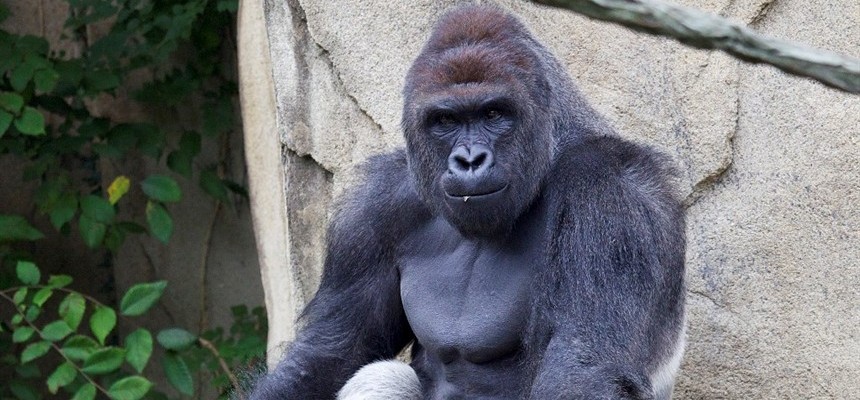
As I am sure many of you know, recently a 3-year-old boy fell into a gorilla pen at a Cincinnati zoo where he met a 17-year-old Silverback Gorilla named Harambe. Responding to the situation, zoo authorities made the decision to put the animal down in order to save the boy’s life, which, given the gorilla’s power, could have been ended in an instant. The story has become the subject of national news; many animal lovers claiming that the boy’s parents should be held responsible for the gorilla’s life, while others threaten them on social media. Now, may we agree that the fact that this gorilla lost its life is a sad event? Absolutely. But, the reaction of some animal lovers demonstrates the direction our society is headed in with respect to the relationship between animals and humans. In short, we are headed in a direction that ends with animals being regarded as having a level of dignity that is equal to that of human beings. To most of us, this seems obviously misguided, but we may ask the question, why is it that some individuals seek to obtain for animals the same rights that are granted to humans?
I would answer that, though perhaps unconsciously, their message recognizes certain truths of the created world. To begin, they recognize, as God does, that all of creation is good. Remember, after each day of the creation story related in Genesis 1 (with the exception of day 2 anticipating the flood), God ends His “day” recognizing that what He has created is good. Secondly, their message recognizes every creature is beautiful because of its participation in the beauty of God, Whose beauty they radiate, and consequently, Whose truth they communicate. It recognizes, as St. Bonaventure taught, that “each creature bears in itself a specifically Trinitarian structure” and so “testifies that God is three” (Pope Francis, Laudato si, 239). Lastly, their message recognizes that all of creation heads in a certain direction, and in fact, yearns to be in a situation where all will be one, as Jesus prayed (cf. Romans 8:22; John 17: 21). But this is precisely where the argument begins to fall apart. For, though Jesus prays that all be one, this does not imply that all identity be abolished, but rather that all identity be expressed to its fullness. This prayer of Jesus does not abolish diversity, rather, it recognizes its beauty!
Moving forward, we can then see that the argument fails on multiple levels. To begin, it fails Harambe. Harambe, as we saw above, is beautiful as he has been created by God, and testifies to the existence of the Beautiful One Who created him. But Harambe does not testify to the existence of God in the same way that the lilies of the field do, or the robin singing in the tree does. Rather, Harambe testifies to God in his being who he is, a gorilla. Yes, along with Pope Francis, we should lament that certain species of animals, like Harambe’s family, the Silverback Gorilla, are headed toward extinction, but we do so precisely because they tell us something of God in their own unique way, not the same way as the rest of creation (cf. Laudato si, 85). In contrast, by putting Harambe in the same moral category as the rest of creation, certain animal rights activists deprive Harambe of his unique beauty. His beauty, among other things, lies in his unique strength and size, his gorillaness, if you will, that echoes the immensity and omnipotence of our God. Following the same line of thought, their message fails to recognize the unique beauty of the human person (in this case the 3-year-old boy), who, alone, among all the biological families of the world is created in the image of God. And, lest the activists of whose message we speak would accuse me of trying to advocate for a situation where creation is submissive to the dominant force of the human family, this message follows the thought of Genesis, which beautifully portrays humanity as the priests of creation.
Bishop Robert Barron is fond of speaking of the poetry of the Genesis 1 story of creation, using the metaphor of liturgical procession to speak on the truth related therein. Bishop Barron explains that, just as the main presider enters the church last before he is to lead the people in their worship of God, so too, humanity appears at the end of the procession of creation, signifying that they (and I would add precisely because they are able to relate to God in a way which the rest of creation is unable because of their creation as imago Dei) are to lead all of creation in the worship of God. This understanding does not portray humanity as authoritarian rulers, but servant-priests, leading all of creation in right praise of the Creator. However, though this situation of harmonious celebration was the intent of the Creator, it is not the situation in which we live, which is another thing the animal activists fail to recognize.
It is interesting to note, that the first indication of animal death in the Bible takes place after the fall when God provides our first parents with the skin of animals as clothing (cf. Gen. 3:21). And why did that animal die to provide our first parents with clothing? Because, having fallen, our first parents now failed to naturally recognize the beauty and dignity of each other. In a similar way, we may say that Harambe also died to protect the dignity of the 3-year-old boy, whose humanness the Cincinnati Zoo authorities rightly recognized as having priority when compared to the gorillaness of Harambe.
Yes, as Christians, we await the day when ‘wolf will be the guest of the lamb and the calf and the young lion will browse together being led by a little child’ (cf. Isaiah 11:6), while at the same time recognizing that, tragically, this is not yet our lived situation and until that time, the child must be protected from all. And, as Harambe’s name would suggest, we should work together (N.B in Swahili “Harambe” means to work or pull together), to create a world where the beauty of each living creature is recognized properly and respected. If we take a moment to reflect on what has happened here, perhaps Harambe has done more to proclaim the beauty of God’s creation than any of us would've dared to imagine.