Suicide: Who can explain it?

From where we stand the Grace of God comforts us

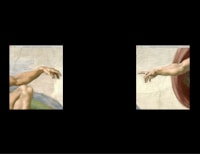
Photo by Pablo Rebolledo on Unsplash
From where we stand the Grace of God comforts us
There are many times when the grace of God touches us but we don’t see or understand its effect upon our immediate needs.
Grace is first and foremost the gift of the Spirit Who Justifies and sanctifies us, But grace also includes the gifts that the Spirit grants us to associate us with his work, to enable us to collaborate in the salvation of others and in the growth of the Body of Christ, the Church. There are sacramental graces, gifts proper to the different sacraments. There are furthermore special graces, also called charisms after the Greek term used by St. Paul and meaning “favor,” “gratuitous” gift,” “benefit.” Whatever their character-sometimes it is extraordinary, such as the gift of miracles or of tongues - charisms are oriented toward sanctifying grace and are intended for the common good of the Church. They are at the service of charity which builds up the Church. (CCC 2003).
Having gifts that differ according to the grace given to us. Let us use them: if prophecy, in proportion to our faith; if service, in our serving; he who teaches, in his teaching; he who exhorts, in his exhortation; he who contributes, in liberality; he who gives aid, with zeal; he who does acts of mercy, with cheerfulness. (Rom 12: 6 - 8).
Other articles have touched on grace and we must use the innovation that we find in this most astute gift that without its impression on needy people and themes we would not get beyond the mystery of God in his generosity. Grace, the one superior gift of himself, that is always ready to lift us up at the most essential moment of doubt and fear.
The first commandment requires us to nourish and protect our faith with prudence and vigilance, and to reject everything that is opposed to it. There are various ways of sinning against faith:
Voluntary doubt about the faith disregards or refuses to hold true what God has revealed and the Church proposes for belief. Involuntary doubt refers to hesitation in believing, difficulty in overcoming objections connected with the faith, or also anxiety aroused by its obscurity. If deliberately cultivated doubt can lead to spiritual blindness. (CCC 2088).
Incredulity is the neglect of revealed truth or the wilful refusal to assent to it. Heresy is the obstinate post-baptismal denial of some truth which must be believed with divine and catholic faith, or it is the total repudiation of the Christian faith; Schism is the refusal of submission to the Roman Pontiff or of communion with the members of the Church subject to him. (CCC 2089).
With the teaching of the Church and these articles, with grace we at least have a certain authority to find the faith that is so essential to living as Christ taught us through his Passion and Resurrection. That too is grace.
Ralph B. Hathaway
Recommended Stories
About the Author
I am an ordained deacon with the Diocese of Pittsburgh, since June 8, 1974. My current ministry is concentrated on writing spiritual reflections and poetry. I am married, with one grown daughter, and 4 grandchildren. I retired from the electrical industry after 58 years as an electrician, contractor, teacher in trade schools, and electrical inspector with a PA State license
More Stories By :