It is Okay to say, "I do not know." - Job and a Response to Suffering

The Magnificat and the Harm of Societal Distraction


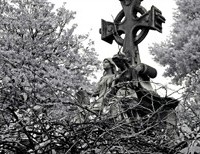
Photo By: Flickr/Gonzalo Baeza
The Magnificat of the Blessed Mother as found in Luke 1:46-55 is a beautiful prayer that has been recited throughout the ages. It has been read at Mass, said in private prayer and sung at the many Marian devotions of the Church. Particularly during the month of May, Catholics are called to reflect on the life and faith of the Blessed Mother and grow in deeper union with the living God through these meditations and through the constant intersessions we continually ask of her.
It is my hope that this article will in no way detract from the beauty and power of the Magnificat, but will begin a process of social questioning and debate that I know has been present among us throughout the ages. If you have taken the patience and time to read, please feel free to comment or reflect on the following observations.
First and foremost, the Magnificat can be seen as a prayer of the Blessed Mother rejoicing at the incredible mercy of God (Luke 1:50, 54-55), his faithfulness to his promises of old (1:54-55) and his ineffable desire to save all of humanity (1:47-48, 50, 54). Filled with the Holy Spirit and literally united with God as having conceived within her the Christ, Mary prays in an overwhelming understanding and vision of God's saving action throughout her own life and throughout all of history. For this reason and so many others, the Magnificat reveals not only the holiness and grace of Mary, but what can be seen as the human being's reaction to the infinite mystery and providence of the Triune God.
Notably throughout these brief verses we find a strong contrast between the rich and the poor, or the lowly and the mighty. The Lord “has looked on his lowly handmaid” (1:47). “He has pulled down princes from their thrones and exalted the lowly. The hungry he has filled with good things, the rich sent away empty” (1:52-53). As is the case throughout the ministry of Christ as found in the Gospels, Jesus continually reaches out to the poor and the outcast and humbles those with any kind of power, authority or social standing (cf Luke 4:18-21). Such has been God's desire; to break down walls that separate humanity from recognizing the great dignity of every man, woman and child.
But one verse I have deliberately refrained from including until now is Luke 1:51, “He has shown the power of his arm, he has scattered the proud in their conceit.” This verse is certainly in the same vain as the above: the contrast between the blessing of the poor and the emptiness of the rich. However, it is the second part that this article will focus on, “he has scattered the proud in their conceit.”
Now there are quite a few translations of this verse that all need particular attention yet aim at the same understanding. The New International Version of the bible reads, “he has scattered those who are proud in their inmost thoughts.” The New American Standard Bible reads, “he has scattered those who were proud in the thoughts of their heart.” The International Standard Version states, “he scattered people who were proud in mind and heart.” And the King James Bible translates the verse as follows, “he hath scattered the proud in the imagination of their hearts.” Each of these translations are identical in their beginning - that the people in question have been scattered, a vital point to our discussion. The closing of the verse is identical in that those who are scattered are those who are proud. And the proud are stated by Mary as those who are proud in their inner most being, whether that be in thought, in mind or heart (conscience) or in imagination.
Of the translations mentioned above, I believe the most relevant for this discussion is that of the King James Version, that the proud have been scattered in the imagination of their hearts. It is very easy to ask why any of this is significant, important or even relevant to theological matters of today. However, I believe this verse is vitally important to our understanding of current trends in society, particularly in North America and those developed countries who have adopted or share in many of the cultural norms geared toward popularity, fame and personal praise. As written in my previous article, I am a privileged white male of 26. I am writing this because upon reading the Magnificat and closely examining this verse, I am chilled to the bone to think that I have become or have always been one among the proud who has been scattered.
Before going any further, let us first ask what is meant by scattered. I believe that scattered essentially means distracted- distracted from God, our neighbor and our own spiritual lives. It is not difficult to see the dire consequences of what this distraction entails. It entails a distraction from the will of God and even more so, a distraction from seeking out the will of God in every day life. It entails a distraction from those around us who need our help, particularly the poor and lonely, as Pope Francis has constantly called upon all Christians and peoples to recognize and assist. And finally, it entails a distraction from the mystery of God still fully alive and present in our world.
Essential to this understanding of the scattering that is distraction is the cause of it. We have already stated that those scattered (now distracted) are those who are proud in the ways mentioned above; in thought, imagination or heart, or all three. I believe in our current society, the cause of these distractions are the overwhelming realities that give rise to a certain pride within our very imaginations. What I speak of now is something nearly everyone I have encountered in my life is well aware of. It is the reality of fame, fortune and success.
Because things such as fame, fortune, success, beauty and the like are so very prized by modern culture, they have often become the ill-planted seeds that grow in our hearts until they completely or partially overtake our imaginations. And it is at that point that we become scattered or distracted from our true reality: that we are children of God through adoption in Christ Jesus (Ephesians 1:5). And of all these things that have become means of distraction, the greatest I believe is the cellphone, particularly the iPhone.
As a person born into the millennial generation, it has been my observation that there has not been anything like the iPhone that has gripped and distracted so many people. Anyone alive today has simply to walk outside and look around to sooner or later see someone on their cell-phone, whether that be talking, texting or watching the latest viral trend. Let me be clear, I am in no way condemning iPhones and the incredible capabilities that they have provided us with. I personally use my iPhone for everything ranging from news to the weather, to sports games and social media. In fact, while writing this article, I am certain I have looked at my phone some three dozen times. But this is precisely my point, that mobile phones and all modern forms of entertainment have become more of a distraction than a help in the spiritual journey.
What I am saying is nothing new and I believe Christians and non-Christians have this conversation all the time. But what I believe must be discussed is the growing trends of secular society that glorify the distractions that keep us from truly following the God-given path that we are meant to follow. I strongly, almost entirely, believe that the Magnificat serves not only as a beautiful prayer, but as a strong social criticism and condemnation of the human action of replacing God with our growing distractions. And because of this, we are becoming more and more scattered among and within ourselves.
This is what I hope to spark – a discussion regarding this verse of the Magnificat and if the values of modern American life, especially at the adolescent level, have lead to a growing pride that has lead to many many people becoming distracted from God and what a life lived for and with God entails.
As I mentioned briefly above, I truly believe that I have been scattered often from my Catholic faith by so many different things, the most prominent being a desire for fame and popularity. And in this the imaginations of my heart have gotten the better of me. I sit down to pray and almost immediately am filled with thoughts of television shows I have watched, text messages I haven't responded to, and lyrics and melodies of songs recently listened to. Even while in Church, I often imagine what it would be like to be famous and have money. All of this frightens and disheartens me terribly. Yet even more, the constant attention I pay to my phone throughout the day not only distracts me from prayer, but actually physically leads to exhaustion and frequent headaches. It truly seems that the distractions of every day life are geared towards wearing us down. In consequence, we become too tired to give God the attention he so deserves and attention that benefits us greatly in-turn.
Just as recounted in the story of the tower of Babel, the people were scattered by God for attempting to reach heaven. It is written, “'Come' they said 'let us build ourselves a town and a tower with its top reaching heaven. Let us make a name for ourselves, so that we may not be scattered about the whole earth'” (Genesis 11:4). This passage has been commented on for centuries, with the consensus that God scattered the people by confusing their language because of their pride in trying to stretch beyond their God-given limits. If we compare it to the Magnificat, we find an almost identical reality, that the people had been scattered because of the imagination of their hearts. They imagined a great city where they could make a name for themselves. Is that not much like our world today, where people strive to make a name for themselves to gain fame and success, praise and power? Ironically, though we are able to communicate easier than ever before and through so many different mediums, like never before have people become so distracted and divided among themselves (personal opinion).
From observation, I believe a similar result will fall upon our modern age as it did in the ancient past; our pride of heart will eventually lead to a scattering, or a distracting of heart from the true ways of God. In many ways it already has. And though it terrifies me greatly, I believe so much of my life I have distracted myself from the truth. I have spent great effort at times to be liked by my peers and to find wealth and popularity in places that are not God-seeking. It is tragic that the desire for celebrity status can overtake the mind and blind it so quickly to the promises of God. But with messages that incessantly promote a culture of popularity and material wealth, such desires are becoming increasingly difficult to avoid.
Please forgive me if I seem too condemnatory. That is not my intention. Inventions and technologies of today's world are truly amazing and are able to benefit so many. I invite you to reflect on the inventions, whether mechanical, medicinal or communicative that have enabled the benefit and extension of life to millions of people around the world. But I also invite you to reflect and hopefully discuss the inventions of the present that have kept people and even families apart and distracted from God and each other. These inventions, albeit social media, the iPhone, HD Televisions or the latest Xbox often promote a culture that is counter to the one of justice and love envisioned by Christ and lived by the first Christian disciples. As many have come to realize, it is a culture that has lead to great social isolation and alienation and a distraction from helping those who are in great need.
This brings me to a final point. As we are told in the Acts of the Apostles, after the descent of the Holy Spirit at Pentecost, “the faithful all lived together and owned everything in common; they sold their goods and possessions and shared out the proceeds among themselves according to what each one needed. They went as a body to the Temple every day but met in their houses for the breaking of bread; they shared their food gladly and generously; they praised God and were looked up to by everyone. Day by day the Lord added to their community those destined to be saved” (Acts 2:44-47). The apostles after Pentecost began to live the union of life with each other and God that Christ so desired for all people. It is the opposite of a scattering or a distraction, it is a profound and happy unity. As has been written by many, Pentecost begins to unify humanity and reverse what took place at Babel. This needs to happen in our world today.
The words of the Blessed Mother in the Magnificat speak of her joy at being united with God and her amazement at the splendor of his fulfilled promises. But they also serve as a severe criticism and warning of what becoming proud entails for anyone who has chosen imagination over truth, or personal desire over God's desire. It is a story that fills the entire lining of the bible, the choice for self over the choice for God. But as our Blessed Mother also tells us, “He has mercy on those who fear him in every generation” (Luke 1:50). Sometimes, in the wake of all the distractions of our world, we need to remind ourselves that to fear God and desire his will above our own unifies and heals us rather than injures and scatters. Especially around this time of Pentecost, I hope we can discuss ways to heal ourselves from any distractions we may indulge in and remember how important it is to focus on the things of God and heaven. In doing this, we can work to prevent any further scattering we now experience. And with God's help and mercy, we can even begin to reverse it.
Recommended Stories
About the Author
John Mayer is a recent graduate of the University of Scranton's Masters of the Arts program in Theology and Religious Studies. He is a practicing Catholic who hopes to enter the field of religious education as a teacher of theology. He currently lives at home with his mother and father in northern New Jersey.
More Stories By :