Contra Contraception

The Reason for My Hope


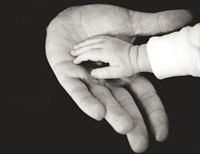
Photo By: Flickr/Emily Carlin
Where there is life, there is hope, or so the saying goes. But perhaps it ought to be that where there is hope, there is life, for without hope what reason is there to live? There is not a lot of hope in our culture of death. We have consistently rejected both God and life beyond the grave. Instead, our age has forged a golden calf to worship upon the altar of materialism. Its false rites revolve around the sensual experiences of the world around us, living by the rule of maximum pleasure for minimum effort. We see this everywhere from the pornography epidemic, to the legalization of addictive drugs, and even in our fad diet plans (lose the weight without the work).
But this religion of the world, this faith of the flesh, has no substance. It is empty. No bodily pleasure can ever be sated. There’s never enough food, enough wine, enough to lust over. In fact, by indulging in this false worship, we only develop the need for greater and greater pleasures. This is the nature of addiction, needing a greater and greater high. Like the punishment of Tantalus for whom the food and drink he so desperately desires are always just out of reach, the world entices us with a true fulfillment that we will never find, but can only obsess over.
Our culture of death will never leave you contented. Self-seeking bodily pleasures only secure a brief and fleeting happiness. Therefore, by its very nature, materialism is hopeless. This hopelessness is painfully evident today. Suicide, especially among the young, continues to cut short lives created by God. Not an exclusive vice of the destitute, hard drugs are spreading into the suburbs because they offer a moment’s escape. We try to live another life through video games and the emerging technology of virtual reality. The immense mass of meaningless material on the Internet is characterized by crass humor which we try to laugh at to forget reality. Our education system focuses on the injustices of the past in a punitive self-shaming. War, terrorism, abortion, domestic abuse, and civil unrest are symptomatic of a society without hope.
I write all of this, not that you might despair nor become despondent (Chaplet of Divine Mercy) but that your eyes might be opened to the futility of the worship of the flesh in which our age partakes. Like I said, there is nothing inherently wrong with our appetites, for they come from God. It is when we misuse them – like when we turn our sexual appetites to the end of self-seeking pleasure and lust instead of true, giving, procreative love – that they become a thorn in our side.
Christians are the outliers in this worship of the golden calf. We remain joyful in suffering, a paradox that the world cannot understand. I see, we all see, the immense weight of sin and despair in this world. Terrorism, the persecution of Christians, the legitimization of sin, all of this is disheartening. But it does not steal my joy. Why? Because I have hope.
Hope is one of the three theological virtues, though I think that it is sometimes overlooked. St. Paul wrote: “faith, hope, and love… but the greatest of these is love” (1 Corinthians 13:13), but that does not exclude the importance of hope; all of the three are essentially inseparable. You cannot have faith without love nor love without hope. If I did not have hope, what reason would I have not to live as the pagans do in their meaningless pleasures?
What then is hope? Hope is an understanding of the victory we have won in Christ. It is not merely looking towards the future with an ambiguous sort of warm and fuzzy feeling, but rather knowledge of the truth that sets us free from the chains of sin. Christ died on the Cross to release us from the “law of death” (Romans 7:6) brought upon us by Original Sin. No longer need we fear the inevitability of the grave. I live with hope because my Lord was dead but now He is alive. “I walk not according to the flesh, but according to the spirit” (Romans 8:4).
Therefore, I will not bow down before the golden calf. Brothers and sisters, take the examples of our ancestors in the faith. The three companions, Sidrach, Misach, and Abendago (with unnecessarily difficult names), refused to give homage to the Babylonian idol. Brought before King Nabuchodonosor, they were threatened with incineration in the furnace. But those three men said in response “be it known to thee, O king, that we will not worship thy gods, nor adore the golden statue which thou has set up” (Daniel 3:18). The world does not like it when we refuse to join them in their futile worship of the senses. It tries to offer us vain gifts and honor, as it did with the Maccabees, in exchange for worshipping their foreign gods. But in his “zeal for the law,” Mattathias, their patriarch, returned that “although all nations obey King Antiochus….I and my sons, and my brethren will obey the law of our fathers” (1 Maccabees 2:19-20). St. Stephen, “being filled with the Holy Spirit,” testified before the chief priests of the Jews after the Ascension of Christ. He was accused of blasphemy and sentenced to death. But unlike the expectations of the world that condemned him, he did not resist their judgement nor hate his persecutors. Rather, he said with his dying breath “Lord lay not this sin to their charge” (Acts 7:59). He died in hope, commending his spirit into the hands of the Lord.
Hope necessitates a rejection of the ways of the world because we are waiting for something better. We will not serve the “golden statue” of hedonism which is devoid of any hope. We will not indulge in desperate, meaningless lusts nor intemperate feasting. Hope means that we realize that the things of this world will not satisfy us. It means that we desire something more, something real. And we are assured in this desire through the death and Resurrection of Jesus Christ.
Therefore, be people of hope. We have no need to walk around with long faces, to beat our breasts or to tear our garments. We will bear these “momentary afflictions” (2 Corinthians 4:17) knowing that the fullness of joy, the fulfillment of all desire awaits us at the end of this long road.
DEUS VOLT!
Recommended Stories
About the Author
Samuel Matthews is a junior in high school. He is the sole writer for The Crusade for Truth, a Catholic teen blog that focuses on modern issues and how to live in the example of Christ. In addition to his writing, Samuel is very involved with his local parish. He is a member of the high school youth group, a Lifeteen group, and helps lead the middle school youth group. He plays guitar for Mass at two different parishes. When not writing, Samuel can probably be found reading. He has a particular love for the works of his patron, St. Augustine.
Links:
Blog - http://thecrusadefortruth.blogspot.com/
Facebook - https://www.facebook.com/thecrusadefortruth/?fref=ts&ref=br_tf
Twitter - https://twitter.com/thcrusade4truth