The Spirituality of Imperfection

Ikigai

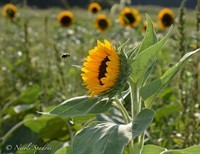
Photo By: Flickr/Fr Lawrence Lew, O.P.
Ikigai ……. What?
Yes, ikigai, that’s what I said. But after a quick WikiPedia search and studying the Venn diagram for awhile, I couldn’t stop thinking about it. According to WikiPedia, “the term ikigai is composed of two Japanese words: iki, referring to life, and kai, which roughly means "the realization of what one expects and hopes for"”. Click on the link above to view the corresponding diagram to use as a reference.
As someone who has always been interested in the meaning of life and “ultimate things”, this caught my attention. As I read about ikigai and studied the diagram more, a few interesting things stood out to me.
- By definition, Christians would equate the concept of ikigai as God and/or Christ. Looking at the diagram, God remains at the center of what we are called to do: our passion, mission, vocation and profession. God is not “one among many” different things in our lives, but the ground by which we do all things.
- I noticed that, at first, I read the diagram from the outside in. Meaning, I started pondering “that which you love”, “that which the world needs”, “that which you are good at”, and “that which you can be paid for”. This got me thinking, though, should it be read from the inside out? If you replace “God” with ikigai, certainly then you should start in the center and work your way out. This follows the Christian concept of centering your life first on God and prayer, and all else will follow. But, it also seems practical to answer the outside statements, and from there develop your four “inner” circles, all which feed to the center.
- Many of us spend the most time thinking about “that which you can be paid for” and “that which you are good at”. These make up the “profession” circle. Some of us don’t even consider what we are good at, and only seek what we can be paid for. This causes many of us to become unfulfilled and quite self-seeking – I observe many young adults of my generation (or even prior generations) stuck in careers that make them borderline depressed. This can be remedied, I believe, by considering more closely “that which you love” and “that which the world needs”. Sadly, we seem to have less people interested in finding out what they love (or, even, how to love!) or what the world truly needs.
- The area that I find most challenging is pondering what the world needs. Some of this may be obvious to us, but how can I help as an individual? This circle encompasses our mission and vocation. I was once blatantly asked “What’s your mission?” by someone close to me. I was caught completely off guard by this, and stammered my way through an answer. In some ways, we are all “co-missioned” as Christ’s disciples and to be a witness to Him. But, this will be lived out in many different ways through each individual with different vocations. I have found that taking the “inside out” approach, centering my life on God and prayer, has worked better at trying to find a mission and vocation.
What's your Ikigai? What's your mission? Passion? What you do you love, what does the world need?
Overall, it seems the ikigai way is to search for a life of meaning, or the meaning of life, depending on how you look at it. I hope those who are searching will consider Jesus Christ as the center of their life’s Venn diagram, because He is certainly “the realization of what one expects and hopes for”.
Recommended Stories
About the Author
My name is Will and I am 37 years old. I attended Catholic school my entire life, but like many in my generation, I fell away from the Church in high school and early in college. I consider myself a "re-vert" to the faith. I am married to the woman of my dreams and together we have three beautiful children, with one on the way!
I picked up the Bible to read the Gospels again when I was 22 years old, and the words of Christ haven't left me since. I began my new faith journey with struggle, still a sinner, but continually give my life to God through my marriage, prayer and the sacraments. I believe that it is precisely our struggles that we encounter in our daily lives that bring us closer to God.
I love golf, fitness, movies, my dog, and following the Patriots, Celtics, and Red Sox (Yes, I'm from Boston). I don’t have a blog or an agenda, I am just passionate about my faith and love to write.