A Crisis of Faith

The Stations of the Cross: Reflections 2

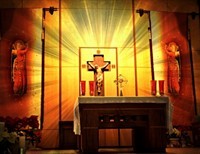
Photo By: Flickr/PROWaiting For The Word
Station 11: John and Mary at the Foot of the Cross
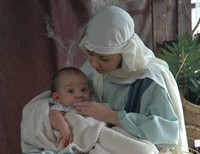
This is one of the most blessed moments and one of the greatest gift that God has given us… second only to salvation itself. The Lord sees His Mother and John standing at the foot of the Cross. He looks at Mary and says “Behold your Son!”, but then He looks at John and says, “Behold your Mother.” The Scriptures say that John took her into his house from that day forward…and wise people who love the Lord have also done the same ever since. I’ve talked before about out of place this action would be in Jewish culture if Jesus had brothers and sisters as some claim. She should have been the responsibility of the elder surviving son if one existed. His action here tells you that they didn’t. So through John He also gave her to each and every one of us too.
Station 12: Jesus Dies on the Cross
The moment that Jesus had dreaded in the garden had arrived. He became the “Lamb of God Who takes away the sins of the world”. For the significance of that phrase I’ll refer you to my series on the “Shadow and Substance of God’s Plan”. The sins of all mankind past (the Old Testament saints who looked to the promise of this moment), present (all those alive at that time) and future (you and I) were poured out upon Jesus there. For the first and last time He had no fellowship with the Father and the Holy Spirit. It was then that He quoted from Psalm 22, but Matthew records it in Aramaic…the only Aramaic phrase carried over in all later translations into other languages.
“And about the ninth hour Jesus cried with a loud voice, saying, ‘Eli, Eli, lama sabachthani?’ that is to say, ‘My God, my God, why hast thou forsaken me?” (Matthew 27:46)
How terrible that must have been for Him. “He Who knew no sin became sin for us that we might be the righteousness of God in Him” Saint Paul would later write. His cry was one of agony. He had had His flesh literally torn from His Body by the cruel Roman whip. He had been beaten so badly that Scripture tells us that He didn’t even look human anymore. In that all He said not a word nor cried out. But now He screamed those words. The Cup had not passed from Him and now He drank from it full measure!
But now the price had been paid, the debt settled. After saying that He was thirsty but refusing the drink He proclaimed “It is finished!” In the Greek the word recorded by Saint John is “tetelostai” and is a term well known to anyone who bought or sold at the Market in Jerusalem. It was marked on every receipt and every bill of lading. It means “Paid in Full”! Your sin debt and mine was paid in full by Jesus. That’s why the Church believes in “grace only” (but not grace alone…a discussion for another time) … the plan was God’s and the provision was God’s and not ours. We didn’t deserve it and we can’t earn it.
Station 13: Jesus is laid in the tomb
This is the final action that occurred on that Good Friday. The Jewish Sabbath was about to begin and the Jewish leaders didn’t want anyone hanging on a cross when the sun went down. So they convinced the Romans to speed the process up by breaking the legs of those men. They did this to both criminals, but when they came to the Lord they determined that He was already dead. When Joseph of Arimathea and Nicodemus asked for the body of Jesus Pilate sent a Centurion to double check and was told it was true. He released the Body for burial to them.
Joseph owned the tomb in which the Lord was buried. This was in fulfillment of prophesy that He would be buried in a borrowed tomb. What happened after that I have already discussed in my series on the Resurrection. But never has a tomb been as well sealed and well-guarded as was the Garden Tomb
Here in the Philippines we celebrate that Resurrection as the 14th and final Station. In other places this station is omitted since the Event is separate from the Passion.
The Stations of the Cross are a great mediation upon the provision and price God paid for our salvation and to restore the fellowship lost in Eden. I think they should be a regular contemplation not only during Lent but year around if only in our private devotions. It helps keep our focus on Whose we are and why we are here…to preach the Gospel of His life, death, burial and Resurrection.
Recommended Stories
About the Author
I was a Cradle Catholic from the time that I was born through my teen years. I slowly moved away from the Church and as a young adult I became an Evangelical Christian. I spent nearly 40 years in various types of ministry as a teacher, preacher, pastor or evangelist. But my main area of expertise was Apologetics…what we believe and why we believe it. I am a graduate of Central Christian College of the Bible in Moberly, MO with a Bachelor of Science in Biblical Studies. In November of 2014 I retired to the Philippines, where my wife Rose is from. We live in the mountains of Negros Oriental in the small town of Canlaon City with our many brothers and sisters, nephews and nieces (to whom I am “Daddy Mike”).
Nine years ago I reverted to the Catholic Church. I have try to write articles which inform, instruct and equip our Catholic brothers and sisters while avoiding using jargon. I have also sought to defend the Faith with our several Protestant visitors in as kind a way as possible
My archive here, which now contains nearly 80 articles, is located at http://www.catholic365.com/author/mike-bugal/
I may also be contacted via email at mbugal@yahoo.com