Source Code and the Mystery of God's Creation

Pain and Suffering - God, why me?


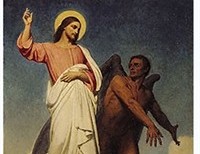
Photo By: Flickr/ Vincent Bozzo-Suffer
Each person goes through some form of suffering in their life. Sometimes, our suffering seems unique compared to the sufferings of other people. It may also seem that we suffer more than others. Often during such times, a question comes up in our minds - "God, why me? Why of all people do I have to go through all this?"
Two millenia of Christianity has pondered about suffering and evil in general and many books have been written on the subject. I am not offering anything new, but I am sharing what I have found to be the answers to these questions for my life. Some of these answers are pertinent to the question of "Why me?". Others are generic answers to the problem of suffering itself. I hope you will find them useful too.
1) God thinks I am capable of handling it!
"No temptation has overtaken you that is not common to man. God is faithful, and he will not let you be tempted beyond your strength, but with the temptation will also provide the way of escape, that you may be able to endure it." - 1 Cor 10:13
For a long time, I understood this verse only in the sense that God won't test me beyond my strength, but recently I had a new perspective on it. If you think you are going through a difficult test, God himself considers you strong enough to endure it! If God thinks you are capable, who are you to think you are not? Perhaps this type of suffering is to be your lot because God has given you the ability to endure it. He may not have given the same ability to others.
2) God can bring about good even from my suffering
"We know that in everything God works for good with those who love him, who are called according to his purpose." - Rom 8:28
If God were to bring about good only from good, then is he really that powerful? But if God can bring about good even from evil, then he is truly powerful.
3) My suffering has a higher cause unknown to me
Two years after Jesus was born, Herod ordered the murder of children two years old and younger. While Jesus escaped with his family, these children suffered unjustly, dying because of Jesus Christ. They were innocent. They had done no wrong. Why then did God allow this unjust calamity to occur to them? Couldn't God have made it known to Herod that Jesus had already escaped and thus prevented Herod from ordering the murder of all children? God could have, but in the eternity of time, this short suffering of these innocent children makes them martyrs in the eyes of God for the sake of Christ. The Church has a feast day instituted for them, called the Feast of the Holy Innocents. Their reward shall be great in the eternity of heaven. We view suffering from our own narrow point of view, but in the eternity of time, perhaps we who suffer are martyrs for a higher cause unknown to us.
4) My suffering can have redemptive value
"Now I rejoice in my sufferings for your sake, and in my flesh I complete what is lacking in Christ's afflictions for the sake of his body, that is, the church." - Col 1:24
Our participation in Christ has elevated us to such a level that our sufferings can even have redemptive value. Jesus allows us to have a share in his own suffering so that our suffering can become the cause of the redemption of someone else in the Church. For how could anything be lacking in the perfect sacrifice of the Lord Jesus himself, unless he himself had willed it to be so that our participation in it was necessary? Jesus gives us a share in his works, including his work of saving sinners and suffering for them.
5) My suffering can provide an opportunity to others to love like God
No person exists for his own sake. We exist for the sake of each other. Perhaps I suffer so much that my family members have to constantly take care of me. Perhaps I am an amputee and throughout my life I need the help of others to help me do basic things of daily life. I exist not for my sake, but I exist so that others may have the opportunity to love as God loves - unconditionally. It is very easy to love a perfect person, but difficult to love a person who has many special needs. But this person provides others an opportunity to show greater love and sacrifice than they could show while loving a perfect person. This suffering person, in God's plan, could actually be an instrument that helps others become more like God, because they learn to love unconditionally.
6) My suffering can be for the purpose of glorifying God
And his disciples asked him, "Rabbi, who sinned, this man or his parents, that he was born blind?" Jesus answered, "It was not that this man sinned, or his parents, but that the works of God might be made manifest in him" - John 9:2-3
The man was born blind so that when Jesus healed him, God would be glorified through this great act of healing.
7) My suffering can be a wake up call for me to turn from my sins
"...for whatever a man sows, that he will also reap." - Gal 6:7
Sometimes, our suffering might be the consequences of our own sin. So our suffering should make us pause and think, "Have my own sins brought this upon me?" If so, we should repent of our sins and mend our ways.
8) My suffering can bring me closer to God
Suffering can be used by God as a way of reorienting our hearts and minds to him. St Ignatius of Loyola was wounded in battle and bedridden. During his time in recovery, he had nothing to read, except some spiritual books around him. Having nothing else to read, he reluctantly began reading them, and that changed his life and he became a great follower of Christ.
9) My suffering can keep me from bring prideful
"And to keep me from being too elated by the abundance of revelations, a thorn was given me in the flesh, a messenger of Satan, to harass me, to keep me from being too elated." - 2 Cor 12:7
Suffering can be a tool that keeps us from being prideful. God is gentle and humble of heart (Matt 11:29). Our suffering might be God's way of teaching us humility and thus his way of making us more like him.
10) My suffering can provide me with an opportunity to trust God
Suffering can lead us to trust in God. If all is well with us and we have no troubles, we might perhaps not even need to trust in God. But if we have needs and particularly if we suffer, then that suffering provides us an opportunity to trust in God. Without faith it is impossible to please God (Heb 11:6). Consequently, it means that if we have faith, it pleases God. The more we trust, the more it pleases God.
Recommended Stories
About the Author
I am a cradle Catholic. From a very early age, the hand of the Lord was upon me and he greatly blessed me. At a very young age, I began to read a children's Bible and read it many times over. Then, in my early teens, I began to be drawn deeper closer to the Lord in a more personal way. I found myself drawn to visit him in an adoration chapel and my prayer life began to grow. I was around 14 at that time. Then I got a copy of the Good News Bible and read that very eagerly. In my late teens I was very actively involved in a Catholic youth prayer group. We had praise and worship, talks. reflections, group discussions, etc. During this time, I grew personally by being mentored through a share group, but most of all because the Lord himself drew me close to him and I would often spend a lot of time before him in prayer. I then "upgraded" to an NRSV Bible and now I use the RSV-CE and have read that and the Catechism as well. I read and reflect upon God's word everyday as he leads me.
To be sure, my life has had its struggles, but since the time I have known the Lord personally (and even before that!), he has led me towards him and I am more and more drawn to him now. The story in my 20s is pretty much along the lines of following the Lord, making mistakes and learning from them, repenting and returning to the Lord, and following him again. The Lord has now brought me to a point where I can truly say I love him and it is my heart's desire to love him more and to draw other people to him.
I don't have any links to promote as such. I am not an active blogger. But a cause that is very close to my heart is Saint Paul's Outreach. Their website is http://www.spoweb.org/
I work as a Software Engineer in downtown Manhattan. I also play chess a lot and I have a National Master Title from the US Chess Federation. But my main interest is still the Lord and I'm willing to go wherever he takes me from here.