A Variety Christmas
Sponsored

Catholic365 is sponsored by
Road to Purity




Please forgive me.
Next to the words, I love you, these are three of the most powerful words in our relationships with other people.
We long to hear them when another person has wronged us, yet they may be the most difficult for us to say when we’ve wronged someone else. And we are usually slow in saying them with meaning.
As followers of Christ, please forgive me are three words we must be ready to say; we are compelled through Christ's teachings to apologize and make amends...to each other, and most especially to God.
In Matthew 5:23-24, Our Lord tells us “Therefore, if you are offering your gift at the altar and there remember that your brother or sister has something against you, leave your gift there in front of the altar. First go and be reconciled to them; then come and offer your gift."
Hurting another person, sinning against that person, can cause severe damage to our human relationship—even destroy it—and the same is true of our bond with God. In fact, it can cost us everlasting life with our Heavenly Father.
So He has given us a model to follow; a way to learn to be forgiving and accept forgiveness. We must believe that we have a most merciful Father who is always ready to say to us: I forgive you.
Jesus makes it clear that reconcilliation is extremely important. First and foremost reconcilliation with God. If we have sinned--and we are all tempted to sin, it's our human condition--it doesn't have to be the end of our relationship with God. He is ready to forgive us, so much so that He sent His Son to dwell among us to tell us personally; He came to show us God's forgiveness as He hung on the Cross—His supreme act of love—Father, forgive them.
When we have an altercation with another person, it feels so satisfying when we hear that person apologize with sincerity. It also heals us when we apologize knowing we truly do want to restore the relationship and be at peace with the person. Yet, it isn’t as satisfying if that person doesn’t say that the apology is accepted. We need to hear it.
That is what happens in Confession. Yes, we can kneel at the altar and tell God how sorry we are for sinning, but we don’t have the satisfaction of hearing Him accept it there. We do in Confession, through the words of absolution given by a priest in persona Christi, we know without a doubt we are forgiven: God the Father of mercies, through the death and resurrection of his Son, has reconciled the world to himself and sent the Holy Spirit among us for the forgiveness of sins; through the ministry of the Church may God give you pardon and peace, and I absolve you from your sins in the name of the Father, and of the Son and Holy Spirit.
Beautiful words; a salve to our souls. Pardon and peace; we are absolved…forgiven…and we hear it directly and intimately.
Christ wants this to follow in our human relationships. As difficult as it might be, we must be ready to say please forgive me. But seeking forgiveness demands that we be forgiving even when someone has hurt us deeply; just as the Father is ready to forgive us, we must be ready to forgive others. We must look beyond the hurt, pain, and disappointment, then focus our eyes and hearts on the love and mercy of our forgiving Christ and be ready to say, “I forgive you," just as He does in Confession.
Please understand, that does not condone a wrongful act done by us or to us, nor does it excuse anyone from “owning up” to their actions. We can still set boundaries and not allow ourselves to be abused. but the truth is, having a forgiving heart is having a peaceful heart—a Christ-like heart.
As strongly as Our Lord speaks of the consequences of unremorseful sin, He tells us just as strongly that as we approach His altar, we must be ready to not only seek forgiveness but to be forgiving.
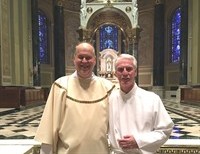
Marie Murphy Duess is the author of three novels, two nonfiction history books, and a Catholic-inspired spiritual book about life after death. She conducts and develops creative writing workshops, motivational presentations, and lectures for local colleges, historical societies, and writing organizations. Marie is married to Deacon Edward Duess of the Archdiocese of Philadelphia and lives in Bucks County, Pennsylvania. In addition to a Marketing and Communications degree, she is also a graduate of the Church Ministry Institute from St. Charles Borromeo Seminary. For more information, visit www.marieduess.com; http://blog.marieduess.com