The Importance of a Father's Love – A Father's Day Reminder Based on Pope Francis' Amoris Laetitia
Sponsored

Catholic365 is sponsored by
Road to Purity



Here we find ourselves in the midst of March, which is traditionally reserved for the necessary celebration of historical women. Indeed, throughout history, women have not received their due recognition for the innumerable ways in which they have contributed to the betterment of humanity, and they deserve the undiluted respect and totality of appreciation of all men. Of course, and unfortunately, most heroic women will never find their way into history books or the annals of official recognition. Indeed, everyone has been born of a mother (a role that no man can ever fill), and our mothers therefore deserve an outpouring of esteem for having given us the gift of our very lives. (Yes, that means that we must profusely thank our mothers far beyond merely the second Sunday in May.)
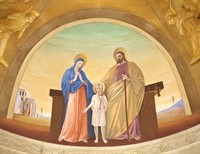
Speaking of mothers, all Catholics – along with all other followers of Jesus Christ – are called to recognize, remember, and celebrate the Virgin Mary for the preordained role that she played in not only birthing and raising, but likewise following, her divine Son, the Lord Jesus Christ. Mary’s close adherence to the Lord’s will is a point that we will revisit imminently, following a reflection on this recurring question: Why do Catholics love, honor, and adore Mary [so much]? Well, in brief, let us frankly say that our very own Mother, whom the Catholic Church has referred to as the “Mother of God” for nearly sixteen hundred years, since the Council of Ephesus in A.D. 431, has even garnered the admiration of National Geographic, who recently named her “world’s most powerful woman” (in December 2015). Yet, as a life-long subscriber to National Geographic magazine, I must still concede that their consideration is hardly [the only reason] why we love her. After all, what did Mary do with her “power”? In short, Mary was strong enough to remain humble and obedient to the Lord, as we are all called to do, and her enduring fortitude and reliable resignation to her own will allowed her to step aside in order to let the Lord’s light shine through, as we are similarly all called to do. Indeed, there was never an instance within the Gospels when Mary offered anything other than an unqualified “yes” as a response to God. If not her, then who is the ideal Christian?
We Catholics love Mary because she always points to the Lord. From the beginning, it was never about her; or, it has only been about her inasmuch as she is the model Christian. Hence, in actuality, Mary’s designation as the “world’s most powerful woman” is simply the latest designation that Mother Mary can add to her reliably impressive “résumé” regarding why we consider her to be the preeminent Christian:
1) Mary was chosen by God to be his mother (let that sink in for a moment while reflecting on the theological profoundness of that reality) (cf. Luke 1:28-30, 42; Matthew 1:18, 20);
2) Mary was given the responsibility of naming the Messiah “Yeshua” (“Jesus” in English), from the Hebrew for “God saves” (cf. Luke 1:31);
3) Mary was so humble that she always deflected attention from herself to God and his will, rather than her own (cf. Luke 1:38, 46-55);
4) Mary was so devoted to the Lord that she was the primary source for what we essentially know about the earliest parts of Jesus’ life (with Joseph probably having died prior to the beginning of Jesus’ public ministry), as alluded to in the Gospels of Luke and Matthew, but especially Luke (cf. Luke 2:19);
5) Mary was so maternally intuitive that she alone was able to persuade Jesus to perform his first miracle (turning water into wine at the wedding at Cana; cf. John 2:1-12);
6) Mary was so courageous that she was the only (*only*; emphatically reiterated) follower of Jesus to never fear, doubt, question, hypothesize, or otherwise hesitate when it came to following him, even being one of the very few of his followers to actually remain with him at the foot of the Cross (at the risk of their own reputations at best and their own lives at worst), watching her own Son being brutally put to death for the sake of the sins of humanity (cf. John 19:25).
For these reasons, and various other related ones, Catholics have had nearly a two-thousand-year-long loving devotion to our Mother Mary: because, in all of salvation history, she has been the only perfectly faithful Christian, and she is now with the Lord for all eternity, continuously drawing us ever closer to her Son, whom she knew so well that she cannot help but invite us to approach the wonders of his divine love, mercy, and redemption. During Women’s History Month and beyond, as we continue to justifiably celebrate women for all that they have done for society broadly and for the kingdom of God in particular, let us remember to honor the Mother of God, and allow her to bring us ever closer to the Lord – for ultimately, mother knows best. Saint Mary of Nazareth, pray for us!
A lifelong resident of the Archdiocese of Washington, Justin has taught theology and Spanish at his alma mater, Bishop McNamara High School in Forestville, Maryland, since 2006.
Justin has written widely on various aspects of the Catholic faith. His books include Called to Teach: Daily Inspiration for Catholic Educators, Called to Pray: Daily Prayers for Catholic Schools, The History of the Catholic Church (a textbook), and Alleluia to Amen: The Prayer Book for Catholic Parishes. Justin is active in pro-life ministries, and serves on the volunteer board of directors for the Forestville Pregnancy Center.
Justin holds an M.A. in Spanish Language and Culture from the Universidad de Salamanca (Spain), an M.A. in International History from Staffordshire University (England), and an M.A. in Theology and Christian Ministry from the Franciscan University of Steubenville. Justin has studied philosophy and theology at Seton Hall University, and Church history from the University of Notre Dame’s Satellite Theological Education Program, for whom he has likewise taught various online courses.
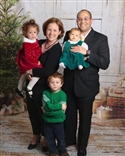
Justin, his wife Bernadette, and their children live in Bowie, Maryland, where they attend Sacred Heart Catholic Church. Justin is a lay member of the Order of Saint Dominic. You can follow him on Twitter (@JustinMcClainOP).