A Sign of Contradiction

Beauty, Sex, and the "Market"


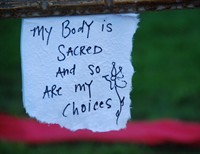
Photo By: Flickr/Neal Sanche
So this week, Sports Illustrated patted itself on the back for featuring a plus size model on its front cover. Ashley Graham is without a doubt, stunning. And yes, those of us on the “curvalicious” end of the spectrum are silently cheering. But. As Baleigh Scott points out in her article in Verily Magazine, “Sports Illustrated is not the supreme judge of who is or is not beautiful. The fact that they seem to think so is rather offensive. The reality is that SI is simply one of many magazines that has, for a long time, used female sexuality to make money, and this issue is no different.”
History is replete with examples indicating that women’s bodies are attractive, and hence “marketable.” Yet now, the new feminists are becoming increasingly aware that with the advent of more sophisticated reproductive technologies, the landscape has become increasingly dangerous.
Feminine beauty is enticing in the most remarkable of ways. It appeals to a deep human longing for meaning and satisfaction, and is thus, saleable. In her lecture, “The Notion of Beauty,” Dr. Pia de Solenni suggests that beauty in and of itself is powerful, and though beauty is beheld in many things, she states that women in particular are associated with beauty. De Solenni suggests that beauty comes in two distinct forms: sensual and spiritual, and she points out, “just as there are two types of beauty, there are two directions of beauty: towards the self or towards the other. Beauty that draws attention to the self can do so in a way that it makes the self an object. At the same time, beauty also has the power to reveal the self as a subject.”
De Solenni applies the language of the Scholastics here, but in essence she suggests that our focus and how we think about ourselves makes all the difference in the world. Is my beauty a manifestation of something dynamic and powerful deep within, a reflection of a timeless beauty outside myself, such as the divine? Is my beauty something worthy of reverence and gentleness? Or am I in some way, turning inward and using my beauty to grasp or manipulate another? Am I permitting my beauty to be “capitalized” on or “used” by another? Certainly we have witnessed the trajectory of both “directions” in culture.
The human preoccupation with beauty is a natural inclination, and yet in our culture, beauty has been de-personalized, reduced to the “sensual” and therefore, confused with sex. We see this in nearly every layer of the media. Sex sells. Morning radio talk shows elicit chuckles with lewd jokes, teens twerk on stage, women’s physiques are revealed regularly in various stages of undress on magazine covers. Pornography and sex trafficking are multi-million dollar businesses; the question is, to what extent are the contraception and abortion industries allowing such markets to exist? Granted, women should have autonomy (at least to a certain extent, which will be the subject of another article for a different day). But, after all, the natural functioning of a woman’s body in a sex-driven market is…well…inconvenient. As long as women continue to be “unencumbered” by the natural working of their reproductive systems, these industries will continue to turn a healthy profit.
The time has come for us to advocate for the re-personalization of beauty, so that the exterior beauty of a woman is valued as a sign of her interior beauty. If we fail to fight the objectification of women in the marketplace, our efforts of advancing a truly humanist feminism will be fruitless.
Recommended Stories
About the Author
Jennifer Edwards studied Biblical Theology at the Immaculate Conception School of Theology, Seton Hall University. She has developed and facilitated a number of programs and materials for the advancement of the New Evangelization, including Bible Studies, Retreats, Family Outreaches, and Children's, Teen and Adult Faith Formation curriculums. She has also managed Music, Liturgical, and Faith Formation programs at various parishes. She is currently a freelance writer, speaker, and pastoral consultant, who is blessed to be able to work from home in the beautiful Catskill Mountains of Upstate New York as she raises four children with her husband of 15 years. For information, please contact Jennifer at: mybroomtree@gmail.com.