Artistic Spirituality and the Divine Mercy Message

St. John of the Cross Poetry Reflections Part 3 Selections from The Spiritual Canticle


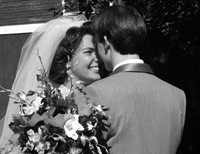
Photo By: Flickr/Bezalel Ben-Chaim
BRIDE
Where have you hidden beloved?
And left me moaning?
You fled like a stag after wounding me;
I went out calling you, and you were gone.
O woods and thickets, planted by the hand of my beloved!
O green meadow, created bright with flowers.
Tell me, has he passed by you?
Pouring out a thousand graces,
He passed these groves in haste;
With his image alone.
Clothed them in beauty.
How do you endure O life,
Not living where You live?
And being brought near death
By the arrows you receive
From that which you conceive of Your beloved.
Extinguish these miseries
Since no one else can stamp them out;
And may my eyes behold You,
Because You are their light,
And I would open them to You alone.
O spring like crystal!
If only, on your silver-over face,
You would suddenly form
The eyes I have desire,
Which I bear sketched deep within my heart.
The Spiritual Canticle is an extensive dialogue between Christ, the Bridegroom, and his bride, the human soul. This dialogue is like that of the Psalms found in Scripture. Like the Psalmist, St. John of the Cross in this poem speaks of both joy and suffering. In the first two stanzas the bride senses Christ abandoning her and searches through his creation looking for him.
The poem speaks of suffering in times of abandonment. St. John wants the reader to understand that the suffering we experience is a share in Christ's suffering on the Cross. Christ can relate to his bride in this way because he suffered and felt abandoned on the Cross. However, just like God the Father at the Crucifixion, Christ is always with his bride even in times of abandonment.
When St. John experiences Christ once again, he speaks of joy. In the bride’s search for her bridegroom, she marvels at the beauty of creation. This beauty assures her that her bridegroom must be near and in the third stanza she recognizes Christ's presence in his creation, which is the fruit of his grace. It is in the smallest, most unexpected places where the bride can find her bridegroom.
Upon meeting Christ again, the bride meditates on the love he shows her through the redemption he won for her. It is through this redemption that her joy and sorrow have meaning. Therefore, the bride is moved to give all the sins and miseries of her soul to Christ for her redemption. She lovingly embraces him in her encounter and expresses her desire to be eternally united with him. The bride patiently waits for Christ to fill her soul with the presence of God to the fullest capacity.
St. John speaks here of the active and passive purification of the soul. From the perspective of the bride, we see a glimpse of the passive purification. She is abandoned by her bridegroom at the beginning of this selection of the poem. She waits for Christ to come fill her soul to its capacity with himself at the end of her portion of the dialogue. In our next reflection, we shall speak more on the active purification when this spiritual dialogue is examined from the perspective of the bridegroom.
Recommended Stories
About the Author
Tim is a 2006 graduate of Franciscan University of Steubenville in Ohio with a BA in Catechetics. Previously he completed studies in Theology and Catholic literature at Our Lady of Corpus Christi Liberal Arts Institute in Corpus Christi, Texas, where he resides. Tim has contributed articles for his diocesan newspaper,The South Texas Catholic and served as Publications Coordinator for print media productions for an apostolate dedicated to spreading the Good News through print, video and audio productions as well as outreach and ministry to budding artists. Tim enjoys writing about the Catholic faith, especially in regards to its beautiful and rich literary patrimony.
More Stories By :