Tu Es Petrus

Lead Me To Calvary
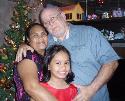

Photo By: Flickr/Ross Dunn
When I was an Evangelical Christian I loved the old hymns of the faith. There is nothing wrong with the newer songs or even the simplistic worship music that are so popular among young church goers (and by now some in their middle age too). But in food terms the newer songs are Big Macs and the older hymns are filet mignon. There’s nothing wrong with the occasional Big Mac, but a steady diet of them is unhealthy.
One of the older hymns that I have always loved is called “Lead Me to Calvary”. I provide this link, not only for our Catholic brethren who may have never heard it, but also for the younger Evangelicals whose church may not use these songs anymore. The first verse and chorus of the song goes:
King of my life I crown Thee now
Thine shall the Glory be
Lest I forget Thy thorn crowned brow
Lead me to Calvary.
Lest I forget Gethsemane
Lest I forget Thine agony
Lest I forget Thine love for me
Lead me to Calvary
In our prayer life as Catholics there are two activities that we have available to us that accomplish this same purpose… but with a deeper meaning due to the realities of Catholic theology. These are The Divine Mercy Chaplet and the Rosary, especially the Scripture Rosary (free MP3 of which are available from Rosary Army). Both make use of the beads of the Rosary and have, at least as far as the Sorrowful Mysteries of the Rosary are concerned, similar purposes.
But First a Word About Repetition
“But when ye pray, use not vain repetitions, as the heathen do: for they think that they shall be heard for their much speaking.” (Matthew 6:7)
This verse is one that many non-Catholics will trot out in opposition to the Rosary. While I try to avoid referring to the Greek or Hebrew in these articles on occasions it is necessary. The two key words in this verse are “vain” and “repetitions” and the words from which they were translated. In the Textus Receptus (the manuscript from which the KJV and several others were made) the word translated “repetition” is “battologeo¯” and it really refers to a babbling stream of nonsensical words. “Vain” means to be empty or without meaning or purpose. In truth, this verse comes closer to prohibiting speaking tongues as practiced in many Evangelical Christian denominations than to praying the Divine Mercy Chaplet or the Rosary. That’s because, unlike tongues, praying the Divine Mercy or Rosary have a purpose… as we will see shortly.
Beyond this, a simple reading of the New Testament shows that repetition was used many times by both the Lord Jesus Christ and also the writers themselves. The Lord used it many times like in the Sermon on the Mount. In the part we call “The Beatitudes” the Lord repeatedly says, “Blessed are…”. In Revelation 2 and 3 He repeatedly uses the term “unto the angel of the Church in…” and “Let he who has ears hear what the Spirit says to the Churches”. Repetition with purpose is quite scriptural…and both the Divine Mercy and the Rosary have purpose.
The Divine Mercy Chaplet or Devotion
In the early 20th Century there lived in Poland a young woman named Faustina Kowalska who was called to consecrated service to God as a nun. Today we know her as Saint Faustina, of course, and it was through her that God gave us the Chaplet. I’ve placed a link to her story so that you might learn more about this dedicated daughter of Christ and His Mother. My purpose here is not so much a history lesson as to show the purpose of the Chaplet.
There is an optional opening prayer that begins the Chaplet:
You expired, Jesus, but the source of life gushed forth for souls,
and the ocean of mercy opened up for the whole world.
O Fount of Life, unfathomable Divine Mercy,
envelop the whole world and empty Yourself out upon us.
(Repeat 3 times) O Blood and Water, which gushed forth from the Heart of Jesus as a fountain of Mercy for us, I trust in You!
Like the Rosary the Chaplet then starts off with The Apostles’ Creed, an Our Father and a Hail Mary…although not in the same order. What follows next clear shows the purpose and focus of the Chaplet. On the large bead at the beginning of each of the five Decades the priest or devotion leader says:
Eternal Father
I offer You
the Body, Blood, Soul and Divinity
of Your dearly beloved Son
our Lord Jesus Christ
In atonement for our sins
and those of the whole world.
The whole purpose of the Divine Mercy Chaplet is draw our attention to Calvary just like the Mass does. This is where many non-Catholics have it wrong. They think that in the Mass we seek to draw Christ down from Heaven and crucify Him anew. But the sacrifice of the Mass is not another sacrifice but a continuation of the “once for all” death on the Cross. It doesn’t seek to bring the Lord down but rather to transport us to Calvary, to the foot of the Cross. In fact, those words in this part of the Chaplet should be familiar to every Catholic: “the Body, Blood, Soul and Divinity” …exactly what is offered in the Eucharist. Our focus in all that follows should be on Calvary and only on Calvary.
On each of the smaller beads we pray the following repetitions:
For the sake of His Sorrowful Passion
have mercy on us and on the whole world.
As in the Rosary the repetitions help us to maintain our focus where it belongs and not on the people and distractions around us. They are hardly “vain” or “empty” repetitions for they have absolute purpose. Again, they lead us to Calvary and keep our attention there.
There is then a concluding prayer that is repeated 3 time: “Holy God, Holy Mighty One, Holy Immortal One, have mercy on us and on the whole world.” (Note: there is also an optional closing prayer that may be used here.)
The Chaplet may either be spoken or sung. There is a broadcast of the Chaplet each day on EWTN and that one is sung. My personal preference is the singing one and I find myself walking around all day singing, “For the sake…” etc. Here is a link to the video on YouTube.
I pray that, in this Year of Mercy, the Divine Mercy Chaplet will become a part of your daily prayer life and you will allow it to bring you to Calvary.
Recommended Stories
About the Author
I was a Cradle Catholic from the time that I was born through my teen years. I slowly moved away from the Church and as a young adult I became an Evangelical Christian. I spent nearly 40 years in various types of ministry as a teacher, preacher, pastor or evangelist. But my main area of expertise was Apologetics…what we believe and why we believe it. I am a graduate of Central Christian College of the Bible in Moberly, MO with a Bachelor of Science in Biblical Studies. In November of 2014 I retired to the Philippines, where my wife Rose is from. We live in the mountains of Negros Oriental in the small town of Canlaon City with our many brothers and sisters, nephews and nieces (to whom I am “Daddy Mike”).
Nine years ago I reverted to the Catholic Church. I have try to write articles which inform, instruct and equip our Catholic brothers and sisters while avoiding using jargon. I have also sought to defend the Faith with our several Protestant visitors in as kind a way as possible
My archive here, which now contains nearly 80 articles, is located at http://www.catholic365.com/author/mike-bugal/
I may also be contacted via email at mbugal@yahoo.com