The Spirit Gives Life

The Open Wound: Why Unity Matters.


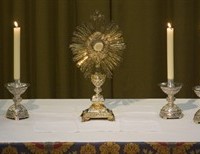
Photo By: Flickr/Catholic Church England and Wales
On January 25th, Pope Francis joined leadership from the Orthodox and Anglican churches at a prayer service concluding the Week of Prayer for Christian Unity. The Holy Father stated,
“We ask most of all for forgiveness for the sin of our divisions, which are an open wound on the body of Christ.”
The quest for Christian unity matters. Yet most Christians today fail to recognize its significance. Typically, the issue only comes across the radar screen when conflict arises and we are sharpening our own positions. We can therefore be thankful that, since establishing the yearly prayer event, the World Council of Churches forces the topic briefly to the forefront for consideration.
Why does the cause of unity matter, and why is it pertinent to the 21st century Church?
The reasons are many. I’ll explore three.
Unity matters to God and to His plan. Jesus prayed for unity among believers. We read in John 17:21
“that all of them may be one, Father, just as you are in me and I am in you. May they also be in us so that the world may believe that you have sent me.”
If Jesus wants us to be one in Him, shouldn’t we at least desire this unity, for His sake? Paul writes in his letter to the Corinthians,
I beg you, brothers, in the name of our Lord Jesus Christ, to agree in what you say. Let there be no factions, rather, be united in mind and judgment. (1 Cor. 1:10)
And he reiterates the problem later in 1 Cor. 3:4 when he says,
“When someone says, ‘I belong to Paul,’ and someone else, ‘I belong to Apollos,’ is it not clear that you are still at the human level?”
Paul likens us to babies who still need to be nursed at the breast. (1 Cor. 3:2-3) Toddlers in the spiritual life, we fuss and fight for our own way. Though we have been baptized into Christ Jesus, we start looking like everybody else.
The Body of Christ is hampered because it is sick. Pope Francis named the disunity of Christians as an “open wound.” Open wounds that go untreated invite infection and disease.Consider this: since 1517, Christians have initiated 41,000 different denominations. Paul wrote to the Corinthians,
“I have been informed my brothers, by certain members of Chloe’s household that you are quarreling among yourselves. This is what I mean: One of you will say, ‘I belong to Paul,’ another, ‘I belong to Apollos,’ still another, ‘Cephas has my allegiance,’ and the fourth, ‘ I belong to Christ’. Has Christ, then been divided into parts?” (1 Cor. 1:12-13)
Yes. Christ has been divided into parts. This was never God’s plan.
Only God, by His Spirit, can create authentic unity among us. But first, we must desire to change and repent of our own contentiousness and petty resentments.
At that same prayer service, Pope Francis gave us an example.
“As bishop of Rome and pastor of the Catholic Church, I want to beg for mercy and forgiveness for un-Gospel-like behavior on the part of Catholics against Christians of other churches,” the Pope said.
“At the same time, I ask all my Catholic brothers and sisters to forgive if, today or in the past, they were hurt by other Christians,” he said. “We cannot erase what happened, but we do not want to allow the burden of past faults to continue to poison our relationships.”
A weak, frail body lacks vitality. Energy is usurped and every action is more labored because of the existing injury. If we wish to effectively proclaim the Gospel, we also need to avail ourselves of healing. We must seek to be reconciled so that our wound will heal.
Disunity nullifies the validity of the Gospel. The Church exists to evangelize because “God so loved the world.” How is it that we serve the Prince of Peace but cannot find unity among ourselves? We say that God is love (and He is). What are non-Christians to make of our proliferating denominations (and the infighting that exists among us)? While the grace and power of God trump all human weakness (Deo Gracias!), imagine what could be achieved if our witness were unified?
Jesus has already prophesied the answer:
&ldquo I in them and you in me—so that they may be brought to complete unity. Then the world will know that you sent me and have loved them even as you have loved me.” (Jn. 17:23)
Our unity matters because the success of our mission, to proclaim His message to the world, matters. May the Holy Spirit inspire us to begin praying from our hearts the words of Jesus,
“I in them and you in me—so that we may be brought to complete unity.”
Recommended Stories
About the Author
Gwen is a displaced Canuck, a cradle Catholic of good Irish stock, and a student of theology who somehow ended up becoming a social worker. She left all that glamour behind to marry a Southern boy and home school their two children. Involved in youth ministry since college, Gwen is passionate about renewal in the Catholic Church by the power of the Holy Spirit, and the clear, uncompromising proclamation of the Good News to Catholics and non-Catholics alike. A newbie blogger, you can check out her latest post at: fireontheearth.net
More Stories By :