Sponsored

Catholic365 is sponsored by
Road to Purity



I write as a lifelong Catholic. For 36 of my now 67 years, I served as a Faith Formation Director and a Pastoral Associate (a lay ecclesial minister) in 3 New England Dioceses – Boston, Worcester and Manchester. I am a cradle Catholic, as the saying goes, and if life hadn’t thrown me an enormous curveball at the age of 11, when I was sexually assaulted by a Religious Order priest serving in the Archdiocese of Boston, I might have been ordained and served in ministry in another role. I stayed a practicing Catholic and pursued theological studies never blaming the institutional church for the sins of too many, and eventually moved forward with my life – for the most part!
Today’s lack of civility when it comes to political discourse has reached an uncivilized level. Social media and the explosion of a variety of news outlets, reliable and otherwise, contribute to the animus between political parties, between members of the same party, between neighbors, between family members, and between congregants everywhere. I can state unequivocally that we have been here before as a nation back to its origins. Has it always been this ugly? Have we always been this cruel toward the “others” among us? Have we always flatly rejected opposing views? Might the Catholic faith, in fact all faiths, provide some framework or blueprint to teach us to see, hear, listen, serve and love God AND others?
A foundational element of Catholicism is the belief that we exist to serve God and others. The church exists to evangelize and this mandate is an evangelizing moment for us. Jesus never said to love God OR others. His commandment was clear – “love God and others.” As people of faith, we gather around a table to share a communal meal. We gather in our worship sites to hear the Word of God proclaimed. We sing our Psalms and Hymns filled with the language of a loving Creator who has blessed all creation and not just certain aspects of it. The very people we gather with each week have opposing views from us on every conceivable topic, yet we gather together bound by the commandment to “love and to serve God and others.”
When we gather, we gather as Democrats, Republicans and Independents. When we gather, we gather as pro-lifers, pro-birthers, and pro-choicers. When we gather, we gather as male and female, straight, gay, lesbian, and more. When we gather, we gather as supporters of sacramental marriages and blessings for same sex unions. When we gather, we gather as married, divorced, re-married, annulled, and non-annulled individuals. When we gather, we are a rainbow of followers.
On March 4, 1861, Abraham Lincoln, during his first inaugural address, invited a divided nation to seek out, to call upon, our “better angels of our nature” to bring about a necessary healing for the entire nation. He called us then, like others have done before Lincoln and after him, to grow so that we might become that more perfect nation. We have arrived at another moment in history where we must beseech these better angels once again to hear our collective needs. I’m not suggesting that we must unabashedly embrace opposing views or conspiracy theories. Yet, we must embrace others as created in the image and likeness of God – Imago Dei.
Our common religious texts reveal to us the trials and tribulations of the people of Scripture who faced rivalries between family members, neighbors, tribes, and nations. Like us, they endured hardships such as wars, conquests of lands, the trauma of being exiled to foreign lands, and the elimination of people through barbaric means. There has always been an unwelcoming of the strangers, or the opposing views unaligned with those in political and religious power. How might Catholicism, and all faiths today, contribute to a sense of civility to heal states and a nation crying out in need?
We might start with this Imago Dei concept. We are today far from seeing all of human creation as made in the image and likeness of God. What a great loss for a society. What a loss for each human encounter. We dismiss opposition, often, as a threat to our values. None of us have all the answers to the plethora of life’s issues. Collectively, we might actually find solutions to these greatest issues. Unless we move forward to see, hear, and listen to others, what remains is “us versus them.”
Pope Francis’ “Fratelli Tutti” (on Fraternity and Social Friendship, October 2020), implored us all to find better ways to be political and be in solidarity with all of Creation – not just with those with whom we are aligned. Political conspiracies, sound bites, television ratings, large financial contributions, venom and hatred all contribute to the uncivilized behavior. We, as a nation, have hit the collective national pause button on civil discourse preventing us from flourishing as a nation. It will take years, perhaps decades and generations, to re-focus our purpose and attention to be that more perfect nation.
Catholics, and people of all faiths, need to model what is possible and what it means to be a civilized and prosperous nation. The disagreements can exist, but the manner in which they can be addressed needs our collective attention as we seek those better angels. Our preachers, while not endorsing a particular candidate, can endorse, promote and preach about the common good of all and the mandate to be in solidarity with all of creation – love God AND others! We must model it in our local faith communities.
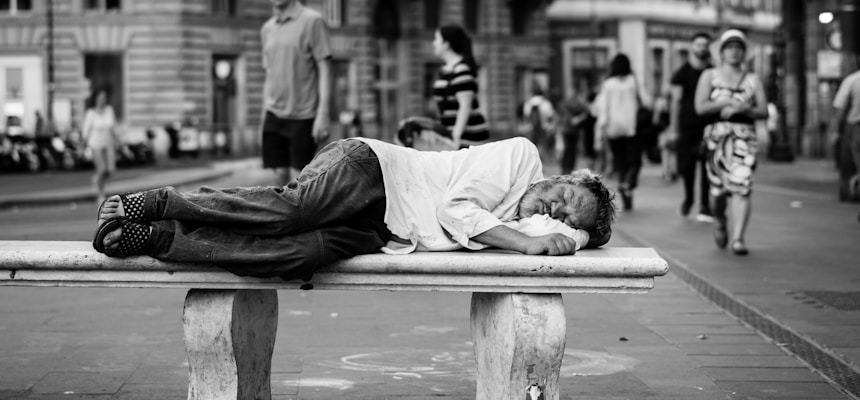
Most organized religions already have the necessary structures in place, some in name only, to promote social justice and the many issues that fall under its umbrella. Parish mission statements, while worded nicely, often fall short of defining how we might better serve the People of God. Examine your faith community’s mission statement. Does it promote or define who we are called to be, what to do, and how to do it, in this created world? We must go beyond Sock Drives in the Winter. We must go beyond Turkey and Ham Dinners for the needy families in our communities at Easter and Thanksgiving. We must do more than collections for Back-To-School supplies in August. Do we see the faces of those lacking socks and Winter gloves? Do we see the faces in need of seasonal meals. We must go deeper to adjust and even change our ideas about the poor and the needy among us. We blindly donate food and money to causes without ever seeing the faces of the impoverished. While this is an attempt at Social Justice, and an important effort, that puts a band-aid on cuts, we need better ways to handle the hemorrhages of this world. Seeing and knowing those who are also made in the image and likeness of God, who lack basic essentials and resources, can change hearts, mindsets, and perhaps government funding.
As Catholics, we are required to have a functioning Parish Pastoral Finance Council (Canon 537 – universal church law). I’ve attended too many of these PPFC meetings where reports are made, financial needs addressed, proposals made to increase giving or cut costs, and very little “outside the box” ideas are surfaced, or even encouraged, to think and be different. A shift in our thinking, or brainstorming new approaches to parish spending, aligned with a new and purposeful mission statement, might generate excitement and a shift in living out the Gospel. Generic mission statements no longer serve the People of God. What are your local needs? Who is not being served? Who are, and where are, the disenfranchised? Where can we grow in service and be more in solidarity with others. Start thinking re-write the mission statement!
Easter and Christmas Flower donations are beautiful gestures and make our houses of worship look beautiful and can enhance our services. What if we had a mindset to take 50% of the financial donations to address a true local need? What if we took 75% of the funding and contributed to a regional need? We would need parishioners to know well in advance how their donations at Easter and Christmas would be used. You might get people to think in new ways about local and regional social ills. We might get parishioners to discover what it means to live in solidarity with others in need. We can change mindsets, people’s hearts, their practices, the parish mission, to truly see that the suffering, the alienated, the disenfranchised, and others, are made in that image and likeness of God, and that we are called to be the hands, feet, face, and voice of God for all.
The communal nature of our faith communities, Eucharistic and non-Eucharistic ones alike, exist to serve all people. We exist to evangelize – not just those contained inside our churches, but more importantly, those outside our churches. James Joyce, the Irish author, poet, and a man influenced and conflicted by his Jesuit education, once defined Catholicism as “here comes everybody.” We can take that to mean all are welcome and we should be making an effort to let everyone know that they are indeed welcome – not just those who meet a certain criterion. Catholicism, while being true to her history and teachings, her doctrines and dogma, her values and precepts, must also be contributing to the civil discourse needed at this time.
John McCain, a political legend of recent times, was a civilized politician who courageously survived being a prisoner of war, who battled cancer, and fought the political enemies he encountered along his life’s journey. In 2008, John McCain was forced to defend his political opponent, then Senator Barack Obama, in a Town Hall debate in Minnesota when a woman began to disparage Obama’s character. McCain interrupted the individual to proclaim that the Senator from Illinois was “a decent family man.” Instead of allowing the false narrative to continue, McCain stopped the slander, changed the tone of the night, and perhaps lost a few votes because of his civility. He could have enhanced his own political path that night but he chose to be civil. He saw his opponent as an equal – made in the image and likeness of God, too. Have we had other courageous politicians since 2008? I’m certain we have, but this is a stellar example!
My premise that Catholicism can play a significant role to bring about healing for a wounded nation might sound simplistic and filled with folly. We Catholics have our own in-house issues we battle daily, it seems, and issues to face, and theologies to grow. At her best, partnered with other faith systems, Catholicism is an invitation to live in solidarity with others – even those we’ve unfriended, blocked, ignore, no longer speak to, etc. We can, in time, eliminate the animus. We’re invited again and again to embrace the one command from Jesus – to love God AND others!
I'm a retired lay ecclesial minister having served in three New England Dioceses as a Faith Formation Director for Children and Youth, and their families; most recently, I served the last 20 years of my career as a Pastoral Associate. In that role, I was fortunate to be engaged with parish and diocesan leadership to assist with parish mergers - to ease the transition at times of a closure but to highlight the creation of something new. I've been engaged with families at the loss of a loved one assisting with wake services, funeral plans and commitals - often presiding at aspects of the ritual. These are just some of the highlights and experiences of a life in ministry.



