My Autonomy is Better than Yours

Malthus' Twisted Logic and The Denial of Womanhood


Photo By: Flickr/Blondinrikard Fröberg
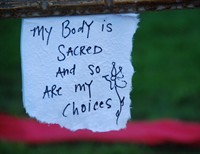
This week, the CDC issued a recommendation that women of childbearing age should stop drinking alcohol unless they’re contracepting. Too much alcohol consumption is bad for a developing fetus. Of course. Duh. But what is riling the feathers of women from every political persuation is the pile of twisted underlying assumptions. Is this yet another manifestation of the “blame the woman” mentality? Perhaps. And it’s not the first time it has been government sanctioned.
The past century has experienced sweeping economic, technological, and social changes that have deeply affected humanity. In the context of these realities, women have struggled for respect, equality, and autonomy. These are noble goals indeed for we “have been created in the image and likeness” of the divine, and we are most worthy of acquiring them. Our feminist forbears fought long and hard to achieve the rights we enjoy today-- to influence politics and direct the course of legislation, to own property, to forge our own destiny through increased access to education, and to hold positions of leadership in the workplace.
The old Virginia Slims ads from the 1980s made the claim, “You’ve come a long way baby.” We have, indeed, come a long way and yet we still have a long way to go. There remain obstacles that prevent women from being acknowledged and respected for our own special dignity. We remain confused about our identity due, in part, to several factors, not the least of which is a reductionist view of what it means to be woman.
The Neo-Malthusian movement was inspired by Robert Malthus, a 19th century economist who wrote “Essay’s on Population.” Though his theories have since been widely discredited, Malthus paved the way for the population mania of the early to mid 20th century. His ideas, which influenced Planned Parenthood founder Margaret Sanger, would come to embodya rather twisted logic. The late 1800s and early 1900s witnessed a vast shift in the societal landscape; the Industrial Revolution, the First and Second World wars, the experience of poverty, corruption, and violence took their toll. The neo-Malthusian movement would develop its own solution to these “societal problems.” People cause these problems, and since people are born from women’s bodies, it would be helpful if women’s bodies could be “controlled.”
In her essay, “The Gift of Female Fertility: Church Teaching on Contraception”, writer and theologian Dr. Angela Franks asks us to carefully evaluate the premises upon which these neo-Malthusian theories lie. Arguing that the world’s social problems have been placed squarely onto the shoulders of women, she writes: “The contraceptive mindset cannot avoid scapegoating women’s bodies as the cause of both personal and societal problems. By contrast, the Church, with critical and prophetic clarity, points out that selfish desire, not the female body, is the source of our problems. It is only this latter approach that presents viable ways of actually meeting the real challenge of female oppression.” (Bachiochi, 99)
Why is the natural functioning of our body something that must be “fixed” and controlled (and in the case of abortion, through violent means) for the “betterment” of society? There is something inherently wrong (and inherently misogynistic) with that picture. Perhaps what needs “fixing” are our economic structures, our social values, our understanding of human dignity, and our attitudes about what it means to be fully humane in light of rampant individualism, materialism, and consumerism.
Recommended Stories
About the Author
Jennifer Edwards studied Biblical Theology at the Immaculate Conception School of Theology, Seton Hall University. She has developed and facilitated a number of programs and materials for the advancement of the New Evangelization, including Bible Studies, Retreats, Family Outreaches, and Children's, Teen and Adult Faith Formation curriculums. She has also managed Music, Liturgical, and Faith Formation programs at various parishes. She is currently a freelance writer, speaker, and pastoral consultant, who is blessed to be able to work from home in the beautiful Catskill Mountains of Upstate New York as she raises four children with her husband of 15 years. For information, please contact Jennifer at: mybroomtree@gmail.com.