New Reflections on the Stations

No Down Time for Filipino Catholics

by Mike Bugal
As I write this we have just celebrated the Feast of the Epiphany and the official end of the Christmas season on January 6th. For most non-Catholics, and even for many Catholics as well, there is a big down time between Christmas and Easter when there are no big holidays. But that’s not the case here in the Philippines.
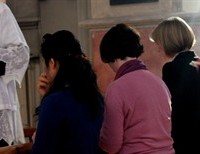
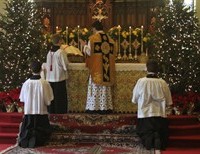
Today began the Novena leading up to Sinulog, which is the Feast of Santo Niño de Cebu. The picture above shows the Basilica of Santo Niño as Mass was offered at 5 AM local time. In other Churches and Basilicas around the country and especially here in the central part of the country (called the Visayas) similar Masses took place. After Sinulog is over there is a short pause and then it’s Ash Wednesday and we’re in the Lenten season. Here in our Parish just a week before Easter is the Feast of our patron Saint, San Jose the earthly step father of the Lord Jesus and husband of Mama Mary. Let’s look at the calendar for Filipino Catholics.
Sinulog
When Magellan came to the Philippines in 1521 he landed on Cebu Island where he encountered the local chieftain Rajah Humabon and his wife, Humaway, and convinced them to pledge their allegiance to Spain. They were later baptized into the Church and took the names Carlos and Juana. Magellan presented them with a small image of the Baby Jesus (it’s about a foot and a half tall) which has been preserved and honored ever since. It is in the Basilica on a glass case that protects it from the climate and, of course, vandals.
The date of the Fiesta was set based on the recovery of the image. About 45 years after Magellan’s death at the hands of Lapu-Lapu (my brother in law’s name, by the way) there was a fire in the house where it was kept and it was feared lost, but a Spanish explorer Juan Camus found the image in a pine box in the house perfectly safe. He brought the image out for procession, established a fiesta to honor its recovery and that is what is celebrated today.
The procession that is held on Sinulog today, as is the case with all Fiestas here, is a very colorful affair. People from different barangay (pronounced like “baron guy”) and even other cities dress in colorful costume and march in the procession. Each unit is led by their own band playing simple instruments of horns, drums and xylophone.
Ash Wednesday and Lent
This, of course, is common to Catholics everywhere. It’s based on the Old Testament concept of repenting “wearing sackcloth and ashes” such as you read in Esther 4:1. As most Catholics know, the palms from last Palm Sunday are collected and burned and it’s those that are placed on our forehead in the Sign of the Cross. When the priest places the ashes he may say something along the lines of reminding us that we came from ashes and one day we shall all return to ashes. He may also say “Repent and believe the Gospel”.
Ash Wednesday (February 10, 2016) begins 40 days (or 46 if the vow and additional practices are kept on Sunday, which is not part of Lent.) of repentance and preparing our hearts for the central event of Christianity and especially Catholicism: the death, burial and Resurrection of the Lord Jesus Christ. It’s normal for Catholics to “give up something for Lent” …and it should be something you actually like since it’s supposed to be a “sacrifice”. It’s no sacrifice for me to give up beets for Lent. I hate them! Coffee? Now that’s another story.
But beyond this “sacrifice” we are also supposed to take on some addition spiritual practice which we don’t usually do. For some it’s daily Mass and for others Scripture reading or daily Rosary. Since Scripture study is central to my life all the time my choice is either the Rosary or the Divine Mercy Chaplet.
Ash Wednesday and every Friday during Lent are meatless for those who don’t practice this all the time. Fridays are also the Stations of the Cross. Here we process from the Church and pass through the streets of town where each station is set up at houses of folks from our Parish…singing as we go. This is done at 4 AM all the way to Good Friday. With the exception of Good Friday the Stations are optional (hence, lightly attended) so it counts as an additional practice for those of us who do it. On Good Friday the procession stretches for a couple miles.
Pasayaw
One week before Easter this year is March 19th, which is the Feast of Saint Joseph, or San Jose, who is the Patron Saint of our Parish. That is the time of our Fiesta called “Pasayaw” and it’s like a miniature Sinulog with procession, costumes, music and, of course, food. As with most celebrations (birthdays, weddings, anniversary, funerals, or “It’s Saturday”) here Baboy must die!! Baboy is the word for pig…otherwise known as Lechon… and it is central to any Filipino celebration.
I’ll be doing a whole article on Easter and especially a series on the Resurrection in February and March, so I’ll address those at that time. But as you can see, for Catholics here in the Philippines, there really is no such thing as “down time” without spiritual celebration and dedication of one type or another. It’s part of the reason that I love being retired in a place like this where the Church is still important and impactful in the lives of the people.
Recommended Stories
About the Author
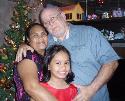
I was a Cradle Catholic from the time that I was born through my teen years. I slowly moved away from the Church and as a young adult I became an Evangelical Christian. I spent nearly 40 years in various types of ministry as a teacher, preacher, pastor or evangelist. But my main area of expertise was Apologetics…what we believe and why we believe it. I am a graduate of Central Christian College of the Bible in Moberly, MO with a Bachelor of Science in Biblical Studies. In November of 2014 I retired to the Philippines, where my wife Rose is from. We live in the mountains of Negros Oriental in the small town of Canlaon City with our many brothers and sisters, nephews and nieces (to whom I am “Daddy Mike”).
Nine years ago I reverted to the Catholic Church. I have try to write articles which inform, instruct and equip our Catholic brothers and sisters while avoiding using jargon. I have also sought to defend the Faith with our several Protestant visitors in as kind a way as possible
My archive here, which now contains nearly 80 articles, is located at http://www.catholic365.com/author/mike-bugal/
I may also be contacted via email at mbugal@yahoo.com