A Stranger on the Road
Sponsored

Catholic365 is sponsored by
Road to Purity


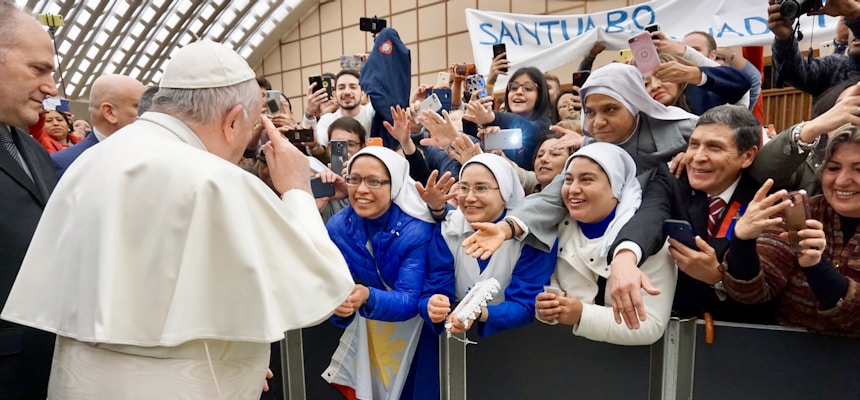
In my previous article, I reviewed the Introduction and the beginning of Chapter One of this important Encyclical Letter titled – Fratelli Tutti. This article will continue with a review of Chapter One titled – Dark Clouds Over a Closed World.
This important letter from Pope Francis was distributed in October 2020. The world was seven months in to the Covid19 pandemic when Pope Francis wrote this letter. As I read the document, I recognized its wisdom. I am also amazed at the details noted on the evil in our world and what needs to be corrected. Pope Francis does not leave anything out. It is important to remember that Pope Francis is speaking to the entire Christian world. Even those who are not Catholic can learn from the wisdom in this document because it focuses on our responsibility as followers of Christ. As I read the words of Pope Francis in this letter, I think of my country, my family, and my personal interaction with others. There is a lot to learn from this letter.
One of the key points noted in Chapter One is the importance of history. History, as noted in this document, keeps us rooted in who we are as people of God and as citizens of the land we live in. Without history, we become shallow and easily swayed. As I consider the importance of history as noted in this document, I realize that my history is layered from different perspectives. I am a woman and the history of women in my country is quite extensive. I think of the first women who came to this country and all that they experienced. I also consider the history of women on a global stage. In both instances, women have made sacrifices and achieved greatness. I have been educated and can sit at my computer and write freely because of all their hard work. This inspires me to look ahead and see what I can leave for the future women of the world.
My history also includes immigrants who came to this country in the early 1900s. Family members traveled from Sicily and Puerto Rico. My grandparents met in New York and our family began. One of my elementary school assignments was to interview my grandparents about the “old country” and what it was like to come to America. It was a wonderful exercise, and I learned a lot about their expectations, fears, struggles, and successes. In Fratelli Tutti, Pope Francis talks about the importance of respect for all people, including the elderly. The elderly provide a living history. We must take the time to listen to their stories. We lose when we disregard people because of poverty, disability, or old age.
What is noted clearly as you read Fratelli Tutti is that there is a snowball effect that takes place when people are disrespected and not listened to. One way to disrespect people is to ignore history. From this void evolves slavery, trafficking, criminal networks, and the building of walls on a personal, national, and global stage. I particularly admire Pope Francis’ ability to listen to all people. In this letter, he shares his conversation with an Egyptian Islamic scholar. Although this reference in the letter startled me at first, I came to realize that evangelization is not possible if we do not make ourselves available through conversation with others. In many ways I am now inspired to be more attentive and willing to listen despite notable differences.
As Pope Francis addresses migrants in this first Chapter, I think of my grandparents who came to this country seeking better opportunities for themselves and their families. When they arrived in New York, there was a process they had to follow to be admitted to the United States and to become citizens. The “streets of gold” in America was a phrase used in the days my grandparents arrived. In my elementary school interview, one of the questions addressed this phrase. When I asked the question regarding the “streets of gold” each of them laughed. They really did not know what to expect when they arrived, but they knew the “streets of gold” was nothing more than an illusion. However, many migrants, as noted in this Encyclical Letter, “are attracted by Western culture, sometimes with unrealistic expectations that expose them to grave disappointments” and unscrupulous people that result in “violence, trafficking, psychological and physical abuse and untold sufferings on their journey.” As I read what Pope Francis writes in this letter about migrants, I can clearly see the importance of each nation taking responsibility not only for its citizens, but for migrants as well. One form of responsibility is to ensure a clear process is in place and followed by all those entering the country. When a country waves this responsibility, the entire population, both citizens and migrants, is negatively affected.
In this letter, Pope Francis also addresses “the illusion of communication” as it relates to the digital relationships we establish on social media. This is not what Pope Francis would consider healthy relationships. It is an “appearance of sociability” but “they do not build community.” Instead, he says, “they tend to disguise and expand the very individualism that finds expression in xenophobia and in contempt for the vulnerable.” The goal is to build bridges and digital connectivity is not capable of uniting humanity. The ability to sit down and listen to one another is necessary to build bridges for the survival of humanity.
This first chapter of Fratelli Tutti ends with hope. The worldwide Covid19 pandemic, according to this Encyclical Letter, “revised a sense that we are a global community, all in the same boat.” It is the hope of Pope Francis that we learn from the experience of this tragic event. He also encourages us to acknowledge the importance of working together as the human family of God to save one another in these types of situations. Pope Francis recognizes the skill and courage of doctors, nurses, pharmacists, cleaning personnel, caretakers, and others who recognized the importance of working together during the Covid pandemic for the good of humanity. Hope, according to Pope Francis, is bold and “speaks to us of a thirst, an aspiration, a longing for a life of fulfillment, a desire to achieve great things … like truth, goodness and beauty, justice and love.”
I am looking forward to reading Chapter Two of this document and will share its summary and my thoughts in my next article.
Click here to read the 95-page document.
Denise Mercado is an award-winning author, blogger, and solo traveler. Denise was born and raised in Brooklyn, New York. As a military spouse, she lived in many cities throughout the USA and abroad. Denise’s book – Mary’s Life Journey & Her Amazing Yes! – was recognized in the 2023 Catholic Media Association Book Awards and the 2023 Independent Author Network Awards. This book focuses on the life of the Blessed Mother and the mysteries of ALL the Rosaries. Her most recent book titled – The Way of Light: The Story Behind the Stations of the Resurrection – received the Nihil Obstat in 2023 by the Diocese of Saint Petersburg, Florida. Denise explores the beauty and history of the Catholic Church by visiting cathedrals, basilicas, monasteries, and shrines and writing about her findings in her Catholic Travel Blog. For more information about Denise’s books, blogs, and travel plans, visit her website at www.denisemercado.com.