What does the Eastern Catholic Church believe?

What is the Jesus Prayer?

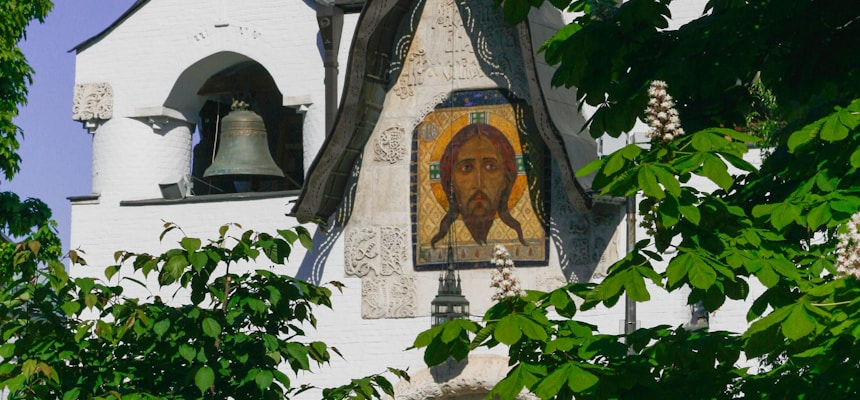
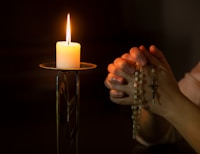
Photo by Anna Zakharova on Unsplash
In a previous article I brought up the reality, emphasized in the Catechism, that the Rosary developed in the Medieval period as a substitute for the Liturgy of the Hours (cf. CCC, 2678).
For lay people who weren’t able to go to the local monastery to attend the hours, and for illiterate religious who weren’t able to read the liturgical books, the Rosary offered a method for staying connected to the Church’s rhythms of liturgical prayer.
A similar development occurred in the Byzantine East, where the Jesus Prayer became the preferred “substitute” for participation in the Divine Office.
What is the Jesus Prayer?
That’s what the rest of this article is going to explore!
What is the Jesus Prayer?
Although there are many versions of the Jesus Prayer, the most well-known version in the English-speaking world is:
Lord Jesus Christ, Son of God, have mercy on me a sinner.
There are other versions of the Jesus Prayer, some of them shorter, some longer. The key feature of each of them is the centrality of, and emphasis on, the Holy Name of Jesus.
Lord Jesus Christ, have mercy on me.
Lord Jesus Christ, Son of God, have mercy on me.
Lord Jesus Christ, Son of the living God, have mercy on me.
Lord Jesus Christ, Son of God, through the intercession of the Theotokos, have mercy on me a sinner.
Some devotees of the Jesus Prayer, feeling that saying “have mercy on me” is too self-centered, prefer to say “have mercy on us.” Others, following the practice of the Desert Fathers that viewed oneself as the only sinner, pray “have mercy on me the sinner.”
As you can see, there is a great deal of freedom in choosing a formula of the Jesus Prayer. The point is to choose one that speaks to your heart, then stick with it. In his wonderful little book, The Jesus Prayer, Fr. Lev Gilet (later known simply as “A Monk of the Eastern Church”) tells us that the goal of the Jesus Prayer is to so inflame the heart with love for Christ that the prayer itself becomes nothing more (or less) than a loving repetition of the Holy Name, “Jesus.”
Scriptural Origins of the Jesus Prayer
The words of the Jesus Prayer, just like the Hail Mary, have their origin in the Scriptures themselves.
St. Paul tells us that no one can call Jesus “Lord” except by the power of the Holy Spirit:
Therefore, I tell you that nobody speaking by the spirit of God says, “Jesus be accursed.” And no one can say, “Jesus is Lord,” except by the Holy Spirit. (1 Cor. 12:3)
Thus the Jesus Prayer opens with a confession of faith in Jesus as Lord and Savior: Lord Jesus Christ – “Christ” being the Greek word for “Messiah.”
The phrase “Son of God” is also a confession of faith and is closely connected to Peter’s words, “You are the Messiah (Christ), the Son of living God” (Mt. 16:16). But it also hearkens to the desperate plea of the blind man, “Jesus, Son of David, have pity on me” (Lk 18:38). Here we have the connection between our confession of faith and our need for salvation.
Finally, the words “have mercy on me a sinner” recall the story of the tax collector and the Pharisee recounted in Luke 18:9-14. In contrast to the Pharisee’s self-righteousness and self-aggrandizement, the tax collector acknowledges his sinfulness and his need for God’s mercy. Beating his breast and refusing to lift his eyes, the tax collector prays the simple yet heartfelt words, “O God, be merciful to me a sinner.”
In these four passages we see the progression of the Jesus Prayer from confession of faith to acknowledgement of our dependence on God’s love and mercy.
This is just a small sample of the connection between the Jesus Prayer and the words of the Scriptures. You could comb through the entire Old and New Testaments and find myriad other passages that shed further light on the Jesus Prayer.
How was this short but theologically dense prayer stitched together from so many biblical passages? We find the answer in the Desert of the early Church Fathers.
Patristic Origins of the Jesus Prayer
The early days of monasticism had very little by way of organization – either organization of life or organization of prayer.
Most “monastic communities” in the early Church period were loosely formed communities of hermits gathered around an “elder,” who was experienced in the heremitic life and who could guide the younger hermits through the ups and downs of this very difficult lifestyle.
To help these younger monk-hermits combat “thoughts” and “the passions,” the elder would frequently assign them a short passage from the Scriptures to recite a certain number of times daily. The most commonly assigned passage that we know of is, “O God, come to my assistance. Lord, hasten to help me.”
The practice of reciting short passages from Scripture to combat temptations became a central feature of Desert spirituality. Some elders went so far as to assemble collections of specific biblical passages for combatting specific “thoughts” and “passions.”
One such very prominent elder was Evagrius, who would have a formative influence on the mystical theology of both the East and the West. It’s thanks in large part to Evagrius that we now speak of the “Seven Deadly Sins” (although he numbered eight), and the three “ages” of the spiritual life.
In his book Talking Back, Evagrius lists over 500 “thoughts” or temptations that a hermit-monk might encounter, and what biblical passages he should repeat to combat that thought.
Over time, the Jesus Prayer slowly emerged as the preferred prayer both for combatting temptation and as a substitute for participating in the Divine Office. The Prayer Rule of St. Pachomius, mentioned in a previous article, was originally given to hermit-monks who could not participate in the Divine Office. The hermit-monks were expected to pray the Jesus Prayer a certain number of times, depending on which Hour of the Divine Office they were replacing.
How would these monks keep track of their prayers? They’d use a rope!
What is a “Chotki” or “Prayer Rope”?
Originally, hermit-monks would use anything they had at hand to count the number of times they’d repeated the prayer assigned to them by their spiritual elder: a bowl of pebbles, seeds, knotted reeds, even their fingers.
Over time, however, they developed a rosary-like knotted rope that they’d use to keep track of their prayers. Many today refer to these ropes as “chotki.” This, however, is simply the Slavic word for a prayer rope. They’re also called “vervitsa” in Russian or “komboskini” in Greek.
Prayer ropes are knotted cords that most commonly have 33, 50, 100, or 150 knots. These knotted ropes are often divided into groups of 10 or 25, separated by a bead. The knot used is called the “angelic knot.” Legend has it that as St. Pachomius was praying, the devil kept untying the knots on his rope, thus causing him to lose track of his prayers. The Archangel Gabriel appeared to St. Pachomius and taught him to tie a knot of interlocking crosses so that the devil couldn’t touch it.
These prayer ropes are given to monks when they make their monastic profession, and are often referred to as their “sword,” hearkening back to the Desert practice of using the Jesus Prayer to combat temptation.
Although a great deal of symbolism has been developed behind black prayer ropes, made of lambs wool, with red beads and a tassel, the reality is that prayer ropes throughout history have been made of whatever material is available: leather, twine, beads and seeds. Today, many prayer ropes are made out of nylon-satin cord (which is what I personally use when I make my prayer ropes).
Can Roman Catholics Pray the Jesus Prayer?
The Jesus Prayer and the use of the prayer rope have grown in popularity among many Roman Catholics today. This is in large part because of the influence of a little book called The Way of a Pilgrim or The Pilgrim’s Tale.
In The Pilgrim’s Tale, a Russian peasant chronicles his spiritual and physical journey with the Jesus Prayer. He begins by speaking of his search for the “continual prayer” that St. Paul talks about in 1 Thess. 5:17:
Pray without ceasing.
This search leads him to an elder, who teaches the pilgrim the Jesus Prayer and assigns him a certain number of daily repetitions. The story itself is a heartwarming tale as well as being spiritually insightful.
Roman Catholics are certainly welcome to pray the Jesus Prayer, just as Eastern Catholics are welcome to pray the Rosary. The Jesus Prayer is as much a part of our Catholic (i.e. universal) heritage as any other devotion.
If you choose to incorporate the Jesus Prayer into your prayer life, where should you get a prayer rope?
Can Roman Catholics Use an Orthodox Prayer Rope?
Roman Catholics and Eastern Catholics are free to purchase a prayer rope from Orthodox sources. These are easy to find, as there are a number of Orthodox monasteries that offer prayer ropes for sale.
There are, however, a growing number of Eastern Catholics who make and sell prayer ropes. I believe the nuns at Christ the Bridegroom Monastery offer prayer ropes for sale on special request. And I myself have been making and selling prayer ropes for nearly 20 years now.
Regardless of where you get your prayer rope, incorporating the Jesus Prayer into your daily prayer routine can be a great way of nurturing ceaseless prayer in your heart.
Recommended Stories
About the Author
Phillip Rolfes is That Eastern Catholic Guy. A "canonical convert" from Roman Catholicism to Maronite Catholicism, Phillip loves researching and sharing the rich theological, spiritual, and historical traditions of the Christian East. Phillip is also the founder of "Into the Desert," a blog that helps Eastern Catholics rediscover their authentic traditions and live them in modern-day U.S.A.