Better Than Green Beer and Shamrock Shakes: Ten Interesting Facts About Saint Patrick, the Master Evangelizer
Sponsored

Catholic365 is sponsored by
Road to Purity



On December 18, the Vatican announced that Mother Teresa would be declared a saint. This declaration came after the Holy Father Pope Francis, based on the findings of the Congregation for the Causes of Saints, confirmed a second miracle attributed to Blessed Teresa of Calcutta’s intercession. This is, indeed, welcomed news in the midst of the already joyous Christmas season.
Even those who are not of the Catholic faith readily recognize Mother Teresa’s numerous contributions to serving those mired in material poverty and suffering from hunger. Mother Teresa spent the entirety of her adult life exemplifying Christian charity, providing us with a living testimony of the Lord’s expectations as we read them in Matthew 25:31-46, particularly that well-know excerpt that comprises verses 34-36: “Come, you who are blessed by my Father. Inherit the kingdom prepared for you from the foundation of the world. For I was hungry and you gave me food, I was thirsty and you gave me drink, a stranger and you welcomed me, naked and you clothed me, ill and you cared for me, in prison and you visited me.’’ Mother Teresa could have had a life replete with material comfort, but she prudently opted to commit herself to serving the poorest of the world, both personally and by way of her leadership that inspired the construction of centers run by the Missionaries of Charity, along with many other Christ-oriented endeavors. Mother Teresa’s selfless service also included lovingly caring for orphaned children, for those [of any age] living with HIV/AIDS, leprosy, or other malignant conditions, and for those in many other abject settings. Mother Teresa served those of any faith, no matter their background, no matter their circumstances, no matter their prognosis, no matter their prospects. In effect, Mother Teresa saw Jesus Christ in others, and allowed others to see Jesus Christ working through her.
A survey of Mother Teresa’s life would be inadequate if it did not include another realm of humanity that is too often neglected, devalued, or outright scorned: the unborn child. Mother Teresa was a champion for unborn life, and frequently proclaimed the value of every single human life. She proclaimed this in the midst of the highest levels of government, including famously at the National Prayer Breakfast in DC on February 3, 1994, as featured in this excerpt (with her referring to the term “abortion” a full sixteen times, as can be read within the full text here). Fifteen years earlier, Mother Teresa also lauded the rights of unborn children within her 1979 Nobel Peace Prize Lecture.
In terms of unborn life in particular, an important consideration is that Mother Teresa did not merely value unborn children up until the child came into the world; rather, she continued to proclaim the inalienable dignity and worth of every person, furthering the principle of Catholic social teaching that emphasizes the consistent ethic of life from the moment of our conception through the moment of our natural death. For example, rather than simply opposing abortion, Mother Teresa made sure to underscore the wonderful gift of adoption, as well as the support that all impoverished mothers and fathers deserve in order to help them provide and care for their children. On the other end of the life spectrum, Mother Teresa likewise showed us how to acknowledge and care for those near death, including the terminally ill and those facing capital punishment.
Ultimately, Mother Teresa reminded us that all of us, whether a zygote or an adult, even if mired in poverty, even if elderly, even if dealt some other difficult situation in life, or otherwise regarded, have equal significance and are able to reflect God’s glory throughout our lives. Mother Teresa spent decades of her own life, even during her “dark nights of the soul,” praising and serving the Lord by seeing his presence throughout various strata of humanity. Now, as a true saint in heaven above, she is spending her eternity in the paradise that is the Lord’s presence, after having met Christ’s standards for how to fulfill others’ deepest longings by bringing his love to them: “‘‘Amen, I say to you, whatever you did for one of these least brothers of mine, you did for me’’” (Matthew 25:40). We now look forward to imminently being able to request of this great Christian champion of the greatest gift that the Lord has given us, our very lives: “[Saint] Teresa of Calcutta, pray for us!”
A lifelong resident of the Archdiocese of Washington, Justin has taught theology and Spanish at his alma mater, Bishop McNamara High School in Forestville, Maryland, since 2006.
Justin has written widely on various aspects of the Catholic faith. His books include Called to Teach: Daily Inspiration for Catholic Educators, Called to Pray: Daily Prayers for Catholic Schools, The History of the Catholic Church (a textbook), and Alleluia to Amen: The Prayer Book for Catholic Parishes. Justin is active in pro-life ministries, and serves on the volunteer board of directors for the Forestville Pregnancy Center.
Justin holds an M.A. in Spanish Language and Culture from the Universidad de Salamanca (Spain), an M.A. in International History from Staffordshire University (England), and an M.A. in Theology and Christian Ministry from the Franciscan University of Steubenville. Justin has studied philosophy and theology at Seton Hall University, and Church history from the University of Notre Dame’s Satellite Theological Education Program, for whom he has likewise taught various online courses.
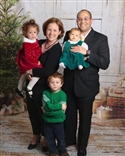
Justin, his wife Bernadette, and their children live in Bowie, Maryland, where they attend Sacred Heart Catholic Church. Justin is a lay member of the Order of Saint Dominic. You can follow him on Twitter (@JustinMcClainOP).