An Open World
Sponsored
Catholic365 is sponsored by
Road to Purity


Several months ago, I was introduced to the Synod on Synodality. Because this was new to me, I decided to research and dig for answers.
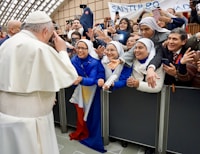
The dictionary definition of the word synod is an assembly of the clergy and sometimes the laity in a diocese or other division of a particular Church. A Presbyterian ecclesiastical court is also referred to as a synod in the dictionary definition. In the Catholic Church, the Synod on Synodality is commonly referred to as the General Assembly of Bishops for the purpose of discerning how the Holy Spirit is moving through and with the Body of Christ. Under the leadership of Pope Francis, the Synod on Synodality, for the first time, has included women and other non-bishops as voting members. This inclusion has concerned many as to its purpose.
The word synodality in the Catholic Church, according to Wikipedia, is a term often used to designate the operation of the Church which reveals and gives substance to her being as communion when all her members journey together, gather in assembly and take an active part in her evangelizing mission.
On several websites, including the United States Conference of Catholic Bishops, synodality is defined as the journeying together of the People of God and indicates a way of listening to each individual person as a member of the Church. With this understanding, it makes sense to include more than bishops in these discussions.
In the homily from the Opening of the Synodal Path that took place on October 10, 2021, Pope Francis said, “The synod is a process of spiritual discernment, of ecclesial discernment, that unfolds in adoration, and in prayer, and in dialogue with the word of God.” The dictionary definition of discernment is the ability to judge well. As it relates to vocation, discernment requires study, prayer, patience, and interaction with others. Priests, spiritual directors, and other trustworthy individuals can help in discerning the direction God has for your life. In this interaction, we must be willing to listen and wrestle with the ideas presented.
The same discerning process is what is required as we journey together as the Body of Christ. We must be willing to study, pray, and listen to each other to properly discern the truth given to us by the Holy Spirit. Our baptism brings us into the Body of Christ. However, our opinions and life experiences sometimes alienate us from the unity that should exist in this Body.
Representing the United States and Canada were 931 delegates who participated in virtual sessions prior to the October meetings in Rome. The delegates included 391 lay women, 235 lay men, 76 deacons, 148 priests, 77 women religious, and 4 non-ordained men religious. A total of 146 bishops also respresented the United States and Canada. Despite the large numbers and the diversity of participants, the working of the Holy Spirit was evident in the discussions and convergence of ideas. However, it was recognized by all that there are strong tensions within the Church and that the process to listen and discern truth is a complicated process.
It is sometimes difficult to envision the process toward unity with 931 delegates. When I look at my family and friends, I can see the need for the same process on a much smaller scale. Most of my friends believe as I do on many issues. However, family members, although we have the same blood line, often have very different political and religious views. How do we discern what is truth and promote that truth among the ones we love? As noted above, it takes more than listening. Prayer is another very important key to discerning truth. We must pray for the issues and all those involved. We must also study both sides of the issues so that we can better understand what people believe and the impact it has on others.
Before sharing the Bishops’ input on the Synod, the North American Final Document for the Continental Stage of the 2021-2024 Synod outlined three key themes. This Final Document was provided by the United States Conference of Catholic Bishops. The first theme noted in the document addressed the fact that we are all called and gifted through baptism. By the same token, we are all called to holiness and must respond to that call. Issues regarding women, young people, and formation were also addressed in this reflection of who we are in the Body of Christ.
The second theme addressed the communion with Christ and one another. First and foremost, at the beginning of this section, the Eucharist is referred to as the center of our lives. The Eucharist is, as the Catechism tells us, the source and summit of our lives (CCC1324). This section of the Final Document encourages us to trust, listen, and be more inclusive. Another part of this section addressed the importance of listening and how it plays a key role in evangelization.
The third theme noted in this Final Document is living out our baptismal call to evangelize, to bring the Good News to the world. In this section, we are encouraged to understand the truth of Catholic Social Teaching. It is always best to go directly to the source to learn its facts. My intention is to do that as it relates to Catholic Social Teaching. I look forward to sharing my findings in future articles.
As we listen and lean in to all that God has for us, it does not mean that the tenets of our faith will change. God is the same yesterday, today, and forever (Hebrews 13:8 NAB). He will not change. We change as we move closer to Him. Listening allows us to see where people are hurting. It is our goal to help one another. We must also realize that we are never alone in this process. The Holy Spirit is always with us giving us guidance and understanding. He is the One that brings discernment.
The conclusion of this Final Document encourages us to imitate Our Blessed Mother who continually said “yes” in building the Kingdom of God. There is more to come as we continue in this process of synodality. Knowing that God is with us, we should be excited to see what the future holds.
Denise Mercado is an award-winning author, blogger, and solo traveler. Denise was born and raised in Brooklyn, New York. As a military spouse, she lived in many cities throughout the USA and abroad. Denise’s book – Mary’s Life Journey & Her Amazing Yes! – was recognized in the 2023 Catholic Media Association Book Awards and the 2023 Independent Author Network Awards. This book focuses on the life of the Blessed Mother and the mysteries of ALL the Rosaries. Her most recent book titled – The Way of Light: The Story Behind the Stations of the Resurrection – received the Nihil Obstat in 2023 by the Diocese of Saint Petersburg, Florida. Denise explores the beauty and history of the Catholic Church by visiting cathedrals, basilicas, monasteries, and shrines and writing about her findings in her Catholic Travel Blog. For more information about Denise’s books, blogs, and travel plans, visit her website at www.denisemercado.com.