Faith in Evidence

Do Protestants Actually Believe Sola Scriptura?

Photo By: Flickr/Savio Sebastian
“Sola Scriptura” is a Latin phrase that means “Scripture only. It’s one of the Five Solae that basically define Protestant theology. These Solae are used within Evangelical Christian circles to delineate who are “Christians” and who are not. If you don’t 100% subscribe to “By grace alone, through faith alone, through Christ alone, through Scripture alone and to the glory of God alone” then you are not a “Christian” but rather are “outside the pale of orthodoxy”.
Part of the problem is that not all churches considered to be within Evangelical Christianity do fully subscribe to these. There are denominations and organizations such as the Church of Christ and the Independent Christian Churches (which grew out of the Restoration Movement following the Second Great Awakening in America in the early 1800’s), among others, who deny Sola Fide based upon their interpretation of the Bible. And in reality Calvinists deny these as well since the Solae militate for Free Will… a doctrinal no-no from their viewpoint. What of Sola Scriptura? First, let’s define the term.
What Is Sola Scriptura?
The Christian Research Institute is one of the premier Apologetics organizations. It was founded by Walter Martin (author of “Kingdom of the Cults”) and currently headed by Hank Hanegraaf (host of the daily “Bible Answer Man program). On their Equip.Org website the following definition of Sola Scriptura appears:
By Sola Scriptura Protestants mean that Scripture alone is the primary and absolute source for all doctrine and practice (faith and morals). Sola Scriptura implies several things. First, the Bible is a direct revelation from God. As such, it has divine authority. For what the Bible says, God says.
The Bible teaches that the Scriptures are inspired by God. But nowhere does it teach that the Bible is the sole authority. In fact, just the opposite is true. Take for example the final sentence in the definition above. This runs counter to what the Apostle John says in his Gospel:
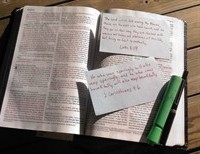
“And many other signs truly did Jesus in the presence of his disciples, which are not written in this book: But these are written, that ye might believe that Jesus is the Christ, the Son of God; and that believing ye might have life through his name.” (John 20:30-31)
According to John not all that God says is written in the Bible. What is written is for the purpose of telling us Who Jesus is in both His humanity and His deity, about what He came to do and to lead us to faith in Christ. This is just one verse that militates against Sola Scriptura. There are many others, such as 1 Timothy 3:15 and Ephesians 3:10. The Scriptures themselves do not teach Sola Scriptura.
What is the Catholic Church’s View on Scripture?
The Catholic Church has always believed and taught that the Scriptures are inspired. In fact, were it not for the Catholic Church the Evangelical Christians wouldn’t even have a Bible. It was written by Catholics, preserved and protected by Catholics and finally assembled and canonized by Catholics. If you think that they weren’t, ask yourself this question: “What Church existed from the Day of Pentecost through the first 400 years after that to which those who wrote the Bible, preserved and finally compiled it belonged?” There was no other Church up until the Protestant Revolt. The Church has no fear of the Book which she wrote, preserved and protected.
The Catholic view of doctrine is that God has given us a three-fold basis for determining sound doctrine. These are the Scriptures, Sacred Tradition and the Papal Magisterium. The latter two help to “accurately handle the Word of Truth” as the Apostle Paul told Timothy. It’s like a three legged stool… eliminate any one leg and the stool falls. No one leg is more important than the other, for without them all the stool doesn’t serve its function. The same is true of arriving at sound doctrine.
Do the Protestants actually practice Sola Scriptura?
“There are so many Bible commentaries available in English that it can be hard to know how to choose”The Calvin Institute of Christian Worship
The answer to this question is an emphatic “No”. But I thought they said they believed that only the Scripture accurately explains the Scripture? That is a natural outshoot of Sola Scriptura, but rarely adhered to by Protestants. How then do they arrive at “sound doctrine”?
The answer to that is that they have replaced the Magisterium with literally hundreds of Bible Commentaries. Here is a link to a list of some of these commentaries. Add to this list the “Study Bibles” written by Bible expositors over the centuries since the Protestant Revolution that tell folks what the Bible means. Recent examples of this are; The MacArthur Study Bible and Ray Comfort’s “Evidence Bible” and examples from the past would include Schofield’s Bible and Ryrie’s Study Bible. The “choosing” that is mentioned in the citation at the beginning of this section is done based on denominational criteria or other preconceived notions. If they truly believe in Sola Scriptura then what are these extra-biblical sources for??
Summation
The fact of the matter is that Protestants give lip service to Sola Scriptura, but in denying that it can be properly understood without commentators or folks with PhD’s they essentially make it moot. What difference does it make if the Bible is “the final authority on matters of faith and doctrine” if it can’t be understood in and of itself?
The Catholic believes that Scriptures, Sacred Tradition and the Magisterium form the foundation for proper understanding. They have replaced the Magisterium with a myriad of teachers, expositors, commentators and authors. That violates the tenets of their own doctrine in spirit if not in technicality.
But if Sola Scriptura is not used in real life for its stated purpose then to what end is it used? It’s used primarily as a way to differentiate themselves from the Catholic Church. In short, it’s used as a club to beat Catholics with and to convince those neither versed in the Scripture nor in the actual teachings of their Church that their Church is evil, deceiving and should be abandoned. But the Protestant stool only has one leg. That may work for unicycles, but it’s not safe foundation on which to stand.
Recommended Stories
About the Author
I was a Cradle Catholic from the time that I was born through my teen years. I slowly moved away from the Church and as a young adult I became an Evangelical Christian. I spent nearly 40 years in various types of ministry as a teacher, preacher, pastor or evangelist. But my main area of expertise was Apologetics…what we believe and why we believe it. I am a graduate of Central Christian College of the Bible in Moberly, MO with a Bachelor of Science in Biblical Studies. In November of 2014 I retired to the Philippines, where my wife Rose is from. We live in the mountains of Negros Oriental in the small town of Canlaon City with our many brothers and sisters, nephews and nieces (to whom I am “Daddy Mike”).
Nine years ago I reverted to the Catholic Church. I have try to write articles which inform, instruct and equip our Catholic brothers and sisters while avoiding using jargon. I have also sought to defend the Faith with our several Protestant visitors in as kind a way as possible
My archive here, which now contains nearly 80 articles, is located at http://www.catholic365.com/author/mike-bugal/
I may also be contacted via email at mbugal@yahoo.com