No Down Time for Filipino Catholics

The Substance of God's Plan Part 2

Photo By: Flickr/Wonderlane
In Part 1 we looked at the reason why a New Covenant was needed: the insufficiency of the priesthood and the sacrifice. In this part we’ll look at how God fulfilled the promise of Jeremiah 31. In doing so we will also reflect back to some of the “types” and “shadows” that we talked about in the two articles of “The Shadow of God’s Plan”, as well as present a couple more Old Testament prophecies not previously mentioned. The first concerns the birth of the Lord Jesus and the vessel chosen for that miracle: the Blessed Virgin Mary.
The Chosen Vessel
“Therefore the Lord himself shall give you a sign; Behold, a virgin shall conceive, and bear a son, and shall call his name Immanuel.” (Isaiah 7:14)
The very first “how” starts with God Himself. Remember we talked before about the shortcomings of the Mosaic Covenant especially the inadequacies of the sacrifice and of the priesthood as described in the Book of Hebrews. Within the Creation nothing would be capable of doing anything more than covering of sins. Since the whole creation was tainted with sin the solution had to come from outside of Creation. Only the One Who is eternal and uncreated could provide sufficient sacrifice to accomplish forgiveness of such a huge sin debt. Only God becoming man would do. That is the meaning of Immanuel…”God with us”.
Then God chose a vessel to achieve this that would get the attention of the world: a VIRGIN conceiving and bearing a Son. For this to happen, since God would not force anyone to do this there had to be a woman who would say “Yes”. She would be the obedient one to recover what the disobedient one (Eve) had lost.
The Old Testament “Type”
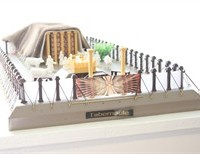
She would also fulfill in the New Covenant the “type” of the Ark of the Covenant. Remember that the Ark was the container outlined by God to the Israelites that would not only hold the Ten Commandments, the cup of manna and Aaron’s rod that budded in the Wilderness but was also where the Presence of God would abide in the Holy of Holies of the Tabernacle. This new Ark would also be the carrier for the Glory of God made flesh.
The Ark was dedicated according to God’s instruction, sanctified and was never to be touched by human hands. The Levites carried it suspended between two poles. We can see how seriously God took those instructions in 2 Samuel 6:1-7. As the Israelites were bringing the Ark back to Jerusalem from Abinadab’s house where it was temporarily place by the Philistines. They weren’t following God’s instructions on handling the Ark to begin with or it wouldn’t have been carried on an ox cart. At one point the cart shook and Uzzah was afraid it would fall. He reached out and touched the Ark…God killed him on the spot.
The New Testament Fulfillment
In the Old Testament Ark we see two characteristics that would be true of the Blessed Mother. First, her Immaculate Conception: just as the Ark was purified and sanctified by the God so too was the Ark of the New Covenant. Some argue against this doctrine, but it is infallibly pronounced as reliable by the Papal Magisterium… and according to typology it’s appropriate. The other aspect is her perpetual virginity. Just as the Ark was not to be touched by human hands so too this true of the Ark of the New Covenant. There is sufficient Scripture in the Gospels to infer this if not directly stated. As Catholics we believe it.
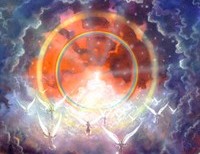
The Apostle John also believed that Mary was the Ark. In Revelation 11:19 to chapter 12:5 John is shown a vision of events in Heaven. In the final verse of Chapter 11 he says that he saw the “ark of his testament (covenant)” in the Temple in Heaven. In Chapter 12 he goes on to describe this Ark, which now appears to be a woman. Bear in mind that when it was written there were no verses or chapter breaks. Chapter 11 verse 19’s thought is continued in Chapter 12. The fact that Mary is seen in the Tabernacle in Heaven also speaks to her Assumption.
God had a plan and prepared a vessel. The next step would be the actual Incarnation of the Lord Jesus Christ and His establishing the New Covenant by His death, burial and resurrection. We’ll address this in the next part.
Recommended Stories
About the Author
I was a Cradle Catholic from the time that I was born through my teen years. I slowly moved away from the Church and as a young adult I became an Evangelical Christian. I spent nearly 40 years in various types of ministry as a teacher, preacher, pastor or evangelist. But my main area of expertise was Apologetics…what we believe and why we believe it. I am a graduate of Central Christian College of the Bible in Moberly, MO with a Bachelor of Science in Biblical Studies. In November of 2014 I retired to the Philippines, where my wife Rose is from. We live in the mountains of Negros Oriental in the small town of Canlaon City with our many brothers and sisters, nephews and nieces (to whom I am “Daddy Mike”).
Nine years ago I reverted to the Catholic Church. I have try to write articles which inform, instruct and equip our Catholic brothers and sisters while avoiding using jargon. I have also sought to defend the Faith with our several Protestant visitors in as kind a way as possible
My archive here, which now contains nearly 80 articles, is located at http://www.catholic365.com/author/mike-bugal/
I may also be contacted via email at mbugal@yahoo.com