Resurrection Evidence: Some Alternative Theories Part 1

The Shadow of God's Plan Part 2

In Part 1 we looked at the first Covenant that God established with mankind, as well as the promise that He made to Eve of a Messiah. We saw that the Noetic Covenant was basically a one sided Covenant, but the Abrahamic Covenant placed requirement on man to participate in it: circumcision. Now we move into the most important of the Covenants of the Old Testament…and one that required the most of them of those who lived under it.
Bear in mind also that this is not just a history lesson for the sake of history. In these Covenants, and especially in the Mosaic, we see the shadows or “types” of what God would do in the New Testament and, ultimately, in us.
The Mosaic Covenant
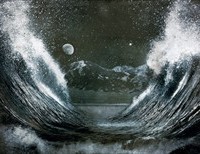
God kept His promise to Abraham giving him a son, Isaac. Isaac had two sons: Esau and Jacob. Even though Esau was the eldest he sold his birthright to Jacob for a bowl of venison stew. Jacob then had twelve sons who became the 12 Tribes of Israel. Jacob and his families went into Egypt, first as honored guests but eventually they became slaves and built many of the wonders of Egypt, some of which remain today. They cried unto God for a deliverer from their bondage…and God raised up Moses. Hundreds of books and many movies have been made of this story, but for our purposes we fast forward to Mount Sinai where God gave Moses not only the Ten Commandments but also His Law that the people were to abide by.
This Covenant is the most complex and most demanding on its participants. It also provides us with the majority of the Shadows of God’s Plan. Many aspects of it, such as the Tabernacle, could be a series of articles all on their own…and probably will be one of these days. The Law covered every aspect of the lives of the Hebrews: dietary, ceremonial, interpersonal relationships and much more. The sign and seal of this Covenant was the same as the Abrahamic Covenant, namely circumcision, which is appropriate since this Covenant was the beginning of the actual fulfillment of the promises of God to Abraham and Sarah in Genesis chapters 12 and 17. Through it God would make Israel a mighty nation and also make Abraham a father of many nations.
One aspect that we want to focus on is the Tabernacle, but not as intensively as I will at another time. The Tabernacle was the center of worship and priestly service to God. It was a large, two part tent divided into 2 sections: the Holy Place and the Holy of Holies. I’ve always found it interesting that the furnishings of the Tabernacle was laid out in such a way that they form a cross. In the Holy Place was the Table of Showbread on one side, the Lampstand or Menorah and in the center before the curtain that separated the two sections was the Altar of Incense. Outside the Sanctuary was the Laver, where the priests washed before entering for service and straight out toward the entrance was the Altar where the sacrifices were killed and burnt.
In the Holy of Holies was the Ark of the Covenant in which was contained the Tablets of the Ten Commandments, a cup of manna and Aaron’s Rod that budded in the wilderness On top was a pair of seraphim facing one another with their wings touching. This was called “the Mercy Seat” and it was where the blood of the lamb was applied on each Day of Atonement. This Ark is very important for it is a shadow, a “type” which we will see fulfilled in the New Testament.
Of course, most people understand the relationship between the lamb without spot or blemish that was sacrificed and the Lord Jesus Christ…the “Angus Dei” or Lamb of God Who takes away the sins of the world. We repeat those words every Sunday in Mass. The Lord also fulfilled the ‘type” of the Passover Lamb, which we’ll cover in more detail under the New Covenant.
The Davidic Covenant
2 Samuel 7:12-17
At first when the Children of Israel entered the Promised Land and established their nation they were governed by a series of Judges (such as Samson, Gideon and others) but it was a very loose governing style. As Samuel records in Judges “…every man did what was right in his own eyes.” Eventually, they wanted to have a king like all the nations around them. God warned them of the shortcomings of that but they still insisted. So first God raised up a man named Saul. But he wouldn’t obey God so eventually he was deposed.
In his place God brought David, a simple son of the land who tended sheep and played a harp. He turned out to be a mighty man of war too and was a man of whom God, in spite of his faults and sins, said was “a man after My Own heart” It was with David individually that this next Covenant was made…and it leads to the New Covenant.
God promised that one of his descendants would always sit on the Throne of Israel. Like the Noetic Covenant there was no condition placed upon David or his descendants for the fulfillment of this but only the faithfulness of God. Considering the history of Israel after David that’s a good thing. It was a series of good kings/evil kings from Solomon until the Captivity in 485 BC. But from this lineage would one day come the King of Kings and the Lord of Lords.
The Promise of the New Covenant
Jeremiah 31:31-34
As the Northern Kingdom (Israel) was already in captivity and the Southern Kingdom (Judah) was heading into captivity to the Babylonians God raised up a prophet to let them know that He wasn’t done with them. It was through Jeremiah that God delivered a promise to them that there was going to be yet one more. It was going to be similar in some ways to the Mosaic Covenant but very different in significant ways. In The next article “The Substance of God’s Plan Part 1” we’ll detail what God told Jeremiah and how it is fulfilled in the Lord Jesus Christ.
Recommended Stories
About the Author
I was a Cradle Catholic from the time that I was born through my teen years. I slowly moved away from the Church and as a young adult I became an Evangelical Christian. I spent nearly 40 years in various types of ministry as a teacher, preacher, pastor or evangelist. But my main area of expertise was Apologetics…what we believe and why we believe it. I am a graduate of Central Christian College of the Bible in Moberly, MO with a Bachelor of Science in Biblical Studies. In November of 2014 I retired to the Philippines, where my wife Rose is from. We live in the mountains of Negros Oriental in the small town of Canlaon City with our many brothers and sisters, nephews and nieces (to whom I am “Daddy Mike”).
Nine years ago I reverted to the Catholic Church. I have try to write articles which inform, instruct and equip our Catholic brothers and sisters while avoiding using jargon. I have also sought to defend the Faith with our several Protestant visitors in as kind a way as possible
My archive here, which now contains nearly 80 articles, is located at http://www.catholic365.com/author/mike-bugal/
I may also be contacted via email at mbugal@yahoo.com