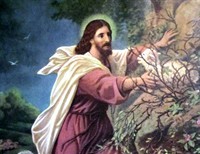
Trusting in God Completely
Sponsored

Catholic365 is sponsored by
Road to Purity




Remember from the Gospel of Luke, the words of Christ as He says, “Whoever listens to you listens to me. Whoever rejects you rejects me. And whoever rejects me rejects the one who sent me.” If we listen to the ones sent by Christ Himself, we listen to Christ; if we listen to the Lord at his words, we listen to the Father who sent His Only Begotten Son to us. These Commands and Teachings of our Lord Jesus Christ go well beyond a simple document or book, but through the three-legged stool of our Faith: the Scriptures, the Tradition, and the Magisterium. For it is when we are most humble, that we find our personal holiness we have sought through the grace of God.
Brethren, it has come to my attention that, for some time, you have rejected one of the Ecumenical Councils of the Church. How long will you hurt the unity of the Church through this rejection? How long will you cause His Sacred Heart any more strife and anguish? To you it may seem the Second Vatican Council to be folly, but to the Truth, it is what was needed in these times. How can we dismiss the restoration of the permanent diaconate, the call to universal holiness, the restoration of the Eastern Catholic Church’s dialogue, and much more. For as it says in the Scriptures, “I give you praise, Father, Lord of heaven and earth, for although you have hidden these things from the wise and the learned you have revealed them to the childlike.” You, my schismatic brethren, have lost your way and have lost your childlike faith in the Lord. The Truth now remains hidden from you, as you have presented yourself to be foolishly wise and pridefully learned before the Lord Himself.
You have only parts of what you desire to be whole, Love which you have traded for the supposed glories of ashes and turmoil within your hearts. In this, dearest brethren, I implore you with all I have to come back to the unity and to reject your rejections. You need only repent and seek the mercies of God, always trusting in Him. It is better that you be given the sufferings of the Lord than the ease of the devil. The demons may attack you at night, but always give recourse to the holy names of Jesus, Mary, and Joseph.
Remember now, what Jesus did when He approached the disciples, saying “All power in heaven and on earth has been given to me. Go, therefore, and make disciples of all nations, baptizing them in the name of the Father, and of the Son, and of the holy Spirit, teaching them to observe all that I have commanded you. And behold, I am with you always, until the end of the age.” Do we truly deign ourselves the least bit worthy to carry our cross on our own power, which always remains impossible, or do we let God infuse His Grace into the very recesses of our beautiful soul? In this passage, it is not just the disciples that are called to bring people to Christ, but all people through their own charisms.
Each person has been given these gifts from God, certain and specific means to help people find the Lord through the Church, that is our call. A bishop is not to play the part of a blacksmith, or a blacksmith to play the part of an actor, or an actor to play the part of a widower. A shepherd of a flock must lead his flock most prudently, as a refiner must refine the metals he has been given in order to make the product required. As a person is supposed to take up a role to emphasize a specific person’s memory, another must become recommitted to the Lord after a loss. In summary, we are each called to our office, domestic or ministerial. In essence, we must bring people to the Triune God, leading them into their Baptism and educating them about the aspects of the One, Holy, Catholic, and Apostolic Faith.
Now let us digest the following passage from the Scriptures, as Jesus is talking to the crowd and His disciples. He says, “The scribes and the Pharisees have taken their seat on the chair of Moses. Therefore, do and observe all things whatsoever they tell you, but do not follow their example. For they preach but they do not practice.” It is one thing to have authority, but another to use it well, one thing to be externally devout, but another thing to have the interior decay of misery. To have the interior emptiness can lead to a misconstrued perception and lead the little ones into hypocrisy and, if not corrected charitably, eventual hell.
So, if one tells you to follow the commandments but doesn’t follow the Divine Law themselves, it doesn’t negate the fact that the Divine Law must still be observed. Even in the midst of corruption and indignity, we must maintain ourselves along the Way. Look on, as Jesus says that, “They tie up heavy burdens hard to carry and lay them on people’s shoulders, but they will not lift a finger to move them.” Again, this part of the passage emphasizes what the leadership could do, but it doesn’t say that the leadership is fundamentally evil. God works through all things, even the evil things, to bring about our holiness and the eventual good of man.
Read on, as He tells us about their actions, saying that “All their works are performed to be seen. They widen their phylacteries and lengthen their tassels.” The ringing sing of a hypocrite is false humility, in where the believer can, with grace, help find the issue with the person at hand. To find this is as far as the believer is allowed to look, for if they look farther, they fall into the near occasion to judge and possibly judgment itself. Look closely, however, as the hypocrite will even use prayers and their very office to push this false humility. The reason we are allowed to see this is for the simple fact to pray for them and the conversion of their soul to repentance. As such, “They love places of honor at banquets, seats of honor in synagogues, greetings in marketplaces, and the salutation ‘Rabbi’."
To the hypocrite, the first place is theirs, the high seat is their seat, the greeting is to them, and the place of authority has been declared their own. They forget who they are, the One they serve, and what will happen to them if they serve the Lord, which is a closer relationship with Him. In regards with the “charism of infallibility”, it does not matter if the person in the seat of the Holy See is in the ways of the Pharisees, as this will not undermine the credibility of the office. It can be clouded, however, making others unable to discover Christ as easily through this charism.
As it also says, “As for you, do not be called ‘Rabbi.’ You have but one teacher, and you are all brothers. Call no one on earth your father; you have but one Father in heaven. Do not be called ‘Master’; you have but one master, the Messiah.” This is not to say that the title is wrong to call someone, but it is wrong when someone assumes that the power comes from themselves and not God Himself. Remember, “The greatest among you must be your servant,” which tells us the single and most primary thing about the charism of infallibility: the more authority handed to one individual, the greater the service is implied for them to produce. As it says, “Whoever exalts himself will be humbled; but whoever humbles himself will be exalted.” If we find ourselves in the position of first, always put ourselves in the place of last, as well as vice-versa. This is what we are called to do, as well as what the Holy Father continues to do through his given charisms, especially infallible teachings.
Moving on from the passage in the Gospels, let us now look at a passage from the Book of Acts. In this passage, the disciples are asking Jesus about restoring the Kingdom, not realizing that by the Paschal Mystery, this has already come about. Jesus tells His disciples that “It is not for you to know the times or seasons that the Father has established by his own authority.” This also remains true to us, as we must trust the judgment of Christ and His Church, His Spotless Bride. Surely, He will not leave us stranded or alone in this murky and desolate world? No, He will be with us always, “until the end of the age.” Our Lord has no intention of abandoning us to the woes of the evil one, even if it seems like all is lost and forgotten within the Church.
Remember now, “The saying is sure; If any one aspires to the office of bishop, he desires a noble task.” What do we truly desire, but the noble task of finding God through sanctity. If it were truly easy to understand the Faith we know, would we not already know all of it from the first moment? As it says in the Scriptures, “Before I formed you in the womb I knew you, and before you were born I consecrated you; I appointed you a prophet to the nations.” Before we were formed, God knew our soul. Before we were born into the world, God knew our minds and hearts. Could it not go as far to say that God would not know His Church as well, who is the Body of Christ? If God counts every single hair on our head, does He not include every person within the Body of Christ? He appointed certain individuals to certain tasks, from porters to Popes, caretakers to Cardinals, and anything in between.
As it also says in the Holy and Unblemished Scriptures, just as the Church is Holy, “Obey your leaders and submit to them; for they are keeping watch over your souls, as men who will have to give account.” Just as we would give the leader of a country due diligence or a parent the respect and honor due them, should we not give the Holy Father who, chosen by Christ, even more diligent respect? As also follows, “Let them do this joyfully, and not sadly, for that would be of no advantage to you.” It is no advantage to be under the stress of doubt, for we must hold on to the Promise of Christ to St. Peter, the first Pope, “On this rock I will build my church, and the powers of death shall not prevail against it.” While never prevailing, you are giving the evil one the ability to prevail against the gates of your soul, by continuing to remain apart from the Church.
Remember also, “For a bishop, as God’s steward, must be blameless; he must not be arrogant or quick-tempered or a drunkard or violent or greedy for gain, but hospitable, a lover of goodness, master of himself, upright, holy, and self-controlled; he must hold firm to the sure word as taught, so that he may be able to give instruction in sound doctrine and also to confute those who contradict it.” Let us examine the meaning of this passage in the Scriptures, for there is more to it than just a simple skimming of words.
As the keeper of God’s house, the Scriptures say this bishop “must be blameless” or “without blame”, yet people who do not agree with the office (yes, those who disregard the Pope as valid disagree with the Holy Office) are not judging actions, but the person themselves. It is okay to critique action, but to critique a person is to go as far as to pronounce God’s judgment upon them, in where we are not God. The Scriptures say this steward, as the Vicar of Christ, “must not be arrogant or quick-tempered or a drunkard or violent or greedy for gain…” Granted, there have been Popes in the past who have let their pride and vanity corrupt their personal mission, but due to the Promise of Christ to St. Peter, arrogance was defeated by humility, quick-tempered quieted by patience, inebriation cancelled by spiritual sobriety, massacre demolished by peace, greed for power silenced by almsgiving in the form of Holy and Venerable Popes. As it says further in the Holy Writings, this Shepherd of Souls must be “hospitable, a lover of goodness, master of himself, upright, holy, and self-controlled.”
You sedevacantists, poisoners of hospitality, perverters of goodness and modesty, superficial in mastering self not through Christ Jesus, but for yourselves alone; you dare to point fingers at the Holy Father, who by his very election, has truly been found hospitable in character, self-sacrificing in goodness, a worker for mastering the tendencies of the flesh, upright in holy self-control. Continue to read on, my friends, as the Scriptures attests that this Keeper of Keys “must hold firm to the sure word as taught, so that he may be able to give instruction in sound doctrine and also to confute those who contradict it.”
To say that the Seat has been made vacant, even for a second, is to claim that the seam of the Church was split into another piece; have we not seen the results of those who claim to have more authority than has been bestowed upon them? Have we not seen the chaos and instability that have been caused for centuries? The Holy Father is intending to give the instruction in sound doctrine that is needed, but with your emotionalism and irrationalism, you cling to pride and vanity. In charitable instruction and acts of faith, the Servant to the Lord is, at the same time, refuting those who contradict the Word made Flesh. It is all through love that the Pope is doing this, to bring you all back to the fold so that “all may be one.”
Remember this, that the Bishops are to “Take heed to yourselves and to all the flock, in which the Holy Spirit has made you guardians, to feed the church of the Lord which he obtained with his own blood.” The Bishops, through their fullness of Holy Orders, are to keep in mind both the spirituality of their people and their own, never to let either one stray from the Truth that is Christ Jesus. It is through the Holy Spirit, the same Spirit that guards the fullness of Truth in the One Church, that guards the fullness of Truth in each and every Bishop. Therefore, no matter how off the path, no matter how astray, and no matter how in error, each Bishop is to be given charitable respect in the office he maintains. In word and deed, each Bishop is to “feed the church of the Lord” with the Sacraments, which are found only in the One, Holy, Catholic and Apostolic Church. As the Lord “obtained with his own blood” the means for us to reach Heaven, this means we should seek fullness. We should never settle for a partial way, no matter how appealing or contrite.
Let us continue this discourse of the Scriptures by turning to the Gospel of John. In this passage, there are some key things to understand, so let us take this part by part, word by word, and letter by letter. As the Scriptures say, “When they had finished breakfast, Jesus said to Simon Peter, ‘Simon, son of John, do you love me more than these?’ He said to him, ‘Yes, Lord; you know that I love you.’ He said to him, ‘Feed my lambs.’” As St. Bernard says, “Humility is necessary not only for the acquisition of virtues, but even for salvation. For the gate of Heaven, as Christ Himself testifies, is so narrow that it admits only little ones.”
Put into context, the Scriptures and the quote by the Saint, then you will see that it is necessary to have humility when dealing with the matter of souls and the elements of faith. Especially in the area of grace, a free and undeserving gift we are given, we must remain part of the Body of Christ via the Sacraments. Since with the institution of Holy Orders that remain unbroken, the priest who administers the grace via the Sacraments must and truly must be part of the Apostolic Church and not part of a schismatic sect. Continue on to read in the Scriptures, as it says, “A second time he said to him, ‘Simon, son of John, do you love me?’ He said to him, ‘Yes, Lord; you know that I love you.’ He said to him, ‘Tend my sheep.’” As St. Thomas Aquinas says, “The principal act of courage is to endure and withstand dangers doggedly rather than to attack them.”
As your brother-in-Christ, I commend you on your courage to see a problem that does exist structurally, although not enough to prevail against the Church but to cripple Her to the point of sickness. However, your courage has taken the form of pride as well, losing its tenderness in action and instead turning to trepidation. It is a recommendation from observing sickness in the medical field, that when one treats a patient, they take the time to treat slowly and surely, not rushing to meet their own ends.
This remains the same in sanctity and holiness, in where we must, while working toward holiness, not push ourselves unnecessarily, but grow in accordance with His Holy will and His Divine Plan. Read on, as the Scriptures say that, “He said to him the third time, ‘Simon, son of John, do you love me?’ Peter was grieved because he said to him the third time, ‘Do you love me?’ And he said to him, ‘Lord, you know everything; you know that I love you.’ Jesus said to him, ‘Feed my sheep.’” In this pillar of the papacy, as with the pillar of Sacraments and the pillar of Holiness, we are asked to support the Holy Father in prayers to God, both by the mediation of Christ and the intercession of the Blessed Virgin, Angels, and Saints. This does not mean praying for anything to happen to him or anything to come against him, but to pray steadfast that he may continuously lead us on the right path towards Jesus Christ.
With matters pertaining to the Bishop of Rome, consult this passage from St. Peter himself, the first Vicar of Christ, in where His Holiness tells us, “So I exhort the elders among you, as a fellow elder and a witness of the sufferings of Christ as well as a partaker in the glory that is to be revealed.” Yes, it is true that St. Peter made his mistakes, just as his successors did as well. They, along with all other people, are human. To those that repented from their denial and incredulities, faithlessness and drudgery, and the like, they lived an austere life of repentance and frequent conversion, going to the Sacraments of our Lord most hastily. Read on, as St. Peter exclaims that these “elders” should “Tend the flock of God that is your charge, not by constraint but willingly, not for shameful gain but eagerly, not as domineering over those in your charge but being examples to the flock.” Just as the Doctor of Grace, St. Augustine, tended to his charge with willingness, with eagerness, and by example, after he learned the meaning of suffering, so too must we embrace our sufferings and learn from them as well, so as to conform ourselves to Christ on the Cross.
It is not the desperation in suffering that makes the Christian, but the suffering embraced in desperation that molds the Christian into the receiver of the saintly crown. Embrace your sufferings of impatience, your agonies of doubt, and your dark night of misunderstanding; realize this is what God guided you towards, not a life of confusion, but a death to the old man to put on the new one and to put on the armor of God, in your suffering and woe. Read on, as it says, “And when the chief Shepherd is manifested you will obtain the unfading crown of glory.” How could we not follow, in full communion, the Bishop of Rome, when Christ Himself promised us that “the gates of hell” shall not prevail against the Church in the Gospel of Matthew? You may think to yourselves, “How does the Promise of Christ to St. Peter correlate to “the chief Shepherd” becoming manifested?” For if the fullness of Truth can reside only in the True Church, as all Catholic Christians believe, then would He, “the chief Shepherd”, not make himself manifest within only one particular Church and not one that appeared in recent times? This is a question that we should, as Christians and as human beings, ponder with all we have been given by God.
Continue on, dear friends, as it says with due diligence, “Likewise you that are younger be subject to the elders. Clothe yourselves, all of you, with humility toward one another, for ‘God opposes the proud, but gives grace to the humble.’” Understand this, that we are all younger to someone older, older to someone younger, and a guide for those that are lost, as we are lost to be guided. Therefore, there will always be someone to teach us, someone to be taught, as we are to guide those who are lost from the Truth, for we need guidance as well to find the Truth more and more. Now knowing this, we must be clothed in humility, not an easy task and sometimes seemingly an impossible feat.
However, if we are to become as one in harmony with one another through the Gospel, yet maintaining the differences that God instilled in us through charisms, then we need to oppose our proud nature and ask for the grace of reverent humility. This is not a one-time task, but an every day journey in every second of that day. Remember now to, “Humble yourselves therefore under the mighty hand of God, that in due time he may exalt you. Cast all your anxieties on him, for he cares about you.” Being exalted among others should not be our worry, for if we do our due work of spreading the Gospel, then this will happen regardless. If we have anxiety about whether something is occurring beyond our control, realize that God’s plan overrules our whims and wants every single time.
This next part of the passage from St. Peter proves very prudent, as the Holy Father tells us to “Be sober, be watchful. Your adversary the devil prowls around like a roaring lion, seeking some one to devour.” Have we not seen lions hunt their prey, in where they sink their teeth into the back of the victim, holding on until the prey is tired from the attacks of other lions in the pride? Same is true with the evil one, as he involves his minions to cause a racket in minds of the faithful, prowling among even the leaders themselves, causing distain and dissentions. Do we truly want to give into a divisive devil, or do we desire unity and charity? It tells us, “Resist him, firm in your faith, knowing that the same experience of suffering is required of your brotherhood throughout the world.” This is not an option to resist, but a requirement if we are to experience the grace of unity. Like a marriage, unity will not break if we do not let it. It is not to say that the relationships unity is invalid at any point, but in the paradox of mysteries, it must be maintained and cultivated.
As Christ and the Church are likened to a man and wife in Holy Marriage, so too is the person to person relationship likened to Christ and His Bride. As it says, “And after you have suffered a little while, the God of all grace, who has called you to his eternal glory in Christ, will himself restore, establish, and strengthen you.” This speaks of the glorification of our bodies at the End of all Things as well as the reuniting of soul and body together in the Last of Times, but does this not speak also at an individual level? There may be individual problems within the Church for a time, in their sickening variety and abusing continuance, but has the Church not always been full of the goats along with the sheep? It was in the chosen twelve Apostles that one became traitor, one denied, and the rest abandoned. So you see, we must trust the Promise of Christ in all things dealing with life within the Church, as well as life outside of it. As in all things, as St. Peter so truly exclaims, “To him be the dominion for ever and ever. Amen.”
In the short conclusion of this letter, I leave you with a quote that is very pertinent from St. Anthony of Padua: “The life of the body is the soul; the life of the soul is God.” So too is the life of the Church the Holy Spirit, and He will never abandon or leave us stranded. For as He allows us to know God, He too, along with the Father in Heaven and Christ our Lord, “Be with us always, until the consummation of the world.”
Matthew Johnson is 35 years old, from North Carolina, and has been a practicing Catholic since he was born into the grace of Baptism. Matthew has had some real powerful experiences with God's Mercy, Grace and Love, and wants to communicate with others about Jesus Christ through the Catholic Faith.