Uniformity with God's Will

The Spirituality of Imperfection
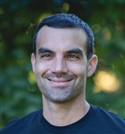

Photo By: Nicole Spadoni
“Baseball teaches us, or has taught most of us, how to deal with failure. We learn at a very young age that failure is the norm in baseball and, precisely because we have failed, we hold in high regard those who fail less often—those who hit safely in one out of three chances and become star players (.333 average), I also find it fascinating that baseball, alone in sport, considers errors to be part of the game, part of its rigorous truth.” -Francis T. Vincent, Jr., former Major League Baseball Commissioner
I recently started with a new spiritual director. In our first meeting, in which I expected more of a “feeling out” process to happen between us, we delved into some deep spirituality based on our personal experiences. My director, a Franciscan Brother, revealed to me his struggle as a recovering alcoholic, and I revealed to him my personal struggles, as well as coming from an alcoholic family myself. Though we barely knew each other, our acknowledgement of our “imperfect” journeys led to a profound conversation about how it is precisely these struggles that will transform, heal, and ultimately save us….if we let them.
He suggested I take a look at a book called “The Spirituality of Imperfection” by Ernest Kurtz and Kathrine Ketcham. The first lines of the introduction are the above quote from the former Commissioner of Baseball, and they struck me as a perfect analogy to what we can strive toward spiritually. I will spare this from becoming a book review, but the book goes on to retell over 100 stories about “spirituality’s stories” – and the wisdom that lies behind the spirituality of imperfection, as highlighted by the great success of the famous 12-step program Alcoholics Anonymous. As you may know, A.A. starts with step 1: admit powerlessness over your addiction. In other words: humility, emptying yourself, and acknowledging maybe your greatest imperfection (though there may be many).
Now, while I recognize the importance of adopting this spiritual practice, and I find myself inspired by this book, I believe we are called even deeper into this spirituality as Christians. When we look at the life and mission of Jesus Christ, we have an example of someone who embodied this spirituality. If you were to think of God entering humanity, would you picture Him rejected, ridiculed, beaten, tortured and then hung on a cross to die? Probably not, but that’s how God chose to manifest himself in the world. Hardly a perfect image of a King and Savior. Further, look at the apostles Jesus chose. These were not spiritually perfect men. They were fishermen, tax collectors, and men who were on the margins of society. St. Peter himself, whom Jesus handed “the keys to the kingdom of heaven”, was probably the worst: often impulsive with his words, and famously denying Jesus three times out of fear. Perfect? I don’t think so.
So, to be a disciple of Christ does not mean that you have to be perfect. In fact, your imperfection, your addictions, your vices, your failures, and your disappointments are precisely what will set you up for spiritual advancement, if you allow. And maybe God is calling you closer to Him through them. Being content with your imperfection can lead to great peace, which will naturally lead you closer to God. Of course we should strive toward the best version of ourselves, but self-deprecation, over-scrupulosity, and fear of being imperfect can spiral quickly out of control. Remember: if life was baseball, and you’re batting with a .333 average and losing almost as many games as you’re winning, then you’re near the top of the league. You’re imperfect. So am I. But maybe we’re exactly where we’re supposed to be.
Recommended Stories
About the Author
My name is Will and I am 37 years old. I attended Catholic school my entire life, but like many in my generation, I fell away from the Church in high school and early in college. I consider myself a "re-vert" to the faith. I am married to the woman of my dreams and together we have three beautiful children, with one on the way!
I picked up the Bible to read the Gospels again when I was 22 years old, and the words of Christ haven't left me since. I began my new faith journey with struggle, still a sinner, but continually give my life to God through my marriage, prayer and the sacraments. I believe that it is precisely our struggles that we encounter in our daily lives that bring us closer to God.
I love golf, fitness, movies, my dog, and following the Patriots, Celtics, and Red Sox (Yes, I'm from Boston). I don’t have a blog or an agenda, I am just passionate about my faith and love to write.