Common Ground, Holy Ground
Sponsored

Catholic365 is sponsored by
Road to Purity



As I look back on 11 years now as a person in professional ministry and education and a lifetime of being a Christian, I’ve come to the realization that being a Christian is hard work. Why? Well, for one thing, the command to “Love one another” - the motto of Abbot Bernard Pennings (the founder of the Norbertine Community in De Pere, WI) and the command leveled by Jesus in John 13:34-35 is hard to live by. Sure, as a Christian we are held to the “golden rule,” and then there is always the reality that we should - by the nature of the term Christian - be Christlike, but sometimes it just seems that this command is counter to our human nature.
Doesn’t it seem so easy to send gestures that express our anger via one digit rather than to decompress, reflect on the causes of the anger that flared up, and then assure ourselves that we must learn from the experience of someone cutting us off in traffic. Isn’t it easier to just say no when our significant other wants to do something that we don’t rather than to think about what they are saying, discerning the value of it in regards to the give and take of a healthy relationship, and to discern its value for the meaning of your relationship together? Or more fully, isn’t it easier to just accept everyone for what they believe, what they say, and who they are rather than to think about the fact that we are all called to love our brothers and sisters unconditionally, but that sometimes that love calls us to question decisions that are not always healthy or life-giving for the betterment and care of that love?
Thinking about this command to “Love one another” in my own life, I am often left with the question of what that actually means. When it comes to discerning what I truly believe and what I truly mean and imply by those beliefs it is important to step back and more fully examine what I am called to do and be in response. This process requires one to think quite carefully, to pray often, and to inform one's conscience by having the courage to discuss and study issues that make one feel uncomfortable, that might make one angry, that might make one question my faith, and that might make one question their whole understanding of existence. Participating in this process takes courage, patience, prudence, temperance...In other words, to live a truly Christian life one needs to practice and rely on the temporal and theological virtues, something which we often forget about in popular Christianity.
After all this work of discernment - a process which is a sign of mature faith - one has to step outside this hypothetical and heady process and live out what one believes to be true and good. This is a part of Christianity that is sometimes most difficult because not only do we have to have a solid base, but we are called to act consistently and congruently with our conscience. As the Anglican theologian NT Wright points out, this calls us to work and live out of our second nature, to challenge ourselves to develop in virtue rather than vice which is so much easier and common in our modern world.
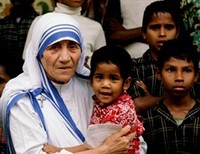
Here is where I may detract from the typical conversation about being Christian in the modern age. Often folks in the Church talk about the idea of being counter-cultural, but what I would like to suggest is that we frame the issue a bit differently. Instead of being counter-cultural, let us be transformational. Referring back to the Second Vatican Council, the Church, the living body of Christ in the world, is not called to retreat from the world or to put up fences from it, but to transform it. As we can see within much of the work of the council and the modern Church, the work of the Church is to build the Kingdom of God here and now and that is most effectively done by showing people the way to Christ. At St. Norbert College we strive to live motto Docere Verbo et Exemplo which means "To teach by word and example." It seems like a simple phrase, but it is incredibly difficult to live by. It is the same motto that people like Dorothy Day and Blessed Mother Teresa of Calcutta lived by and though their lives and examples may seem to be so far from our own experience, we see and experience people who live their call to sainthood everyday. Our challenge then, is to do our best to do the same.
Shaun Michael Johnson has a B.A. from the University of Wisconsin, Green Bay in English, a M.A. in Theological Ethics from Catholic Theological Union and is currently completing a M.T.S. from St. Norbert College in Pastoral Studies. Shaun has served in campus ministry for nine years and has taught theology at two all boys Catholic high schools on the South Side of Chicago before being called to serve on the campus ministry team at St. Norbert College in De Pere, Wisconsin.