What I Learned from the Early Christians about Spiritual Growth, Part 3: Human Effort Matters

What I Learned from the Early Christians about Spiritual Growth, Part 1: We Need Silence

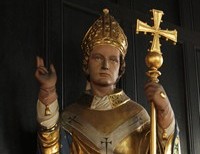
Photo By: Flickr/neekoh.fi
When we think of the Early Church Fathers and Mothers, we tend to think in terms of common mental images: martyrs standing in the center of an arena, bravely facing an unspeakably cruel death, apologists defending the faith, theologians explaining the faith, or monks living solitary lives in some remote desert. All these mental images are correct, but they do not tell the whole story. In addition to being bishops, martyrs, apologists, ascetics and theologians, most of the Fathers and Mothers of the early Church were also masters of the spiritual life, adept at teaching their many disciples how to grow closer to the Lord and abide in His love.
I have spent most of my adult life studying the Fathers and Mothers of the Early Church, and I have learned some abiding lessons from them. This series of articles is as much my homage to their greatness as it is an attempt to pass their lessons on. Briefly then, here is what I have learned:
Lesson 1: We need silence.
The other day I saw a young lady I know who had a sticker on her backpack that said, “Silence is death.” I know this teenager well enough that I could ask her about the sticker. She told me that the saying originated in the seventies, when the AIDS crisis was fully blown, and some people wanted to raise awareness about the problem. Nowadays, I gathered, it has become a general slogan for people who want to raise awareness about the various problems that plague our society. “People have to talk about things,” my young friend told me earnestly. “If we don’t talk, more people will die. And fear is keeping people from talking.”
There is a great deal of truth in this sentiment. God gave us voices to speak, and we can use those voices to inform one another about the dangers that are around us. However, as a general rule, it doesn’t seem that silence is our greatest societal problem. It seems to me, rather, that our biggest problem is the great cacophony of sound that surrounds us, preaching almost every conceivable message, most of those messages directly contradictory of the next voice we will encounter, blaring from our phones, laptops, tablets, car radios, TV’s and shop windows.
How do we know which voices to listen to? Is there a method by which we can discern the truth and learn to hear the voice of the Holy Spirit in the midst of so many voices? In the fifth century, an abbot by the name of Diadochus of Photice gave an answer so brilliant in its simplicity that it seems best to quote his words, rather than paraphrasing him:
We must maintain great stillness of mind, even in the midst of our struggles. We shall then be able to distinguish between the different types of thoughts that come to us: those that are good, those sent by God, we will treasure in our memory; those that are evil and inspired by the devil we will reject. A comparison with the sea may help us. A tranquil sea allows the fisherman to gaze right to its depths. No fish can hide there and escape his sight. The stormy sea, however, becomes murky when it is agitated by the winds. The very depths that it revealed in its placidness, the sea now hides. The skills of the fishermen are useless.[1]
This observation by a great, relatively unknown Early Church Father, sums up the need for silence in our lives in one pithy paragraph. Broadly speaking, the Fathers understood that our minds are the principle battlegrounds in the ongoing spiritual warfare. Later writers identified three types of “voices” that might speak in our minds: the voice of God, the voice of the devil, and that of the world. The first step to learning to distinguish between these three voices is to cultivate an interior silence, a stillness of mind and heart. The Fathers believed that it was possible to learn, either from long practice or at the feet of a master, to calm the racing of our own minds and discern the difference between the voice of God and that of the evil one. Once the passions are clamed, we can begin to hear the voices for what they are. Those voices that grant us consolation, peace, and love are clearly the voices that come from God. Those voices that produce desolation, anger and fear are clearly from the vil one, and are to be rejected.
This technique might seem simple, but it is not easy. It takes a lifetime of practice to perfect the art. But once we have taken even a small step down this path, we can begin to see good fruits. Events that cause anxiety in us can be seen for what they truly are. We can begin to see the presence of Christ in people who previously provoked us to rage. The simple act of taking time for reflection before responding to some outside stimulus can prevent many rash and foolish responses.
Diadochus of Photice was one of the greatest spiritual teachers of the fifth century, though you would be hard pressed to find one Catholic in a thousand today who has even heard of him. His great work, One Hundred Chapters on Spiritual Perfection, was used by later teachers in both the East and the West. In Western Spiritual theology, Ignatius of Loyola recommended the Diadochus’s teachings on discernment of spirits. And in the East, Diadochus’s teachings became one of the foundations of what later became known as “The Jesus Prayer.” (“Lord Jesus Christ, Son of God, have mercy on me a sinner.”)
[1] From the treatise On Spiritual Perfection by Diadochus of Photice, quoted from The Discenrning Hearts website, http://www.discerninghearts.com/?p=13401.
Future articles in this series:
Lesson 2: Everything is Gift.
Lesson 3: Human Striving Matters
Lesson 4: We Need to Struggle
Lesson 5: We don’t Need as Many Things as we Think We Do.
Lesson 6: We need Truth. Orthodoxy Matters.
Lesson 7: We need Beauty. The Liturgy Matters.
Lesson 8: We need Goodness. Don’t Forgo the Highest Good for the Sake of Lesser Pleasures.
Lesson 9: With Time Comes Wisdom
Recommended Stories
About the Author
Carl Sommer holds an M.A. in historical theology from Aquinas Institute of Theology in St. Louis, Missouri. He has one published book, "We Look for a Kingdom: The Everyday Lives of the Early Christians." He has fifteen years’ experience as a religious educator in St. Louis, where he lives with his wife and two daughters. He is currently Adjunct Professor of Church History at Kenrick Glennon Seminary in Saint Louis.
More Stories By :