Introduction to Evangelization

“I Am the Bread of Life.”


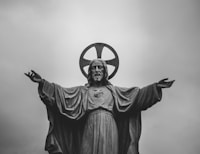
Photo by Jacob Bentzinger on Unsplash
In my last article we looked at Jesus’ own words to demonstrate the reality of the Real Presence, as the Catholic Church has taught it for 2000 years. This time we’re going to take it a bit further.
A logical question to ask is whether or not the apostles really believed in the Real Presence. A quick answer to that is found in I Corinthians 11:27-29. Paul writes, “Whoever, therefore, eats the bread or drinks the cup of the Lord in an unworthy manner [meaning in a state of mortal sin] will be guilty concerning the body and blood of the Lord. Let a person examine himself, then, and anyone who eats and drinks without discerning the body eats and drinks judgement on himself.” Now if the Eucharist is a mere symbol or representation of Jesus, how in the world can you eat judgement on yourself by receiving Communion while in a state of mortal sin? And this was reiterated by every early Church Father from the very first century, and has been taught by the Catholic Church for 2000 years.
As we’ve clearly seen, Jesus promised us His own flesh and blood for our consumption in John six. He did this for our own salvation. So if you’re one of the 70% of Catholics who don’t believe in the Real Presence, in order to continue to deny it you have to call Jesus, the apostles, and the early Church Fathers liars. Of course, you can only dare to do that if you’re not a person of good will.
Most people have never even heard of patristics. For those of you who don’t know what that is, patristics are the extant writings of the early Church Fathers. There are so many extant writings that they fill thirty-eight encyclopedia-size volumes. Now, since the Church can’t change any of her teachings because her Founder is God Himself in the second Person of the Blessed Trinity (Hebrews 13:8), I’ve always told people that if they want to know what Christians of the first few centuries believed then they need to read patristics. Let’s see what a few of the early Church Fathers had to say about the Eucharist.
St. Ignatius of Antioch (d. AD 107), in speaking about heretics, said, “They abstain from the Eucharist and from prayer, because they do not confess that the Eucharist is the flesh of our Savior Jesus Christ, flesh which suffered for our sins and which the Father, in his goodness, raised up again.” (Epistula ad Smyrnaeos 6, 2)
Forty years later, Justin Martyr (d. AD 165) wrote, “We call this food Eucharist, and no one else is permitted to partake of it, except one who believes our teaching to be true and who has been washed in the washing which is for the remission of sins and for regeneration and is thereby living as Christ has enjoined. For not as common bread nor common drink do we receive these; but since Jesus Christ our Savior was made incarnate by the word of God and had both flesh and blood for our salvation, so too, as we have been taught, the food which has been made into the Eucharist by the Eucharistic prayer set down by him, and by the change of which our blood and flesh is nourished, is both the flesh and the blood of that incarnated Jesus.” (Apologia prima pro Christianis, 65)
Irenaeus of Lyons (d. AD 202), in his masterwork, Against Heresies, written toward the close of the second century, said that Christ “has declared the cup, a part of creation, to be his own Blood, from which he causes our blood to flow; and the bread, a part of creation, he has established as his own Body, from which he gives increase to our bodies”. He asks, “If the Lord were from other than the Father, how could he rightly take bread, which is of the same creation as our own, and confess it to be his Body and affirm that the mixture in the cup is his Blood?” (Adversus haereses 5, 2, 2; 4, 33, 7)
Origen (d. AD 253), writing about 244, demonstrated that reverence is given to the smallest particle from the host. “I wish to admonish you with examples from your religion. You are accustomed to take part in the divine mysteries, so you know how, when you have received the Body of the Lord, you reverently exercise every care lest a particle of it fall and lest anything of the consecrated gift perish. You account yourselves guilty, and rightly do you so believe, if any of it be lost through negligence.” (In Exodum komiliae 13, 3)
Finally, Athanasius (d. AD 373), bishop of Alexandria, said this in his Sermon to the Newly Baptized, delivered in 373: “You shall see the Levites bringing loaves and a cup of wine and placing them on a table. So long as the prayers of supplication and entreaties have not been made, there is only bread and wine. But after the great and wonderful prayers have been completed, then the bread is become the Body, and the wine the Blood, of our Lord Jesus Christ.” (Sermo ad nuper baptizatos)
We could go on and on and on quoting the early Church Fathers about the Real Presence of Christ in the Most Holy Eucharist. And if you were to take the hours necessary to read all of what they said about the Eucharist, you’d not find one iota of difference in what they believed and taught. So if you’re among that 70% of Catholics who deny the Real Presence, and if after having read this you continue to obstinately deny it, then you’re holding to heresy. Holding to heresy makes you a heretic. Heretics aren’t Catholics. If you’re a heretic, do yourself and other Catholics a favor and find another religion where they believe as you do. However, know this: the Catholic Church teaches now and has always taught that a Catholic who dies outside the Church established by Christ has no hope of salvation. So the choice is yours: choose a Christian religion that is at most 500 years old, or get your soul right with God to remain in the Christian Church established by Christ 2000 years ago.
Be sure and listen to The Cantankerous Catholic podcast to learn more. You can download each episode wherever you get your podcasts, or you can go directly to CantankerousCatholic.com.
Recommended Stories
About the Author
I’m a convert of thirty-plus years. God has used me to make hundreds of converts and reverts, eighty-four of whom are my adult godchildren. I’m a consecrated member of the Marian Catechist Apostolate, under the direction of Raymond Leo Cardinal Burke. I host The Cantankerous Catholic podcast, and I have a weekly column in The Wanderer and Church Militant.
My wife and I live in the Ozark Mountains of Missouri. I’m also a proud veteran of the United States Army and a gold star father. I’m permanently bound to a wheelchair, due to a debilitating stroke. My favorite pastimes are to sit with my wife on the back deck and watch the wildlife, engaging in apologetics, and evangelizing non-Catholics and lapsed Catholics.