A Strange Request

Catholics in Crisis, and They Don’t Even Know It


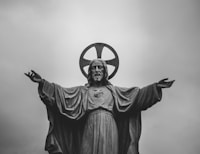
Photo by Jacob Bentzinger on Unsplash
Seven out of ten Catholics in this country deny the very core dogma of our Catholic faith, and most of them don’t even realize it. That would make them heretics, but for the fact that they deny this dogma isn’t their fault. It’s the fault of the most treacherous group of men ever to make an attempt at destroying the Catholic Church. And those men aren’t the freemasons or the Communist Party, but rather members of the largest criminal organization in America. Of course, I’m talking about the vast majority of the bishops in the USCCB.
The dogma being denied by 70% of the Catholics in America is the Real Presence of Christ in the Most Holy Eucharist. Some of you are in that seven out of ten group, and you don’t even realize it. Now, what I’m going to do is first explain exactly what the Eucharist is, then I’m going to tell you how and why those evil prelates cheated you out of the most beautiful gift God ever gave to man, and I’m going to wrap it up by proving to you that Jesus gives us His real body and blood every time we receive Communion. You’ll need to get your Bible so you can follow along with me as I show the reality of the Real Presence.
There are two reasons I became a Catholic over thirty years ago: one an intellectual reason, the other an emotional one. The intellectual reason is because it was proven to me, right from the plain text of the Bible and simple logic, that Jesus is God, that He established the Catholic Church, and that He wills that all men belong to her for our salvation. Since I was a freemason at the time, the last thing I wanted was to become a Catholic, but neither did I want to go to hell. And having it proved to me that Jesus established the Catholic Church and that He’s the one who obligated all men to belong to her, logic dictated that my refusal to become a Catholic would only result in spending eternity in hell.
The emotional reason for deciding to become a Catholic came a bit later. It was proven to me, just as I intend to prove to you, that the Eucharist really is the true body, blood, soul and divinity of Jesus Christ. The reason that was emotional for me is, I’d spent most of my life begging God to show Himself to me so I could believe without any doubts. Learning about the Real Presence was an answer to that life-long prayer.
Some of you at this point may think I’m just a fanatic, or that I believe in superstition, or that I just hung my brain at the door and blindly accepted everything the Catholic Church said. I’m not the sharpest knife in the drawer, but if you’ve listened to The Cantankerous Catholic before, or read anything I’ve written, then you know that I’m not stupid. I’m proud, opinionated, cantankerous, and rude, but I’m not stupid. I hold three college degrees, four professional certifications, and a bevy of awards in my former profession, so my godfather really had his work cut out for him in proving everything to me. I hope that by telling you this I’ve established enough credibility with you that you’ll at least pay attention to what I have to say.
Most of the 70% of Catholics who deny the Real Presence think that the Eucharist is merely a symbol or a representation of Jesus, but that’s not what it is at all. In the Holy Eucharist Jesus gives us Himself, under the appearances of bread and wine, fully and completely; He’s truly present in his body, blood, soul, and divinity, in order to give Himself to the Father for our salvation, and to give Himself as divine nourishment for our souls. That’s it in a nutshell. You’ll more fully understand this when I prove the dogma to you. But first I want to tell you why and how the bishops cheated you out of this beautiful truth.
During the pontificate of Pope St. Pius X, there was a dark and evil heresy that raised its ugly head and threatened the faith of all Catholics. It was called Modernism, and Pius X condemned Modernism through a decree with the English title of Lamentabili Sane Exitu. Throughout the history of the Church, when a pope condemned a heresy the heretics either left the Church or renounced the heresy. That wasn’t the case this time, though. Instead of leaving the Church, which would’ve been the honest thing to do, they simply slid underneath the nearest rock and bided their time, quietly promoting their heresy to their chosen proteges. They saw their opportunity to bring havoc into the Church in the aftermath of Vatican II.
The world had become a very busy place after World War II, and the council began in the era when we were still trying to catch up with all of the changes the war had brought into the world. Priests had become busier than they’d ever been before. So after the council these Neo-Modernists came out of hiding and began holding educational events for the priests to tell them what the council taught. After all, they had no reason not to trust the nuns and their fellow priests who were teaching them, and going to seminars was easier than taking the time to read the sixteen documents that the council produced.
They shouldn’t have been trusted, though, because the people hosting these events were promoting their Neo-Modernist heresies in an attempt to destroy the Church from within. They did a pretty good job of it too. They convinced the priests that the Catholic Church was changing in a big way, which wasn’t at all true. She hadn’t changed a smidgen. And many of the priests effected by the heresies in these seminars eventually became bishops.
Among the evil destruction they wanted to accomplish was to convince the laity over time that the Eucharist was merely ordinary bread and wine. They did that too, as we can see from surveys where Catholics tell on themselves that 70% of them no longer believe in the Real Presence. So how did they manage to convince the laity that the Eucharist is just ordinary bread without the Vatican coming down on them? They made gradual, incremental changes that seem normal to you today because it’s all you’ve ever known, but the way things were are what Christ and His Church want them to be even now.
The way things used to be was that only men, because Jesus set it up that way, were at the altar. We had altar rails for the laity to kneel and receive Communion instead of standing. No one accept the priest received the Precious Blood from the chalice. And no one except the priest or a deacon dared to touch the Eucharist because Jesus’ body is just too special for anyone other than a man of Holy Orders to touch.
But the idea of these Neo-Modernists was for you to stop thinking of the Eucharist as the actual body of Christ, and rather to think of it as ordinary bread. They did this with incremental changes that they claimed were demanded by Vatican II, which was a bald faced lie.
The first thing they did was turn the altar around so the priest would have to face the people, making it the “dig me” show for the priest rather than divine worship with the focus on Jesus. Vatican II never called for that.
Then they ripped out the altar rails so people would begin receiving while standing rather than kneeling before their King of Creation. Later they made receiving standing mandatory, once most Catholics did it that way. Vatican II never called for any of that either.
If you read the Old Testament, especially the book of Leviticus, you’ll find that the old covenant sacrifices and how they were done is a blueprint for the new and everlasting covenant in the celebration of the Holy Sacrifice of the Mass. In those old sacrifices, God told Moses that only levitical priests would perform the various sacrifices, so only men were at the altar. That gave it a sense of being very special. Then these evil agents of darkness began making it less special by allowing women readers and girl altar servers.
Through deception, they got permission from Rome to begin allowing the laity to receive Communion in the hand and extraordinary lay ministers of the Eucharist. Add to this the fact that the bishops completely stopped teaching about the Real Presence and their mission was complete. They had managed to avert the emphasis from the Eucharist being the true body, blood, soul and divinity of Jesus Christ to the Eucharist being ordinary bread. After all, if just anyone can manhandle the Eucharist, and if its not special enough to kneel, and if women can take over an all-male role regarding the Eucharist, the laity can’t possibly see it as anything other than ordinary bread. In a matter of decades, these evil agents of darkness altered 2000 years of Tradition and worship, turning the Eucharist into the “Jesus cookie”.
Is the Church crazy in believing that Jesus is really and truly present in the Eucharist, a belief that’s 2000 years old? I hope you got your Bible out when I mentioned it earlier, because now I’m going to show you why the Church believes in the dogma of the Real Presence and I want you to follow along in your Bible.
We’ll begin in Luke 22:15. Jesus and the apostles are in the upper room preparing for the Last Supper—the final meal Jesus will have before His crucifixion. He said, “I have earnestly desired to eat this Passover with you before I suffer.” Think about that. Jesus knows this will be His last meal, yet He earnestly desired to eat it with the apostles. If a condemned man on death row were about to have his last meal, do you think he’d earnestly desire that final meal? If an ordinary man said that he earnestly desired to have his last meal, we’d think he’s nuts. But Jesus was no ordinary man. He was anxious to finally fulfill a promise He’d made earlier. We find that promise in John’s sixth chapter.
Looking at the entire sixth chapter of John, we have to appreciate the way John set everything up for Jesus’ Eucharistic discourse. Oh, for those of you who need a little help, John is the fourth book in the New Testament.
In verses 1-21, John sets up the discourse by showing Jesus’ divine power by talking about the miracles He performed to get His followers ready for the Eucharistic discourse. First He fed 5000 people with two fish and five loaves of bread. Get it? He not only fed the people miraculously, but He fed them flesh and bread together.
After Jesus was finished preaching and feeding the people miraculously, He told His apostles to get into their boat and go across the sea to Capernaum. In the meantime, He slipped away from the people and went into the hills to pray.
The people saw the apostles go across the sea, but they had no idea where Jesus was. However, they knew that wherever the apostles were that Jesus would show up. So they spent the entire night walking around the sea to find and catch up with the apostles.
During the night, while the apostles were going across the sea, Jesus came to the apostles walking on the water. Miracle number two. The third miracle was that as soon as He got into the boat, they suddenly found themselves on the shore where Jesus wanted them.
Later that morning, the people who spent the night walking around the sea found Jesus with the apostles. They said, “Rabbi, when did you come here?” Jesus cut right to the chase when He answered them, “Truly, truly, I say to you, you are seeking me, not because you saw signs, but because you ate your fill of the loaves. Do not work for the food that perishes, but for the food that endures to eternal life, which the Son of Man will give you. For on him God the Father has set his seal.”
Then the people asked Him, “What must we do, to be doing the works of God?” This was the question that Jesus was waiting for; their question led them right into what Jesus wanted to tell them. Jesus said, “This is the work of God, that you believe in him whom he has sent.”
This next question they asked Jesus really floors me. After the miracles they’d already seen, they had the audacity to ask Him, “Then what sign do you do, that we may see and believe you? What work do you perform? Our fathers ate the manna in the wilderness; as it is written, ‘He gave them bread from heaven to eat.’”
Now Jesus had them right where He wanted them. Jesus replied, “Truly, truly, I say to you, it was not Moses who gave you bread from heaven, but my Father gives you the true bread from heaven. For the bread of God is he who comes down from heaven and gives life to the world.” The people replied, “Sir, give us this bread always.”
Now Jesus launches into His Eucharistic discourse. He said, “I am the bread of life; whoever comes to me shall never hunger, and whoever believes in me shall never thirst.” Jesus also said, “For I have come down from heaven, not to do my own will but the will of him who sent me.”
Because Jesus said that He’d come down from heaven, the Jews began to grumble. They asked among themselves, “Is this not Jesus, the son of Joseph, whose father and mother we know? How does he say, ‘I have come down from heaven’?”
After informing the Jews that they were now being taught directly by God by quoting a prophet, Jesus went on to say, “I am the bread of life. Your fathers ate the manna in the wilderness, and they died. I am the living bread that came down from heaven. If anyone eats of this bread of this bread, he will live forever. And the bread that I will give for the life of the world is my flesh.”
The Jews grumbled among themselves again. “How can this man give us his flesh to eat?” By saying this, it’s obvious the Jews were clearly thinking that Jesus was being literal. And they were right, because Jesus became even more forceful in His language when He said, “Truly, truly, unless you eat the flesh of the Son of Man and drink his blood, you have no life in you. Whoever feeds on my flesh and drinks my blood has eternal life, and I will raise him up on the last day.” He became even stronger so there’d be no misunderstanding. “For my flesh is true food, and my blood is true drink. Whoever feeds on my flesh and drinks my blood abides in me, and I in him.”
Then John tells us that many of the people there just couldn’t take this. They said, “This is a hard saying: who can listen to it?” John tells us that at this point many of His disciples forever walked away. Now if Jesus didn’t mean what He’d said literally—if they failed to understand His meaning—Jesus had a moral obligation to say something like, “Hey, guys, you don’t understand. Come back and I’ll explain it.” But He didn’t do that. Jesus let them abandon Him rather than back down from what He was saying.
The apostles didn’t understand either. Jesus asked them, “Do you want to go away as well?” Peter, speaking for all of them, said, “Lord, to whom shall we go? You have the words of eternal life, and we have believed, and have come to know, that you are the Holy One of God.” In other words, Peter was saying that they didn’t understand any better than those who’d walked away, but they had a supernatural faith that Jesus would reveal it to them.
Now you know why Jesus earnestly desired His last meal with the apostles. He wanted to finally reveal what He had promised in John six. And that’s exactly what He did at His final Passover supper. This was the third Passover Jesus had celebrated with the apostles, but this final one is the only one recorded by all four gospel writers. Why? Because this is when Jesus instituted the Eucharist in which He gave us His Real Presence.
A logical question to ask is whether or not the apostles really believed in the Real Presence. A quick answer to that is found in I Corinthians 11:27-29. Paul writes, “Whoever, therefore, eats the bread or drinks the cup of the Lord in an unworthy manner [i.e., in a state of mortal sin] will be guilty concerning the body and blood of the Lord. Let a person examine himself, then, and anyone who eats and drinks without discerning the body eats and drinks judgement on himself.” Now if the Eucharist is a mere symbol or representation of Jesus, how in the world can you eat judgement on yourself by receiving Communion while in a state of mortal sin? And this was reiterated by every early Church Father from the very first century, and has been taught by the Catholic Church for 2000 years.
As we’ve clearly seen, Jesus promised us His own flesh and blood for our consumption in John six. He did this for our own salvation. So if you’re one of the 70% of Catholics who don’t believe in the Real Presence, in order to continue to deny it you have to be calling Jesus, the apostles, and the early Church Fathers liars.
Recommended Stories
About the Author
I’m a convert of thirty-plus years. God has used me to make hundreds of converts and reverts, eighty-four of whom are my adult godchildren. I’m a consecrated member of the Marian Catechist Apostolate, under the direction of Raymond Leo Cardinal Burke. I host The Cantankerous Catholic podcast, and I have a weekly column in The Wanderer and Church Militant.
My wife and I live in the Ozark Mountains of Missouri. I’m also a proud veteran of the United States Army and a gold star father. I’m permanently bound to a wheelchair, due to a debilitating stroke. My favorite pastimes are to sit with my wife on the back deck and watch the wildlife, engaging in apologetics, and evangelizing non-Catholics and lapsed Catholics.