True rejoicing, a foretaste of heaven

John's unfinished mission, we are bound to continue
Second Sunday of Advent – Year C
Gospel Lk 3:1-6
In the fifteenth year of the reign of Tiberius Caesar,
when Pontius Pilate was governor of Judea,
and Herod was tetrarch of Galilee,
and his brother Philip tetrarch of the region
of Ituraea and Trachonitis,
and Lysanias was tetrarch of Abilene,
during the high priesthood of Annas and Caiaphas,
the word of God came to John the son of Zechariah in the desert.
John went throughout the whole region of the Jordan,
proclaiming a baptism of repentance for the forgiveness of sins,
as it is written in the book of the words of the prophet Isaiah:
A voice of one crying out in the desert:
“Prepare the way of the Lord,
make straight his paths.
Every valley shall be filled
and every mountain and hill shall be made low.
The winding roads shall be made straight,
and the rough ways made smooth,
and all flesh shall see the salvation of God.”
John’s unfinished mission, we are bound to continue.
John the Baptist lived during the time Palestine was controlled and dominated by powerful political elites and religious leaders. Luke situates John’s ministry in the timeline of world events to help us to understand the context where both the civil and religious societies co-existed and competed for position, power, and influence. As mentioned in the Gospel, Luke narrowed down the following personages as the Roman Emperor Tiberius Caesar, the Governor of Palestine Pontius Pilate, the Tetrarchs, Herod, Philip, and Lysanias, and the High Priests Annas and Caiaphas. These Israel’s religious leaders held office one at a time. During the New Testament times, most of them were appointed by Roman authorities and deposed the priests at will. Annas ministered from A.D. 6 until A.D.15 in Jerusalem while the son-in-law, Caiaphas continued the ministry as high priest from A.D. 18 to 36.
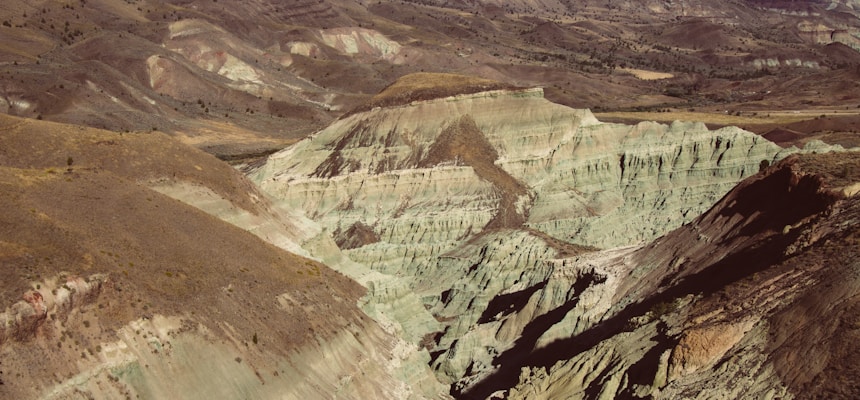
Luke cited the prophecy of Isaiah to introduce John who received the Word of God in the desert. John decisively obeyed God to go throughout the whole region of Jordan “proclaiming a baptism of repentance for the forgiveness of sins.” At first glance, the fulfillment of Isaiah’s words seemed to happen in Israel towards her restoration as announced by John, yet the message was also delivered for the entire world where sin, darkness, and evil dwelt. John is the voice in the desert announcing the coming of the Lord. Thus, he will prepare His way, to make His path straight, the valley to be filled, mountain and hill to be made low. Isaiah’s prophesy as mentioned in Luke’s account of John’s crucial role towards Israel’s restoration ushered in to further advance the Biblical promises:
Because of His coming, Jesus will…
-rescue the poor and the oppressed (41:17; 42:7; 49:13)
-pour out the Spirit (44:3)
-restore Israel (43: 5-7; 48:20; 49:5)
-be the King of Jerusalem (40: 9-10; 53: 7-10)
-destroy His enemies (41:11-13; 47:1-15)
-show mercy to His children (43:25; 44:22; 55:7)
-to bless the nations as the Messianic Servant (42:1-4; 49:1-6)
-and atone for sin (50:4-9:52:13-53:12). All of this is fulfilled by Jesus (2:32; 22:37; 24:46; Acts 3:13).
Recalling what happened to Israel in the distant past, they were lost, afraid, miserable, and enslaved in the land of the Pharaohs until God listened to their pleas and saved them. Led by Moses, they were freed from the hands of their enemies as they crossed the waters of the Red Sea and stayed in the desert for forty years, being cared for by God Himself as they entered the Promised Land. Came their patriarchs, prophets, and leaders: Saul, David, Solomon, and their successors, Israel became relatively peaceful and united for years despite the multiple battles with their powerful opponents. In time, however, the people wandered away from God and fell under their oppressive invaders-the Assyrians, the Babylonians, the Persians, the Greeks, and now the Romans-and went back to slavery.
John, the Voice in the desert announced the coming of Jesus and who would proclaim the baptism of repentance for the forgiveness of sins was truly God’s undying, unstoppable, and ultimate desire to save His people. God would like to re-establish a new nation, His people who were defeated and became slaves due to the slavery of sin. God reminds us what He did in the past that the cause of the misery and the consequences of sin and death were due to the unfaithfulness to God and His covenant by our ancestors.
John still shouts to us in our desert or wilderness of confusion, doubt, disbelief, spiritual laziness, comfort-seeking, passivity, and indifference. The message of repentance and conversion often falls on deaf ears. How many more Isaiahs and Johns should proclaim the coming of Jesus to keep us awake, alert, and enthusiastic? Calling us to get ready: “prepare the way of the Lord, make straight His paths,” could be enormous and unreachable. Are we dealing with this massive undertaking as serious as the coming of the virus and its variants? Oftentimes, the unseen enemy could catch us by surprise. Yet, the tangible, visible, and concrete ways to “level the mountains and hills, straighten the roads, and pave the uneven paths,” could be overwhelming and impossible for many of us.
Indeed, such foundation and groundwork involved extensive efforts. The fiery prophet John the Baptist could not be so convincing, serious, and not to mention his readiness to lay down His life for Jesus, the Truth, Way, and the Life if repentance for the forgiveness of sin is not necessary and vital for conversion and salvation. Friends, we are following John’s mission as promised in the Second Reading, as Paul exhorts the Philippians “that the one who began a good work in you will continue to complete it until the day of Christ Jesus.”
We can cross the “Red Sea,” too by rectifying our ways, e.g. the old habits, inordinate attachments, immoral conducts and attitudes, and wicked way of life. Looking both outside and inside ourselves. We need to look deep within ourselves. It takes courage to cross the “Red Sea.” Patience, discipline, determination, and trust in God’s ways are crucial. The call to transformation by John was not one-dimensional. It encompasses even our political, religious, social, cultural, personal, and spiritual life. If we wandered away from Him, and start to live miserably, and became enslaved by sin, shame, guilt, and fear, sincere repentance is the way to overcome that sadness and separation. And God’s gracious mercy and forgiveness is the water that purifies our guilt and shame.
The Eucharist is ever available even in unlikely circumstances
One glaring proof of God’s continuing love and mercy in our lives is the Sacrament of the Eucharist. Every Mass, Jesus makes Himself, seen, felt, and received like another Bethlehem, another Christmas. His perpetual presence cannot be denied, reduced to human religious act, the more people refuse or ignore Him, the more He reveals Himself in the most tangible way. Archbishop Fulton Sheen told the story of a group of Catholics who protested when the Communist government in China arrested their bishop. They were put into prison and next to the bishop. Every morning, a four-year-old girl was allowed to visit them and bring each of the twenty prisoners a small loaf of bread. Hidden inside each loaf of bread was a napkin, and inside each napkin was the consecrated bread- the Eucharist. This made the prisoners truly comforted, relieved, and grateful despite their great ordeal- that they could receive Holy Communion. But they left one load uneaten and keep it in a corner of the cell. That way, throughout the day, they could pray to our Lord in the Eucharist and adore him there.
In addition to our First Week of Advent preparation: prayer, Mass, and confession, in this Second Week of Advent we may try to commit the following: to reach out especially to those in need, whether spiritual or material. Helping the poor is always essential. If the Lord has done great things for us and were filled with joy, we can reach out to others who have less in life, maybe not to give up on possible reconciliation, or visiting someone who is lonely, those whose families are far away, or whose husband is on deployment, or coping with a loss. It does not need to go far. Some of these people you might even find in our very home or family. Do you also pray for those who are not here? Why not reach out to those people in these weeks before Christmas?
Recommended Stories
About the Author
I am Fr. Jude M. Serfino, a diocesan priest from the Diocese of Bacolod, Philippines, currently endorsed by Archdiocese for the Military Services, USA. assigned as the contract priest at St. Michael's Catholic Community, Camp Pendleton, California.