True rejoicing, a foretaste of heaven

Generosity is the language of the heart

Homily 32 Sunday Year B
Gospel Mk 12:38-44 or 12:41-44
In the course of his teaching Jesus said to the crowds,
"Beware of the scribes, who like to go around in long robes
and accept greetings in the marketplaces,
seats of honor in synagogues,
and places of honor at banquets.
They devour the houses of widows and, as a pretext
recite lengthy prayers.
They will receive a very severe condemnation."
He sat down opposite the treasury
and observed how the crowd put money into the treasury.
Many rich people put in large sums.
A poor widow also came and put in two small coins worth a few cents.
Calling his disciples to himself, he said to them,
"Amen, I say to you, this poor widow put in more
than all the other contributors to the treasury.
For they have all contributed from their surplus wealth,
but she, from her poverty, has contributed all she had,
her whole livelihood."
Generosity is the language of the heart
One day during my pastoral exposure program before my priestly ordination, I met a family who allowed me to stay in their house for a few days to experience a glimpse of what they could offer- a simple life in the farm, depending on the source of livelihood in a daily basis, a mother taking care of six children while the father was out in the field, and regularly volunteering in the Church as lay leaders and other ministries. One evening as I joined them for dinner, the mother said sadly: Bro. so sorry this is all we have for dinner, chicken stew with vegetables grown at the back of the house, caramelized banana for dessert, and my family’s favorite: pumpkin soup. I smiled and said thank you many times. She added: I don’t know what happened, this pumpkin was only as small as my fist before you came, but maybe it heard that you’re going to stay here for two days, suddenly it grew big as this ball- pointing the basketball ball on the floor. I couldn’t stop laughing as I hugged her, and was moved by this simple generosity. The prayer of the father before we started eating was heart-warming: Lord, you have been generous to us, our Provider, out of our nothingness, You give us the opportunity to be generous to others because we trust you always and please bless the work of our hands as we pray the Our Father…
The Gospel is composed of two correlative stories, complementing each other by the mention of widows. These stories present a contrast between pride and humility, the greed of the scribes with the simple humility and generosity of a widow.
The scribes were known as:
- Religious leaders who like to walk in long robes (Greek: stolais)
- Being greeted in the public places
- Took the important seats in the synagogues and best places in the feasts
- Exploited the widows and pretended to be protectors through long prayers, but deceivers.
- Their position of trust turned into self-serving ambition
- Focused on what they could get rather than what they could give
That’s why we have to watch out for the scribes.
This is a common temptation for every age- the red carpet treatment, wearing a lavish attire, to be addressed by honorific title. Let us not assume that all scribes are guilty. Last Sunday, one of them was admired by Jesus as “one not far from the Kingdom” (12:34) because he accepted with understanding the greatest commandments. Jesus asserted that to be the first or the greatest must be the servant of all, for He came not to be served, but to serve, giving up His life as a ransom for many.
Widows during Jesus’ time were vulnerable in a patriarchal society. Scribes acted both as lawyers and rabbis, helping people both financially and spiritually. Yet their long prayers gave them a glaring reputation for piety and respect while they took advantage of simple or poor people.
Their guilt will receive greater condemnation (v. 40b). God will hold them accountable when they fail as stewards. In another context, Jesus said, “To whomever, much is given, of him, much be required; and to whom much was entrusted, of him more will be asked” (Luke 12:48b). Today, some church leaders are always more preoccupied with personal ambition and privileges than their mission and faithful service. There’s a thin line that separates the sacred and the profane. When grandiose buildings and costly vestments stop glorifying God, and the people start glorifying the builders and the priest behind his attire, that becomes a hidden secret that only God knows for what it belongs to our heart cannot escape from the judgment of God.
The scribes of today can do the following:
- Amongst the business owners, they are tempted to treat customers and employees as objects that operate the moneymaking machine.
- Government officials are tempted to make and sell policies to campaign contributions and personal favors.
- Military leaders are tempted to put personal promotions above the welfare of subordinates.
- Educators are tempted to put salaries and work conditions above students.
- Parents are tempted to have more children supposedly as gifts from God so they can benefit from them for future security when the former grow old as a mere obligation on the part of their children, and not for their welfare and well-being.
Here comes the poor widow who out of her generosity and trust in the Lord, cast in two brass coins. She gave more than all those who are giving into the treasury according to Jesus because out of her poverty, gave all that she had to live on. Lepta or a small coin is considered worthless equivalent to 10 cents or a penny. Jesus does not condemn the huge gifts of wealthy people but says that his woman’s offering is even larger. He bases His calculation, not on what she gives, but what she has left.
The rich people who saw what the widow did felt shame and guilt because they allowed their budget to dictate their giving or they gave out of their excess or surplus. Their false benevolence was displayed superficially in the guise of kindness and compassion. For them, there’s no reason to feel bad about extending help for a good cause while getting a substantial return on the investment. They simply used the poor to enrich themselves.
We are not being told to go and do likewise. Jesus does not demand that we drop every last penny in the offering tray. However, Christ’s specific call to all is with regard to stewardship. That we are not the owners of what we have including our life. We are simply called stewards, custodians, caretakers, or overseers of all the blessings we received.
The two coins show that (1) even in our poverty, we can honor God with our gifts: The three t’s: time, talent, and treasures. (2) God looks at the heart of the giver. It’s not by the size of the gift, but by the person’s heart.
Truly God wants from us is something more, something deeper: He wants our faithful love; He wants us to trust in Him for He is involved in all our human circumstances. This is what the poor widow gave to him in return. Remember as a widow, a woman, a mother, deprived of some basic necessities of life (work, material comfort, and might have no voice in the society. She handed over to God all of her resources, saying to Him:
-“I claim your promise Lord, that you will take care of me and my children, You are the One I’ve got, I couldn’t afford to lose you. You are my everything. Please accept all that I have.” This is the prayer the scribes never prayed.
These self-righteous, arrogant, and selfish – the scribes would only say: I worked hard, and I don’t owe anybody, I do not care if I used somebody as long as I am promoted, I got what I want. Why give? These people don’t deserve my help; I will only give to those who love me, so when I need them someday, they will not forget me. I have to take care of myself first.
As Christians, we’re called to behave and live in a certain manner: not to deceive or pretend we’re better than others, but because we have been set apart for a purpose. Christ calls us to be His witnesses on earth.
He modeled the behavior and the heart God wants from His people so we wouldn’t have to guess what was expected. As children of God, we are called to make our lives living sacrifices to the Father who sent His Son to die in our place.
Jesus saw the poor widow’s sacrifice and He sees yours as well. That’s why we are called to faithfulness. God is more concerned with the state of our hearts when we give than He is with the amount that we offer as a sacrifice. You see, God knows that when our hearts are in the right place, everything else will fall into place.
Recommended Stories
About the Author
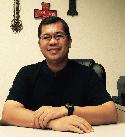
I am Fr. Jude M. Serfino, a diocesan priest from the Diocese of Bacolod, Philippines, currently endorsed by Archdiocese for the Military Services, USA. assigned as the contract priest at St. Michael's Catholic Community, Camp Pendleton, California.