In God's Design of Marriage, the couple mirrors God's love

To whom shall we go? Jesus, You are our life.
Gospel Jn 6:60-69
Many of Jesus’ disciples who were listening said,
“This saying is hard; who can accept it?”
Since Jesus knew that his disciples were murmuring about this,
he said to them, “Does this shock you?
What if you were to see the Son of Man ascending
to where he was before?
It is the spirit that gives life,
while the flesh is of no avail.
The words I have spoken to you are Spirit and life.
But there are some of you who do not believe.”
Jesus knew from the beginning the ones who would not believe
and the one who would betray him.
And he said,
“For this reason I have told you that no one can come to me
unless it is granted him by my Father.”
As a result of this,
many of his disciples returned to their former way of life
and no longer accompanied him.
Jesus then said to the Twelve, “Do you also want to leave?”
Simon Peter answered him, “Master, to whom shall we go?
You have the words of eternal life.
We have come to believe
and are convinced that you are the Holy One of God.”
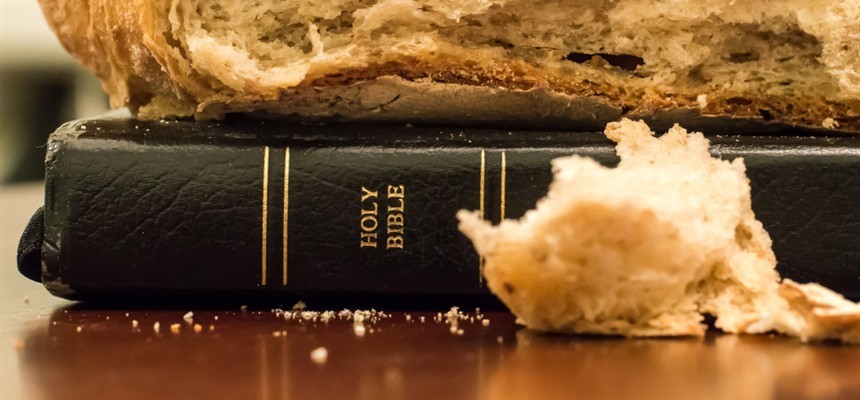
To whom would we go? We need to be with Jesus, our Life.
One of our Theology professors asked the class whether we would change our position and regret if in the end Jesus was only lying and whatever He promised would not come true. He added another thought-provoking question: What if there’s no heaven, will you still not change your mind? What a mind-bugling question, isn’t it? And after a brief silence, my classmate said with confidence: To whom shall we go? Jesus has the words of eternal life. This is what we are here for. What’s the use of studying Theology and hopefully become priests, if after all what He says is nonsense! And the class broke into laughter and loud applause.
Last Sundays’ Gospel episodes we heard the outcry, anger, and varied reactions including the constant murmuring and questioning of the crowd when Jesus pronounced Himself as the bread of life from heaven, the one to come who will give life, and the anointed One sent by the Father commanding them to eat His flesh and drink His blood. The crowd quarreled and were divided over their interpretations of who Jesus claimed to be. It’s either rejection or acceptance, approval or dismissal of belief or doubt. They were made to choose as if their lives were at stake and would face serious consequences for Jesus spoke with authority as the true prophet. However, Jesus respected their freedom and decision. Those who followed Him were wise enough not to disregard His hard sayings and pronouncements.
To whom would we go? You have the words of eternal life. Peter emerged as the representative for the disciples. This question somehow confirmed His faith in the divinity of Jesus as he likewise confessed it on the three Gospels: Matthew 16:13-20; Mark 8:27-33 and Luke 9:18-20. Though this declaration happened in different places (John at Capernaum and while the Synoptics in Caesarea Philippi). Another difference is that in the accounts of Peter’s confession in Matthew and Mark, Jesus tells the disciples that He must suffer and die. Peter protested while Jesus rebuked him. In today’s Gospel, there’s no hint of Peter protesting on Jesus’ words.
Many went back and walked (Greek: periepatoun-were walking) no more with Him. The twelve remained. And when asked by Jesus: “You don’t also want to go away, do you?” Simon Peter confidently proclaimed, “We have come to believe and know that you are the Christ, the Son of the living God.” The word “walking” implies following – discipleship. Those who turned back expected something other than what Jesus offers. There were offended by Jesus’ offer that He did not promise deliverance from the hands of their enemies or foreign dominion, but spiritual liberty and eternal life.
To follow Jesus as the true way, He is pointing to us Himself, and not a specific place or space, or road map, a destiny or direction. It’s towards friendship, of deep intimacy and communion that grows with His grace, acceptance of our daily crosses, even in the midst of persecution, trials, and hardships for standing for Him in truth in love. The Gospel also causes people to stumble because it is costly. When Christ calls us to eat his flesh and to drink his blood, he is inviting us to participate in his death. The Christians who first read this Gospel experienced persecution. They knew martyred Christians, suffered under the threat of martyrdom, and knew Christians who avoided martyrdom by compromising their faith. E-priest.
They expect a political messiah in the image of their King David-a great leader to restore back Israel’s glory days. We might wonder why the twelve, a small group who followed Jesus became the pillars of the Church and the origin of her human leadership. There must be something worth reflecting on how they walked with Jesus.
Joshua in the First Reading admonishes God’s people to serve their God as a household, as a family for He performed great miracles and protected them during their entire journey. This is similar to Jesus’ disciples who follow Him, as they work, serve, pray, and live together as God’s people. St. Paul in the Second Reading compares God’s loving covenant with His people as a relationship between the husband and his wife in reference to Christ and the Church.
To conclude, I would like to share the message of His Excellency, the Most Reverend Timothy P. Broglio, J.C.D., Archbishop for the Military Services, USA, who issued the following statement on the situation in Afghanistan:
“The fall of Afghanistan and the departure of its elected leaders are a cause for concern, because of the possible denial of human rights, particularly for women and girls. My two visits to the country confirmed my impression regarding the sacrifices, even including death, made by many members of the Armed Forces and civilians striving to bring stability and peace to the people there. At the moment, however, we can only pray for the Afghani people, support any humanitarian efforts that are in place there (especially through Catholic Relief Services), and give voice to local leadership on all sides. The human dignity of these people must be respected.
“Naturally, I am particularly concerned about those in the US Armed Forces who continue to defend refugees and assets in the country. We pray that there will be no violence and a peaceful departure for all of those desiring to leave.”
We pray as well for the victims of the earthquake in Haiti. We know that more than 50% of the population are Catholics and many of them perished during this natural calamity. We are encouraged to extend our help and support to any Catholic initiatives that will hasten their recovery and healing. May God continue to comfort them and give them hope in the midst of this tragedy and great loss.
Recommended Stories
About the Author
I am Fr. Jude M. Serfino, a diocesan priest from the Diocese of Bacolod, Philippines, currently endorsed by Archdiocese for the Military Services, USA. assigned as the contract priest at St. Michael's Catholic Community, Camp Pendleton, California.