Courage, Play the Man

The Twentieth Century Prophet You Never Heard About

Like great visionaries and men of foresight, saints and prophets are only fully appreciated after they die. Such is the case with Prof. Plinio Corrêa de Oliveira whose life spanned the tumultuous twentieth century. Despite reaching the pinnacle of influence in political, social and religious spheres during his early years, he was largely ignored by the major media for the remainder of his extraordinary life. This silence was only broken when his enemies resorted to calumny and slander directed not only at his person but also the organization he founded, the Brazilian Society for the Defense of Tradition, Family and Property (TFP). This was no doubt meant to diminish his greatness and stain his untarnished character.
Yet long after his death, Prof. Plinio (as he was affectionately known by his followers) continues to exercise an enormous influence on our modern world. This is because he not only opposed the errors of his time but more importantly founded a unique school of thought which continues his work to our days. This legacy makes the new release of the English edition of Prof. Plinio Correa de Oliveira: Prophet of the Reign of Mary by Italian scholar Prof. Roberto de Mattei so important.
The term, “prophet,” in the title might be a bit enigmatic for some. This is because most people understand a prophet as someone who merely foretells the future. However, the main characteristic of such a holy man is his ability to discern the will of God and lead mankind in that direction. “He announces a punishment,” Prof. de Mattei explains, “not necessarily by divine revelation but because he understands how certain human forms of behavior inevitably lead to divine punishment.” This is exactly what Prof. Plínio did throughout his life.
He defined the great enemy of our times as the Revolution, a long historical process against Christendom, which he masterfully explains in the book Revolution and Counter-Revolution. Prof. de Mattei likened the work to the City of God by Saint Augustine. Whereas the latter was a “meditation on the sunset of the Roman Empire,” the former “can be seen as a meditation on the decline of Christian civilization.”
Because mankind did not resist this Revolution, Prof. Plinio foretold a subsequent Divine chastisement and finally the splendid victory of our Lady. Just like the great Saint Louis de Montfort, he called this era of peace the Reign of Mary. However, it is worth pointing out that Prof. Plinio developed this perspective of victory before he learned about the prophecy of our Lady of Fatima that spoke of the eventual triumph of Her Immaculate Heart. This is where Prof. de Mattei’s treatment of his subject’s prophetism will be of most interest to the reader.
Prof. Plinio’s profound insights came from an intellectual life, which was not simply an accumulation of doctrine obtained through books, but also his reflections on the world around him. Thus, his wisdom was derived as much through looking inside his own soul and then matching it with what he saw around him, than simply parroting what others had written. However, he never claimed to have a monopoly on this method.
“I maintain,” he said, “that we are by far our own best book. We are not [just one] book; each of us is a library that contains immensely more than libraries with books. Never has anyone written all that can exist in a person’s mind.”
This way of living, whereby one analyses reality then reflects on its significance cannot be done without the virtue of calm, about which Prof. Plinio frequently lectured. His constant tranquil disposition provided the necessary means to discern what was true, good and beautiful. This in turn allowed him to see and reject its opposite. More often than not, this rejection entailed a profound discernment of Revolutionary errors that were concealed in their “veiled and embryonic forms.”
Prof de Mattei exemplifies this with the expression white heresy. Prof. Plinio coined this term to describe a heresy not in the strict sense of the word but rather a sentimental, romantic idea of the Catholic religion where “virtue is conceived as something alien to heroism.” This concept is easily recognizable in the numerous depictions of the saints as soft, rosy-cheeked individuals of weak will and little suffering.
The historical embodiment of this spirit was Monsignor Jacques-André Emery who lived during the time of the French Revolution. Prof. Plinio found it noteworthy how this cleric was often imprisoned with saintly nobles. Many of them heroically faced the guillotine and died martyrs’ deaths for their refusal to sign the “liberté-égalité” oath which this “holy” priest counseled them to take. Prof. Plinio dubbed this tendency to compromise, the “white heresy mindset,” which “spread the mentality of conciliation and concessions that tend to subordinate the Church to the world.” Msgr. Emery survived the bloody terror and his pacifist “heresy” served to lull to sleep those who would have otherwise been disposed to fight against the advance of the Revolution.
The opposite of this deformed version of Catholicism was that practiced by the medieval knight, especially those who made up the numerous orders of Chivalry of that time period. These monk-warriors represented the ideal human type because they molded themselves after the example of our Lord Jesus Christ. Their manly piety attracted Prof. Plinio since it contrasted with the feminization of religion so prevalent in the world today.
Prof. de Mattei explains how these warriors embodied the Plinian spirituality which was both combative and chivalrous. The mixture of militancy with courtesy might seem, at first glance, a contradiction. It might be better understood if we relish the beautiful custom of these manly warriors at Mass during the reading of the Gospel. Full of Catholic fervor they would draw their swords in silence and hold them on high until the end of the sacred reading. That gallant attitude meant “If the Gospel needs to be defended, here we are!”
Like a knight of old, Prof. Plinio devoted his life to fight in defense of the Catholic Church and Christian civilization with the same spirit of readiness. Prof. Plinio’s knightly way of living and intransigent opposition to the errors of the Revolution is what most contributed to him being ostracized by those who preferred to make continual concessions. As a result, the twentieth century arbitrators of greatness made sure the spotlight never fell on him.
Sadly, he died on October 3, 1995 without seeing the establishment of the Reign of Mary for which he longed so much. Nevertheless, he accepted the will of Our Lady and passed tranquilly from this earth because he had the certainty that one day She would be victorious. This was one of the reasons for his devotion to St. Joan of Arc. She continued to believe in the mission she received from heavenly voices in the face of apparent defeat. That is why Prof. Plinio encouraged his followers to never lose hope in the victory of the Counter Revolution by repeating the Maid of Orlean’s dying words, “The voices didn’t lie, The voices didn’t lie!”
Prof. Plinio Corrêa de Oliveira: Prophet of the Reign of Mary is a very important read for those seeking a role model to help them face the Revolution in their respective lives and navigate the turbulent waters of our twenty-first century. More importantly, it supplies priceless principles for those wishing to be students in this Counter-revolutionary intellectual and spiritual school.
Norman Fulkerson
Book Review: Plinio Correa de Oliveira: Prophet of the Reign of Mary by Prof. Roberto de Mattei
Recommended Stories
About the Author
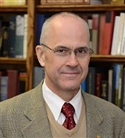
Mr. Norman Fulkerson was born in 1962 in Owensboro, KY. After completing his secondary education at Owensboro Catholic High School, he continued his studies by completing a degree in Tool Engineering from ITT Technical Institute in 1983. He has also studied writing and journalism with Long Ridge Writing School in West Redding, Conn.
Shortly after completing his degree, he began working as a full-time volunteer for the American Society for the Defense of Tradition, Family and Property (TFP) in 1984. Since then he has developed his skills as a writer.
He currently contributes to Crusade Magazine, and tfp.org with his “Only in America” column that highlights the cultural riches of our country and stories of American heroism that focus on members of the Armed Forces who have distinguished themselves in battle. He has also contributed to the illustrious fifty-five-old Brazilian periodical Catolicismo. His articles have also appeared in the Australian magazine Quest and the Polish magazine Polonia Christiana and the Marine Corps Leatherneck Magazine. In October, 2009 he published his first book, An American Knight: The Life of Col. John Ripley, which has received praise from several Medal of Honor recipients and former Marine Corps Commandant, Gen. Carl E. Mundy. In 2018 he co-authored Lighting the Way: Stories that Show How Our Culture Went Wrong and How We Can Restore Order with John Horvat.
His speaking accomplishments include giving lectures to TFP action groups in Rochester, N.Y., Cleveland, Ohio, New Castle, Penn., Louisville, Ky. and Boston, Mass. He has spoken at TFP conferences in Queenston Ontario at a Pro America rally. He has also appeared on several radio programs such as Radio Mambi in Miama, Fla., The Stan Solomon Show in Indianapolis, Ind., The Ron Ford Show in Boston, Mass., and With Jay Fox and Friends show in Willoughby, Ohio.
He now resides in Spring Grove, Penn. Where he continues to employ his various skills for the American TFP.
More Stories By :