
WWW; Be Wise, Watchful, and Wary in the present

When our Churches open their doors

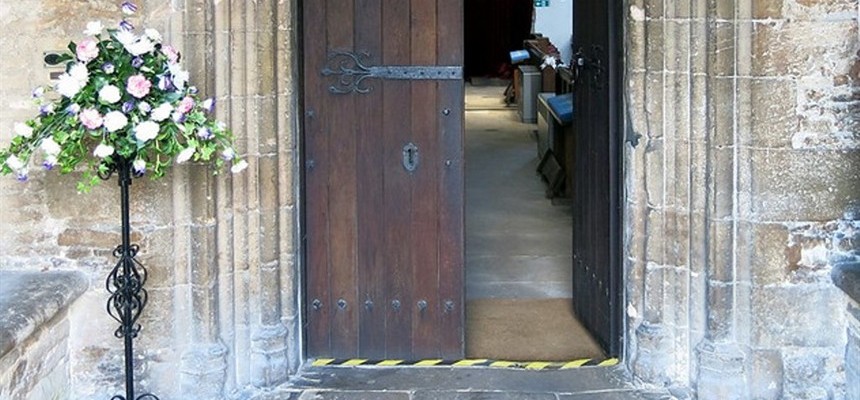
Photo By: Flickr/Spencer Means
Going back, when?
It is close to two months that we haven’t gone to our Churches to pray, to attend our long-cherished services (Mass, fellowships, devotions, adoration before the Blessed Sacrament, seeing old friends, talking to our pastors, etc.) and other important events that we would have attended including the canceled Baptism, weddings, funerals, and Easter celebrations. What will it be like when we return? It’s been a while and many are anxious, impatient, frustrated, dismayed even angry why we should avoid a place where we find comfort, solitude, and safety. And most importantly, if this is essential, why should we not include this amongst the low-risks and vital places to start easing down or gradually opening where we feel at home and being cautious as well of not creating unnecessary anxieties and disturbances amongst us? Time will tell.
We still must deal with this public outcry and immobility as if we have nothing to do, just to accept, and follow or obey for the sake of our safety and health. Many are asking: when are we going back to the Church? When will we restore our sacraments? When are we getting normalized? I would rather answer, let’s wait patiently, only God knows and it will even months or a year until we get the vaccine. We can even observe mixed reactions from the public. Some would take seriously the government health restrictions, though confused about varied messages. Some are feeling immune and unaffected. Somehow, it will always boil down to one’s personal beliefs, preferences, understanding, decision, commitment, and seriousness if indeed this contagion could be taken as a new normal or a temporary ordeal. However, it pays to be ready and prepared in any given situation: better to overdo the precautionary measures than being sorry or being prudent than careless because regret comes after and it would be devastating and painful.
When we return to our parish or chapels, there is still no room for relaxation and relative comfort. We still need to maintain social distancing at least six feet, no shaking of hands while greeting each other, it could be distribution by hand on holy communion, making the vicinity accessible to few people, have to wear face masks and to wash our hands with sanitizers. Surely, we will never be at peace physically and be disposed of spiritually because of this valid consciousness. We still would like to participate actively, fully, and consciously in our liturgy, but we need to adjust and adapt to current circumstances.
Returning someday (for work, recreation, outdoor activities, travels, gyms, Church, and other public domains) will not remove our grief and sorrow on the global damage and severity of what this COVID-19 has done to us. It will tell about ourselves, who we are. It brought us down to our knees and painful reality that nothing is permanent, work could be taken away from us, death is apparent not sparing only the sick, and we are not in control of everything. Mindful of the promise of St. Paul’s letter to the Romans: “We know that all things work together for good for those who love God, who are called according to his purpose.” And reflecting this Old Testament passage from Prophet Jeremiah: For I know the plans I have for you, declares the LORD, plans for welfare and not for evil, to give you a future and a hope (29:11), though written to the exiles in Babylon, this is could be applied to all the believers since it helps us refer to the truest nature of God. We continue to hope in Christ at all times including our future as Jesus says, “I am with you always, to the end of the age (Matt. 28:20). Therefore, we remain abiding in Him (Jn. 15:1-8), where Christ comes to dwell in us, and we in Him.
It has been our battle cry or buzzword nowadays to say with conviction: We are all in this together or let’s move on! God is in control. We re-affirm one another that we will never be alone in this fight as long as God is on our side. We even lift up the front liners to boost their morale and courage. If they are our “front-liners?” who are back liners, sideliners? second liners? Are we not in solidarity with humanity and brothers and sisters during this pandemic and say: I am your lifeline? I could call our front liners- life-liners, too, just a thought.
The Lord is moving in so many ways in our lifetime. I strongly advocate the Church as a missionary Church who knows how to read the signs of the times. The Church is ready and able to adapt to the current mode of communication. Many Church creative initiatives engage in on-line, social media, or digital means. Families are drawn together to pray daily at least the Rosary which has been revived since the pandemic started. We uncover the Bibles and reflectively meditating on it as our source of encouragement.
A spiritual re-awakening is happening amongst family members who have discovered the beauty of the Catholic Church. Families watch movies together and are creative in doing the “tik-tok” fancies. Parents become instant tutors, teachers, and catechists, which they should be. The home altarhas been dusted, where family worships and our mothers bring the garden blooms to embellish its corners. It's a sight to behold. We must be aware as well that rampant domestic abuses do happen in our homes. Jobless parents (if they engage in vices like smoking and drinking and even drugs) start to be violent in front of their kids. The father becomes passively aggressive and an irritant at the expense of his family who could suffer stress and boredom.
We make sure everyone is physically and spiritually well. Let us not only be concerned about the physical welfare of our family and not minding that many experience miseries, tragedies, and painful sufferings. Matthew 10:28 puts it: "Do not fear those who kill the body but are unable to kill the soul, but rather fear Him who is able to destroy both soul and body in hell.” The extent of this horrific pestilence could be unimaginable as we see the data and worldwide statistics. Some put their priorities on economic recovery at the expense of the integrity of the people. Simply surmising that the economy is more vital or important than human life. Both are interlinked and interrelated to some extent, however the need to address the current issue should not be based on science, social, political, and economic spheres alone, it is in a wider perspective the needs and the basic human rights of everyone. There have been family deaths and serious ailments. People are alone and neglected. Others are financially drained and insecure. They need the comforting messages of the Church who brings Christ’s promises of hope and freedom through her leaders.
The Church must accompany those who grieve. Grieving is not only intentional for showing compassion and unity with our faithful who suffer; it also helps us to bring Christ in flesh to reorient our hearts and minds to depend on God totally rather than ourselves. Therefore, mourning what we have lost and cried for amid health crisis of this magnitude is an extremely critical step before reopening the doors of our churches in the near future.(S. Jones)
.
With our constant and daily prayers and as we grieve, asking God for the grace to remain faithful to His Word and promise of deliverance and hope, as Christ’s disciples, we need to take courage as we face this unpredictable and uncertain ordeal. Jesus admonished us to be wise as serpents and innocent as doves. We can carry out our daily duties with courage and prudence, caring for the Church without putting it unnecessarily at risk. By our conscious responsibilities of deliberately doing what we should do, we can avoid, minimize, or eventually eradicate the untoward consequences of this global chastisement. As St. Paul tells us: 2 Thessalonians 1:4-5 4 Therefore, among God’s churches we boast about your perseverance and faith in all the persecutions and trials you are enduring. 5 All this is evidence that God’s judgment is right, and as a result, you will be counted worthy of the kingdom of God, for which you are suffering. And Philippians 4:6 6 Do not be anxious about anything, but in every situation, by prayer and petition, with thanksgiving, present your requests to God.
The world so desperately in need of hope, the Church, our Mother, and as a model of true compassion, fortitude, prayer, and resiliency will be in solidarity with those who suffer tough times during their difficulties in varying degrees even it will take months to end this crisis.
Recommended Stories
About the Author
I am Fr. Jude M. Serfino, a diocesan priest from the Diocese of Bacolod, Philippines, currently endorsed by Archdiocese for the Military Services, USA. assigned as the contract priest at St. Michael's Catholic Community, Camp Pendleton, California.
More Stories By :